VantageScore 3.0: 6 Key Factors That Affect Your Score
Unlock the secrets of VantageScore 3.0: Learn how this powerful credit scoring model works, its key factors, and tips to boost your score for better financial opportunities.

VantageScore 3.0 is a widely used credit scoring model that ranges from 300 to 850, helping lenders assess a borrower’s likelihood of repaying debts based on credit history and behavior.This model stands out for its advanced analytics, inclusivity for those with thin credit files, and frequent updates that reflect recent financial activity more quickly than some competitors.
Origins and Evolution of VantageScore Models
Developed jointly by the three major credit bureaus—Equifax, Experian, and TransUnion—VantageScore was introduced to provide a consistent alternative to dominant models like FICO. The 3.0 version, released years ago, marked a significant advancement by incorporating more granular data and machine learning techniques for superior prediction of creditworthiness. It delivers a 25% predictive lift for prime and near-prime consumers compared to prior iterations, enabling scores for 30-35 million people previously unscorable due to limited history. This inclusivity uses just one month of credit history on accounts updated in the last two years, contrasting with stricter requirements from other models.
While VantageScore 3.0 remains prevalent, newer versions like 4.0 have emerged with refined factor weights and treatments of collections data. However, many lenders still rely on 3.0 for its proven track record and ease of implementation, including standardized reason codes that help consumers understand score drivers.
Breaking Down the 300-850 Score Range
VantageScore 3.0 employs a familiar 300 (poor) to 850 (excellent) scale, aligning with industry standards for easy comparison. Scores are categorized to signal risk levels to lenders:
- 300-499 (Poor): High risk; limited access to credit, often with high interest rates if approved.
- 500-600 (Fair): Moderate risk; basic approvals possible but terms may be unfavorable.
- 601-660 (Good): Lower risk; better rates and more options emerge.
- 661-780 (Very Good): Strong profile; favorable lending terms standard.
- 781-850 (Excellent): Lowest risk; prime rates, high limits, and premium offers.
These tiers guide everything from credit card approvals to mortgage rates. A higher score correlates with financial advantages like lower APRs and larger limits.
Core Factors Driving Your VantageScore 3.0
The model evaluates six primary categories, each weighted differently to predict repayment probability. Here’s the breakdown:
| Factor | Weight | Description |
|---|---|---|
| Payment History | 40% | Tracks on-time payments across accounts; late payments or delinquencies heavily penalize scores. |
| Depth of Credit | 21% | Considers age of accounts and mix of credit types (e.g., cards, loans); longer, diverse histories boost scores. |
| Credit Utilization | 20% | Ratio of balances to limits (e.g., $3,000 on $10,000 limit = 30%); aim under 30% for optimal impact. |
| Balances | 11% | Total debt across accounts, including delinquent ones; lower balances signal better control. |
| Recent Credit | 5% | New inquiries and opened accounts; too many can indicate risk. |
| Available Credit | 3% | Unused credit limits; higher availability reflects restraint. |
Payment history dominates, emphasizing reliability. Utilization and depth follow closely, rewarding prudent use and established profiles.
How VantageScore 3.0 Treats Collections and Tricky Data
A forgiving aspect of VantageScore 3.0 is its handling of collections: it ignores paid collections entirely, unlike some FICO versions that still ding scores. It also weighs unpaid medical collections less severely and overlooks small balances under $100 in certain cases, promoting fairness for one-time setbacks.
For medical debts under six months old, the model is lenient, recognizing they may not predict future behavior accurately. This nuance helps consumers recover faster from health-related financial hiccups.
VantageScore 3.0 vs. FICO: Key Differences
While both range 300-850, VantageScore 3.0 differs in data use and emphases. It scores thinner files (one month vs. FICO’s six), ignores paid collections, and updates faster—ideal for monitoring but volatile with changes.
| Aspect | VantageScore 3.0 | FICO 8/9 |
|---|---|---|
| Min History | 1 month, recent activity | 6 months typical |
| Paid Collections | Ignored | Impacts (FICO 8); ignored in FICO 9 |
| Medical Collections | Less weight, ignores small/new | Full weight generally |
| Update Speed | Faster | Slower |
| Payment History Weight | 40% | 35% |
VantageScore prioritizes total balances more (11% vs. FICO’s lower emphasis), making debt reduction crucial.
Comparing VantageScore 3.0 to 4.0
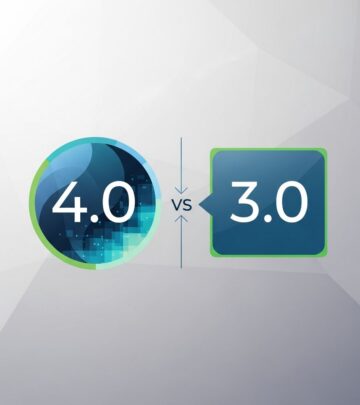
VantageScore 4.0 tweaks weights for modern trends: recent credit jumps to 11%, balances drop to 6%. Both share factors but 4.0 ignores more collections (paid, small-dollar, some medical) for greater forgiveness.
| Factor | 3.0 Weight | 4.0 Weight |
|---|---|---|
| Payment History | 40% | 41% |
| Depth of Credit | 21% | 20% |
| Credit Utilization | 20% | 20% |
| Balances | 11% | 6% |
| Recent Credit | 5% | 11% |
| Available Credit | 3% | 2% |
Transitioning lenders favor 4.0 for enhanced predictions, but 3.0 persists widely.
Proven Strategies to Elevate Your VantageScore 3.0
Improving your score requires targeted actions aligned with factor weights:
- Pay on time always: Automate payments; even one late hit tanks the 40% payment factor.
- Lower utilization: Pay down balances below 30%; request limit increases without spending more.
- Build depth: Keep old accounts open; diversify responsibly (e.g., add installment loan).
- Limit new credit: Space applications; too many inquiries hurt recent credit (5%).
- Reduce total debt: Prioritize high-balance accounts to ease the 11% balances drag.
Monitor via free tools from credit bureaus or services; frequent updates mean quick wins from good habits.
Where and Why to Check Your VantageScore 3.0
Available from all three bureaus, it’s consistent and accessible via bank apps, card issuers, or sites like Credit Karma. Knowing it empowers preemptive fixes, especially since lenders may use it alongside FICO. Benefits include accurate risk assessment for lenders and faster score gains for you.
Frequently Asked Questions (FAQs)
What is the minimum credit history for VantageScore 3.0?
One month on an account updated in the past two years—far less than FICO’s threshold.
Does VantageScore 3.0 ignore paid collections?
Yes, fully ignored, aiding recovery unlike some FICO models.
How often does VantageScore 3.0 update?
More frequently than many models, reflecting changes rapidly.
Can VantageScore 3.0 help with thin credit files?
Absolutely; it scores 30-35 million previously unscorable consumers.
Is VantageScore 3.0 better than FICO?
Not inherently; it complements FICO with inclusivity and speed, but lenders choose based on needs.
References
- Understanding VantageScore Ranges — Equifax. 2026. https://www.equifax.com/personal/education/credit/score/articles/-/learn/vantagescore-ranges/
- VantageScore 3.0 — VantageScore Solutions, LLC. 2026. https://vantagescore.com/insights/vantagescore-3
- Scoring Models: How to Calculate VantageScore — Academy Bank. 2026. https://www.academybank.com/article/scoring-models-how-to-calculate-vantagescore
- What is a VantageScore 3.0 Credit Score? — Embers.org. 2026. https://www.embers.org/articles/what-is-a-vantagescore-30-credit-score-blog-post
- What is the VantageScore 3.0 Credit Scoring Model? — Credit Karma. 2026. https://www.creditkarma.com/credit/i/vantagescore-30
Similar Articles








Read full bio of medha deb