Value Vs Growth Investing: 2025 Guide For Investors
Discover the core differences between value and growth investing strategies to make informed portfolio decisions for long-term success.
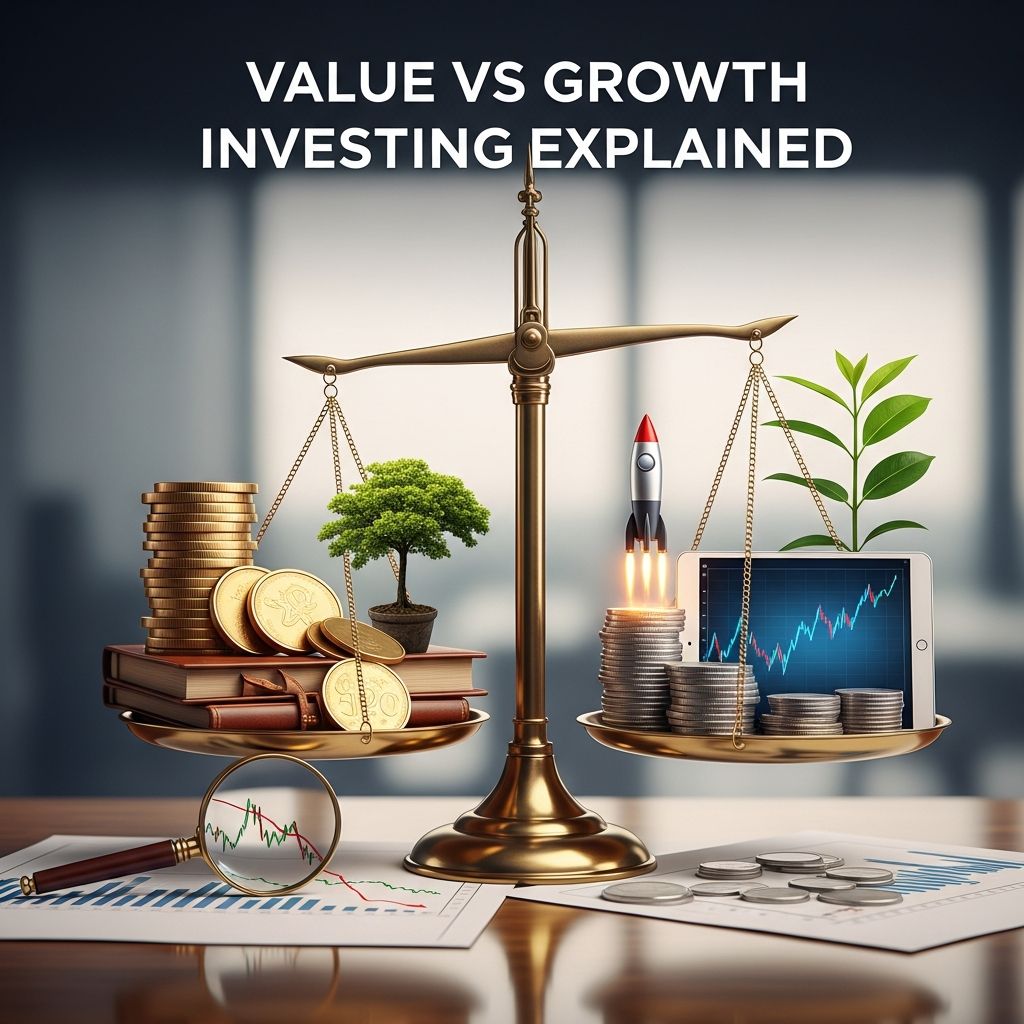
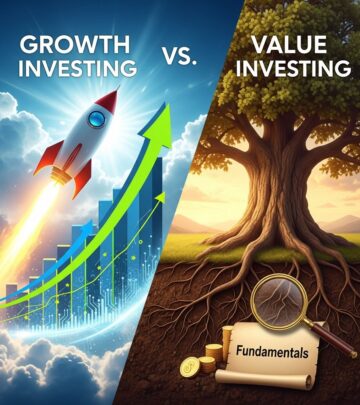
Investors often face the choice between two primary equity strategies: value investing, which targets undervalued companies with solid fundamentals, and growth investing, which prioritizes firms poised for rapid expansion. Understanding these approaches helps build resilient portfolios amid market fluctuations.
Defining the Core Strategies
Value investing centers on purchasing stocks trading below their intrinsic worth, often due to temporary market oversights or sector downturns. These companies typically exhibit mature operations, stable earnings, and attractive dividend payouts, appealing to those seeking capital preservation and steady income.
Growth investing, conversely, involves betting on companies expected to outpace market averages in revenue and profit expansion. Such firms reinvest earnings into innovation and scaling, leading to elevated valuations but promising substantial future gains.
Key Characteristics of Value Stocks
Value stocks generally belong to established industries like financial services, energy, and utilities. They feature low price-to-earnings (P/E) ratios, high dividend yields, and reduced volatility compared to broader markets.
- Low Valuation Metrics: P/E and price-to-book (P/B) ratios below sector averages signal bargains.
- Dividend Focus: Regular payouts provide income during holding periods.
- Defensive Nature: Lower debt levels offer resilience in rising interest rate environments.
Legendary proponents like Warren Buffett emphasize buying quality businesses at discounted prices, awaiting market recognition to unlock value.
Key Characteristics of Growth Stocks
Growth stocks dominate sectors such as technology, biotech, and consumer discretionary. High P/E ratios reflect investor optimism about explosive earnings trajectories, though this introduces greater price swings.
- High Growth Rates: Revenue and earnings expansion exceeding industry norms.
- Reinvestment Priority: Minimal dividends as capital fuels R&D and market expansion.
- Volatility Exposure: Sensitive to economic shifts and unmet expectations.
These stocks thrive in low-interest environments where future cash flows warrant premium pricing.
Comparative Analysis: Value vs Growth
The table below highlights fundamental differences to aid strategy selection.
| Aspect | Value Investing | Growth Investing |
|---|---|---|
| Valuation (P/E Ratio) | Low | High |
| Dividend Yield | High | Low/None |
| Risk/Volatility | Lower | Higher |
| Typical Sectors | Finance, Energy | Tech, Healthcare |
| Investment Horizon | Medium to Long | Long |
| Market Conditions | Recessions, High Rates | Expansions, Low Rates |
Performance Cycles and Historical Trends
Neither style dominates perpetually; performance rotates based on economic phases. Growth surged during the 2010s tech boom and post-2008 recovery, outpacing value for over a decade.
Value led in periods like 2001-2008, capitalizing on dividend appeal amid uncertainty. Long-term data from 1926 onward shows value slightly edging growth, underscoring diversification benefits.
Recent analyses as of 2025 indicate potential value resurgence, driven by normalized rates and undervalued cyclicals.
Risks and Rewards Breakdown
Risks in Value Investing
Value Traps: Stocks appearing cheap may harbor deteriorating fundamentals, trapping capital indefinitely.
Oversight Challenges: Requires deep analysis of financials, management, and macro factors to avoid pitfalls.
Rewards in Value Investing
Margin of safety from undervaluation buffers downturns, while dividends compound returns.
Risks in Growth Investing
Overvaluation: High multiples amplify corrections if growth falters.
Economic Sensitivity: Prolonged high rates compress future cash flow values.
Rewards in Growth Investing
Exponential upside from market leadership and innovation breakthroughs.
Blending Styles for Balanced Portfolios
Pure strategies risk underperformance during style rotations. Blend funds or growth-at-a-reasonable-price (GARP) approaches merge attributes, targeting growth with value discipline.
Consider market cap alongside style: large-cap growth offers stability, small-cap value higher yields but elevated risks.
Diversification across styles mitigates cycles, as evidenced by multi-factor portfolios outperforming single-style over full market cycles.
Practical Strategies for Implementation
For Value Enthusiasts:
- Screen for P/E under 15, P/B below 1.5, debt-to-equity ratios under 0.5.
- Focus on sectors rebounding from cycles, like energy post-commodity dips.
- Hold through 3-5 years for re-rating.
For Growth Pursuers:
- Seek 20%+ earnings growth forecasts, robust cash flows.
- Prioritize companies with wide economic moats via patents or networks.
- Scale in during pullbacks to manage volatility.
Investor Suitability Guide
Conservative profiles favor value for income and stability. Aggressive investors with long horizons suit growth’s potential. Hybrids serve most, allocating 40-60% per style based on age and risk tolerance.
Frequently Asked Questions (FAQs)
What is the main difference between value and growth stocks?
Value stocks trade at discounts to intrinsic value with dividends; growth stocks command premiums for rapid expansion prospects.
Which performs better long-term?
Historical data favors value slightly, but cycles vary; diversification wins.
Can I invest in both?
Yes, via blend funds or GARP strategies balancing growth and valuation.
How do interest rates impact these styles?
Low rates boost growth; rising rates favor value’s lower debt and yields.
Are ETFs available for these strategies?
Abundant options track value (e.g., low P/E indexes) and growth (high growth indexes).
Building Your Investment Approach
Assess personal goals, then allocate thoughtfully. Monitor economic indicators signaling rotations, like yield curve shifts. Regular rebalancing maintains discipline amid volatility.
Tools like fundamental screens and style-box analyses from index providers aid selection. Patience underpins success—value rewards waiting, growth demands conviction.
References
- Growth vs Value Investing – Key Differences and Which is Better — Bajaj Finserv. 2024-09-06. https://www.bajajfinserv.in/investment/growth-vs-value-investing
- Growth versus Value Investing — Fidelity Investments. https://www.fidelity.com/learning-center/investment-products/mutual-funds/2-schools-growth-vs-value
- Value And Growth Funds: How Are You Positioned? — Russell Investments. https://russellinvestments.com/us/blog/value-and-growth
- The Cyclical Nature of Growth vs. Value Investing — Hartford Funds. https://www.hartfordfunds.com/practice-management/client-conversations/investing-for-growth/the-cyclical-nature-of-growth-vs-value-investing.html
- Value vs. Growth Investing: What are the Differences — Chase Bank. https://www.chase.com/personal/investments/learning-and-insights/article/financial-jargon-busting-value-vs-growth-investing
- When It’s Value vs. Growth, History Is on Value’s Side — Dimensional Fund Advisors. https://www.dimensional.com/ca-en/insights/when-its-value-versus-growth-history-is-on-values-side
Similar Articles








Read full bio of Sneha Tete