Value Chain: Definition, Analysis & Business Strategy
Understand how value chains drive competitive advantage and business optimization.
What Is a Value Chain?
A value chain is a progression of activities that a business or firm performs in order to deliver goods and services of value to an end customer. The concept encompasses the full lifecycle of a product or process, including material sourcing, production, consumption, and disposal or recycling processes. The term “value chain” refers not only to the physical movement of goods but also to the manner in which value is added at each stage, both to the product itself and to the actors involved in its creation and delivery.
In essence, a value chain is a high-level model of how businesses receive raw materials as input, add value to those materials through various processes, and sell finished products to customers. The concept was first popularized by Michael Porter in his 1985 bestseller, Competitive Advantage: Creating and Sustaining Superior Performance, where he described how organizations function as systems composed of interconnected subsystems, each with inputs, transformation processes, and outputs.
Value Chain vs. Supply Chain
While the terms “value chain” and “supply chain” are often used interchangeably, they represent distinct concepts. A supply chain refers specifically to the system and resources required to move a product or service from supplier to customer, focusing primarily on logistics and distribution networks. The supply chain may involve suppliers, manufacturers, warehouses, transportation companies, and retailers working together to create, produce, and distribute products.
In contrast, a value chain builds upon the supply chain concept by also considering the manner in which value is added along the chain, both to the product and to the stakeholders involved. From a sustainability and strategic perspective, the value chain concept has broader appeal because it explicitly references internal and external stakeholders in the value-creation process and encourages examination of how each activity contributes to overall value creation. While a supply chain focuses on the “how” of moving products, a value chain focuses on the “why” and “what value” at each stage.
Porter’s Value Chain Framework
Michael Porter’s value chain model remains the foundational framework for understanding how organizations create value. Porter’s concept is based on the process view of organizations, viewing a manufacturing or service organization as a system made up of subsystems, each with inputs, transformation processes, and outputs. According to Porter’s framework, inputs, transformation processes, and outputs involve the acquisition and consumption of resources—including money, labor, materials, equipment, buildings, land, and administration.
How value chain activities are carried out determines costs and significantly affects profits. By understanding each component of the value chain, organizations can identify opportunities to reduce costs, improve quality, and enhance customer value. This framework has become instrumental in strategic planning for businesses across industries.
Primary Activities in the Value Chain
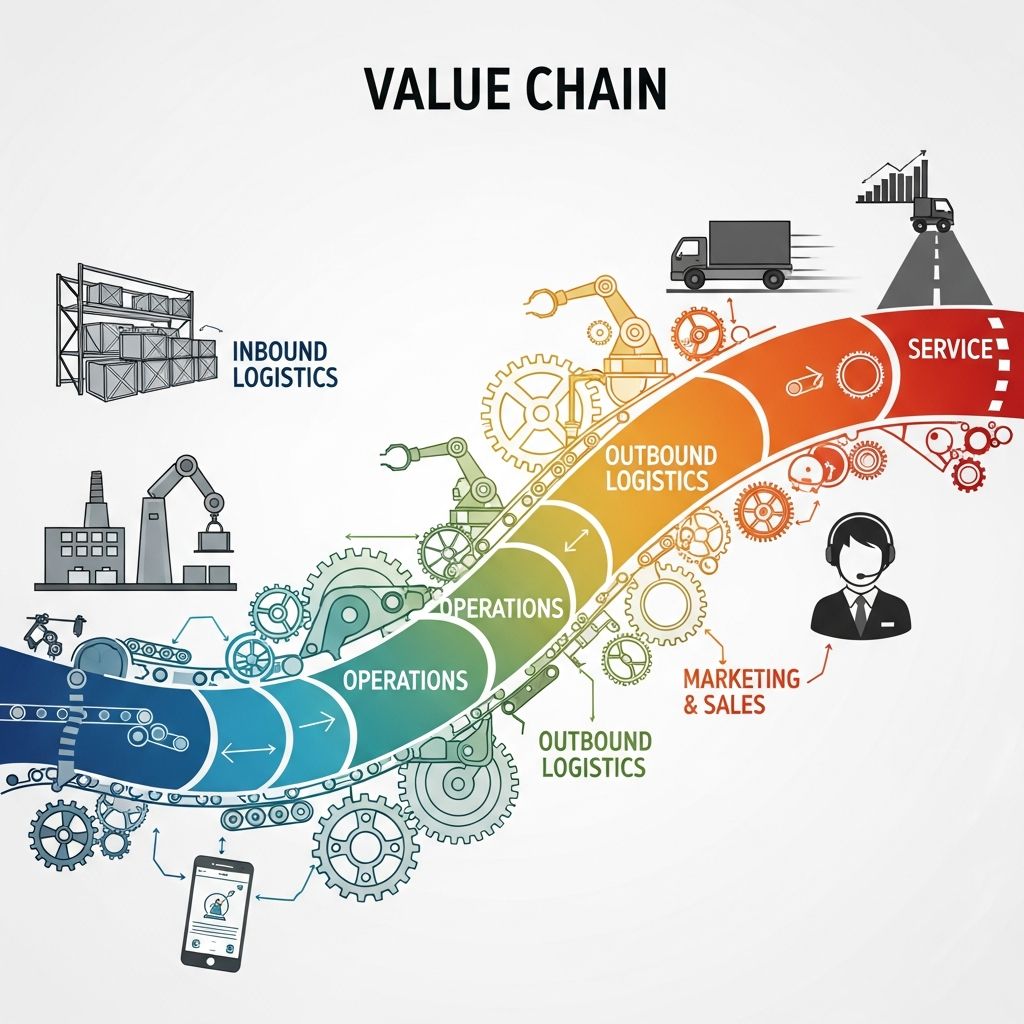
Porter identified five primary activities that directly add value by helping build and sell a company’s products or services:
- Inbound Logistics: Arranging the inbound movement of materials, parts, and finished inventory from suppliers to manufacturing or assembly plants, warehouses, or retail stores. This activity ensures that raw materials and components arrive efficiently and cost-effectively.
- Operations: Managing the process that converts inputs (raw materials, labor, and energy) into outputs (goods and services). This is the core transformation activity where value is physically created through manufacturing, assembly, or service delivery.
- Outbound Logistics: Coordinating the movement and distribution of finished products to customers. This includes warehousing, order fulfillment, and delivery management to ensure products reach end-users efficiently.
- Marketing and Sales: Promoting products and persuading customers to purchase them. This activity communicates the value proposition and helps customers understand why they should choose the product or service.
- Service: Providing after-sales support, maintenance, repairs, and customer service. This activity maintains and enhances the product’s value throughout its lifecycle and builds customer loyalty.
Supporting Activities in the Value Chain
Four supporting (or secondary) activities underpin the primary activities and enable them to function effectively:
- Procurement: The acquisition of goods, services, or works from external sources. This includes purchasing raw materials, components, and services needed throughout the value chain.
- Technological Development: Pertains to the equipment, hardware, software, procedures, and technical knowledge brought to bear in the firm’s transformation of inputs into outputs. Innovation and continuous improvement of production methods fall under this activity.
- Human Resources Management: Consists of all activities involved in recruiting, hiring, training, developing, compensating, and managing personnel. Strong human capital is essential for executing all value chain activities effectively.
- Firm Infrastructure: Includes activities such as accounting, legal, finance, control, public relations, quality assurance, and general strategic management. This activity provides the organizational foundation supporting all other activities.
Understanding Value Chain Analysis
Value chain analysis is a means of evaluating each of the activities in a company’s value chain to understand where opportunities for improvement lie. The analysis looks at every step a business goes through, from raw materials to the eventual end-user, with the goal of delivering maximum value for the least possible total cost.
Through value chain analysis, businesses can identify areas of inefficiency that hinder the delivery of quality products and take steps to improve them. The process involves examining how each activity interconnects and whether each activity truly adds value to the product or service. By doing so, companies can eliminate non-value-adding activities, optimize cost structures, and enhance their competitive advantage.
Benefits of Value Chain Analysis
A robust value chain analysis and optimization strategy offers several significant benefits:
- Enhanced Efficiency: By identifying and eliminating wasteful or redundant activities, organizations can streamline operations and reduce unnecessary costs without sacrificing quality.
- Improved Competitive Advantage: Understanding the value chain allows companies to identify unique ways to differentiate themselves from competitors and create sustainable competitive advantages.
- Increased Product Value: By optimizing each activity, companies can enhance the overall value delivered to customers, improving satisfaction and loyalty.
- Better Cost Management: Detailed analysis of each activity helps organizations understand cost drivers and identify opportunities for cost reduction without compromising quality or customer experience.
- Strategic Decision-Making: Value chain analysis provides insights that inform strategic decisions about outsourcing, vertical integration, and resource allocation.
- Innovation Opportunities: By examining how activities interact, organizations can identify opportunities for innovation and process improvement.
Global Value Chains and Extended Networks
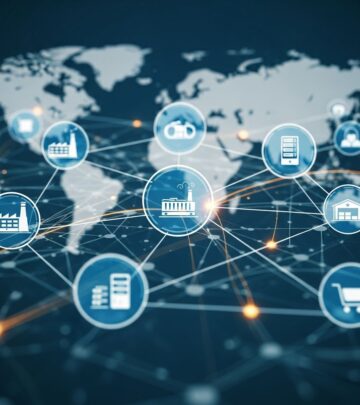
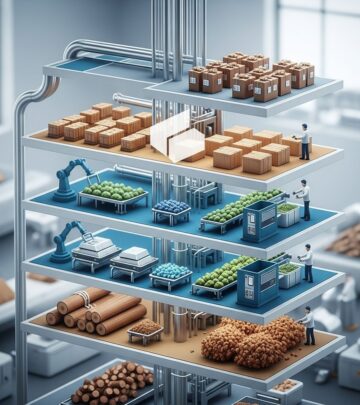
The value chain concept has extended beyond individual firms to encompass entire supply chains, distribution networks, and global operations. A global value chain recognizes that the design, production, and marketing of many products now involves a chain of activities divided among enterprises located in different places.
At the industry level, an industry value chain represents the various processes involved in producing goods and services, starting with raw materials and ending with the delivered product. The sum total of value-added at each link (stage of production) yields the total value created. Additionally, value chains interact within what Porter termed a “value system,” which includes the value chains of a firm’s suppliers, the firm itself, its distribution channels, and its buyers.
The Virtual Value Chain
Beyond the traditional physical value chain, the concept of a virtual value chain has emerged. Created by John Sviokla and Jeffrey Rayport, the virtual value chain is a business model describing the dissemination of value-generating information services throughout an extended enterprise. This value chain begins with content supplied by a provider, which is then distributed and supported by information infrastructure, allowing context providers to supply actual customer interaction. The virtual value chain supports the physical value chain of procurement, manufacturing, distribution, and sales in traditional companies and extends value creation into digital and information-based domains.
Practical Steps for Conducting Value Chain Analysis
To effectively analyze and optimize a value chain, organizations should follow systematic approaches:
- Map the Current State: Document all activities and processes currently involved in creating and delivering products or services. Identify all inputs, processes, and outputs at each stage.
- Evaluate Value Addition: Assess which activities truly add value from the customer’s perspective. Identify non-value-adding activities or bottlenecks that could be eliminated or improved.
- Analyze Costs and Performance: Examine the cost drivers for each activity and measure performance metrics. Compare internal processes with industry benchmarks and competitors.
- Identify Improvement Opportunities: Look for areas where efficiency can be enhanced, costs can be reduced, quality can be improved, or differentiation can be created.
- Implement Changes: Prioritize improvements based on impact and feasibility, then systematically implement changes while monitoring results.
- Monitor and Adapt: Continuously monitor the effectiveness of changes and adapt strategies as market conditions, technologies, and competitive landscapes evolve.
Frequently Asked Questions
Q: What is the primary purpose of analyzing a value chain?
A: The primary purpose is to identify where value is added in the production and delivery process and to find opportunities for improvement. By analyzing each activity, organizations can reduce costs, improve quality, enhance customer value, and gain competitive advantage.
Q: How does a value chain differ from a supply chain?
A: A supply chain focuses on the logistics and resources needed to move a product from supplier to customer. A value chain goes further by examining how value is added at each stage and considering all stakeholders involved in value creation, not just logistics.
Q: Who developed the concept of the value chain?
A: Michael Porter introduced and popularized the value chain concept in his 1985 book, Competitive Advantage: Creating and Sustaining Superior Performance. His framework remains the foundational model used in business strategy today.
Q: Can value chain analysis be applied to service industries?
A: Yes, absolutely. While Porter’s original examples often focused on manufacturing, the value chain framework is equally applicable to service industries. Service organizations can analyze how they transform inputs into valuable services through their various activities.
Q: What are some common mistakes in value chain analysis?
A: Common mistakes include failing to consider the entire chain from suppliers to end-users, not involving key stakeholders in the analysis, focusing only on cost reduction without considering quality, and failing to update the analysis as market conditions change.
References
- What is a value chain? Definitions and characteristics — Cambridge Institute for Sustainability Leadership (CISL). 2024. https://www.cisl.cam.ac.uk/education/graduate-study/pgcerts/value-chain-defs
- Value Chain Definition — Tulane University Library Guides. 2024. https://libguides.tulane.edu/c.php?g=182431&p=1204399
- Value chain — Wikipedia. 2024. https://en.wikipedia.org/wiki/Value_chain
- Value Chain: Definition, Benefits, and Examples — Salesforce. 2024. https://www.salesforce.com/sales/value-chain/
- How To Use This Guide – Value Chain Analysis — Florida State University Library. 2024. https://guides.lib.fsu.edu/valuechain
- What Is a Value Chain Analysis? 3 Steps — Harvard Business School Online. 2024. https://online.hbs.edu/blog/post/what-is-value-chain-analysis
Similar Articles








Read full bio of Sneha Tete