Value-Added Tax (VAT): Definition, How It Works, and Examples
Understanding VAT: A comprehensive guide to consumption taxes, rates, and global implementation.
What Is Value-Added Tax (VAT)?
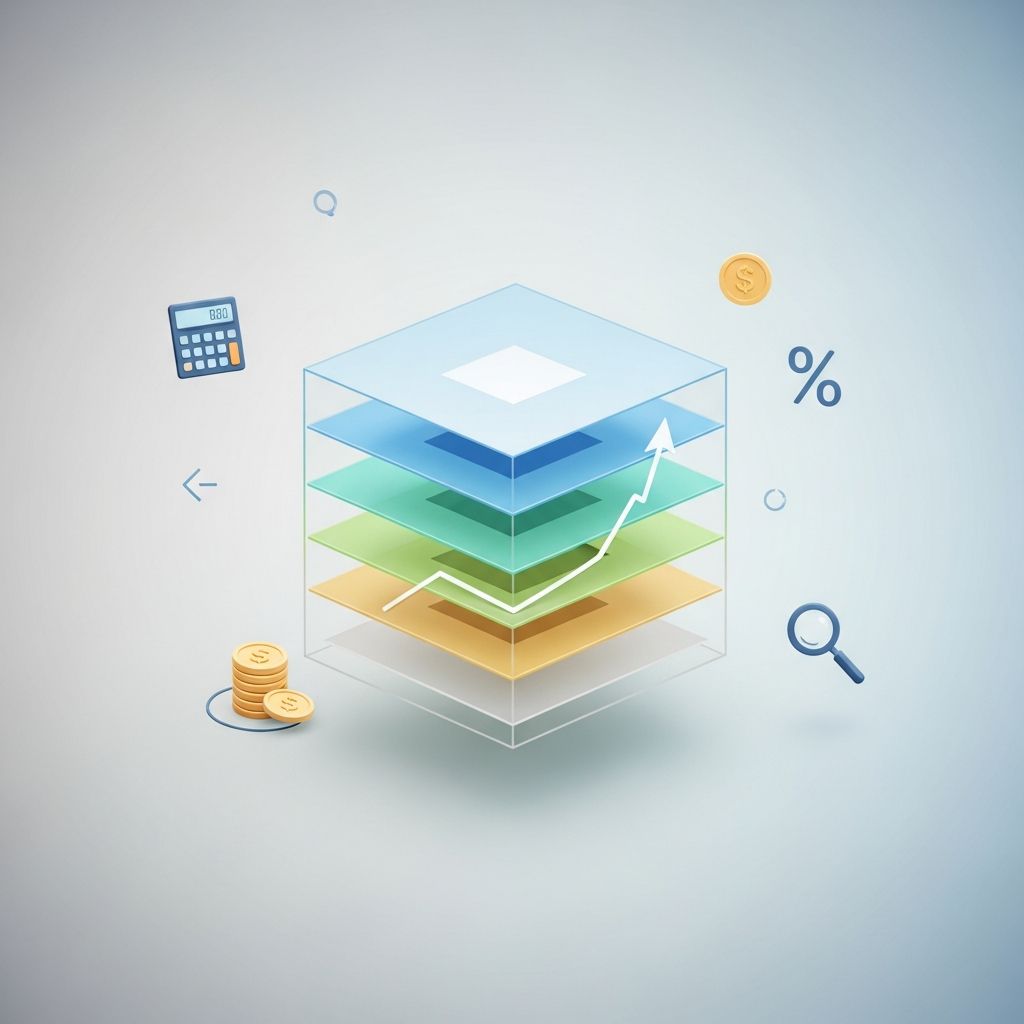
A value-added tax (VAT) is a consumption tax applied to goods and services at each stage of production and distribution. It is calculated based on the value added to a product or service at each step of the supply chain, rather than being collected solely at the final point of sale. This fundamental distinction makes VAT a unique taxation mechanism that has been adopted by more than 170 countries worldwide, generating approximately one-fourth of global tax revenue.
The defining characteristic of VAT is that it credits taxes paid by enterprises on their material inputs against the taxes they must levy on their own sales. This mechanism prevents the cascading tax effect that occurs with traditional turnover taxes, where tax is levied multiple times on the same value as goods move through the production chain.
How Value-Added Tax Works
Understanding VAT requires examining its operational mechanics at different stages of production. Unlike a retail sales tax—collected only at the point of sale to the final consumer—VAT revenue is collected throughout the entire production process. Firms whose annual turnover exceeds a specified threshold must participate in the VAT system, not only those involved in making final sales to consumers.
The Input Tax Credit Mechanism
The cornerstone of VAT functionality is the input tax credit system. When a business purchases materials or services subject to VAT, it records the amount of VAT paid. When the business sells its output, it charges VAT to its customer. The business then remits to the tax authority only the difference between the VAT collected on sales and the VAT paid on inputs. This ensures that tax is ultimately borne only by the final consumer, while revenue is collected progressively throughout the supply chain.
Practical Example of VAT Collection
Consider a simplified example with a 10 percent VAT rate. Firm A produces goods with no material inputs and sells them for $100 to Firm B, charging $10 in VAT for a total of $110. Firm A remits $10 to the government. Firm B then sells the same goods to final consumers for $400, charging $40 in VAT for a total of $440. However, Firm B claims a credit for the $10 VAT it paid on its inputs, so it remits only $30 to the government ($40 in collected tax minus $10 input credit). The government collects a total of $40 in revenue, representing a 10 percent tax on the final $400 sale price.
This structure provides a significant practical advantage: it secures revenue collection more effectively than alternative consumption tax methods. If Firm A were to omit charging tax to Firm B, the government would still collect $40 from Firm B, which would have no credit to set against its output tax. This built-in audit trail creates natural compliance incentives.
VAT Versus Other Tax Systems
VAT vs. Retail Sales Tax
The United States primarily relies on sales tax rather than VAT. Sales tax is levied as a percentage of the final sale price and collected only at the point of final purchase. In contrast, VAT is collected at multiple stages throughout production and distribution. This fundamental difference affects both administration and economic incentives. The multistage collection method of VAT creates an inherent compliance mechanism where each business in the supply chain has an incentive to ensure proper documentation of transactions, as they need documentation to claim input credits.
VAT vs. Turnover Tax
A traditional turnover tax levies tax on all sales—both intermediate and final—without allowing for credits on inputs. This creates a cascading effect where the same value is taxed multiple times as goods move through production stages. The VAT’s input credit mechanism elegantly solves this problem by allowing producers to reclaim the tax charged on their inputs, ensuring that only the net value added at each stage bears the tax burden.
Global Implementation of VAT
European Union VAT Rates
Each European Union country has implemented its own VAT rate, ranging from 15 percent to 27 percent. The variation reflects different fiscal policies and economic priorities across member states. A significant legislative development occurred on January 1, 2015, when the EU enacted new regulations requiring that VAT be charged in the country where digital products are purchased, rather than where the seller is located. Digital products include digital downloads, online courses, and e-books. This change meant that small businesses selling digital items to EU customers must register for VAT in each country of sale and comply with local regulations, creating administrative challenges that prompted protests from many businesses.
United Kingdom VAT Structure
In the United Kingdom, VAT rates are set by the Chancellor of the Exchequer and have evolved significantly. For many years, the UK VAT remained at 17.5 percent; however, in 2009, it was temporarily reduced to 15 percent in an attempt to stimulate the economy by reducing the cost of purchases. The tax returned to 17.5 percent in 2010 and subsequently increased to 20 percent in 2011, where it remains as the standard rate.
The UK implements a tiered VAT system with three distinct rates: The standard rate of 20 percent applies to most goods and services. A reduced rate of 5 percent applies to certain items, including electricity for the home and children’s car seats. A zero rate applies to specific items deemed essential, including books, magazines, and newspapers; public transportation fees; food items and groceries; children’s clothing and shoes; women’s sanitary protection; and certain medical items. This differentiated approach reflects policy priorities regarding equity and economic stimulus.
VAT Significance in Government Revenue
In the United Kingdom, VAT represented £78,439 million in 2009, accounting for nearly 18 percent of the government’s annual receipts. Only National Insurance Contributions (22 percent) and income tax (34 percent) generated more revenue for the UK government. This demonstrates the significant role VAT plays in government financing across developed economies.
Advantages and Benefits of VAT
Economic Incentives for Saving and Investment
Proponents of VAT argue that the system encourages a healthy economy by taxing only consumption while leaving savings and investment untaxed. This contrasts with the US federal tax system, where taxes are often paid twice: once when income is withdrawn from paychecks and again when taxes are paid on earned interest from capital gains and investments. By not penalizing savings and investment, VAT theoretically promotes capital accumulation and economic growth.
Revenue Collection Efficiency
The multistage collection mechanism of VAT provides considerable practical advantages over single-stage consumption taxes. The input credit system creates natural compliance incentives and audit trails throughout the supply chain. Businesses cannot claim input credits without proper documentation, which inherently discourages tax evasion and reduces administrative costs compared to systems relying solely on final-stage collection.
Equity Considerations
Proponents argue that VAT is equitable because it is directly linked to consumption. Those with higher disposable incomes purchase more goods and services and therefore pay more VAT in absolute terms. The system is perceived as fair because everyone bears the same tax rate on consumption, regardless of income source.
Criticisms and Concerns Regarding VAT
Regressivity Issues
Critics highlight that lower-income individuals may bear a disproportionate tax burden under VAT systems. Lower-income households tend to spend a larger share of their total income on consumption compared to wealthier households, which save a greater portion. This means that while VAT rates are uniform, the effective tax burden falls more heavily on those with limited incomes. A person earning $30,000 annually who spends 90 percent of income on consumption pays VAT on $27,000, whereas a person earning $300,000 who spends 50 percent on consumption pays VAT on only $150,000.
Implementation Complexity
While VAT provides advantages over some tax systems, concerns persist about implementation costs, particularly for small businesses. The multistage registration requirements and compliance obligations create administrative burdens. Additionally, recent digital VAT regulations requiring businesses to track sales by country have proven particularly challenging for small enterprises.
Inflation Concerns
Potential inflation impacts remain a concern in discussions regarding VAT adoption in different jurisdictions. Questions persist about whether VAT increases might be passed directly to consumers, potentially creating price level adjustments.
VAT Administration and Threshold Considerations
Registration Thresholds
A crucial administrative decision involves setting the registration threshold—the turnover level at which businesses must charge VAT. In many developing countries, a simple VAT with a high registration threshold would be simpler to administer than the complex tax systems it would replace. A simple rule of thumb suggests setting the threshold at the point where collection cost savings are balanced against revenues lost. Given that the value-added tax base is concentrated among relatively few firms in most countries, a high threshold is generally the most efficient administrative approach.
Why Countries Resist High Thresholds
Despite the administrative efficiency of high thresholds, many countries have resisted this approach for various reasons. Political perception that excluding smaller firms is unfair often influences policy decisions. Additionally, policymakers frequently believe that covering more firms will generate more revenue, even when administrative efficiency data suggests otherwise.
VAT Across Different Jurisdictions
More than 160 countries around the world currently use value-added taxation systems, with particular prevalence in the European Union. Countries have developed diverse approaches to VAT implementation, reflecting local economic conditions, administrative capacity, and policy objectives. The tax has become one of the most important taxes in use globally, demonstrating its flexibility across different economic systems and development levels.
Cross-Border and Digital Considerations
The growth in cross-border online shopping has driven increased interaction among national VAT systems. Goods sold for export are normally not subject to VAT, while services sold to customers abroad typically follow similar principles. When buying or selling items from outside the United States, additional VAT or GST (Goods and Services Tax) might be applied to the sale or purchase, depending on local regulations. International coordination has become increasingly important to address risks of non-taxation and double taxation that can harm both tax revenues and competitive fairness between businesses.
Frequently Asked Questions
What is the primary purpose of VAT?
The primary purpose of VAT is to serve as a consumption tax that funds government operations while minimizing economic distortions. By taxing only final consumption and allowing input credits throughout production, VAT encourages savings and investment while generating stable tax revenue.
How does VAT differ from sales tax?
VAT is collected at multiple stages throughout production and distribution, with input credits allowing businesses to reclaim taxes paid on inputs. Sales tax is collected only at the final point of sale. This makes VAT more complex administratively but potentially more efficient in revenue collection.
Why don’t more countries use VAT?
While over 170 countries use VAT, some nations like the United States primarily rely on sales taxes. Historical tax system development, political preferences, and administrative considerations influence adoption decisions. The US federal system structure and state-level tax autonomy have historically favored sales tax approaches.
Is VAT regressive?
VAT can be considered regressive because lower-income households spend a larger proportion of their income on consumption and therefore pay VAT on a greater share of their earnings. However, many countries mitigate this through reduced rates or exemptions on essential items.
How are digital products taxed under VAT?
Since January 1, 2015, EU regulations require VAT to be charged in the country where digital products are purchased rather than where the seller is located. This requires businesses to register for VAT in each country where they make sales to comply with local regulations.
References
- The Allure of the Value-Added Tax — International Monetary Fund. 2002-06. https://www.imf.org/external/pubs/ft/fandd/2002/06/ebrill.htm
- Consumption taxes — OECD. 2024. https://www.oecd.org/en/topics/policy-issues/consumption-taxes.html
- VAT, GST and DST — Harvard University Tax Compliance Program. https://tax.oc.finance.harvard.edu/vat-gst-and-dst
Similar Articles








Read full bio of Sneha Tete