Vacancy and Credit Loss in Real Estate Investing
Master vacancy and credit loss management to protect your real estate investments and maximize returns.

Understanding Vacancy and Credit Loss in Real Estate Investing
Real estate investing presents numerous opportunities for wealth building, but it also comes with inherent risks that require careful management. Two critical concepts that every real estate investor must understand are vacancy and credit loss. These metrics directly impact a property’s profitability and ability to generate consistent cash flow. Whether you’re investing in residential apartments, commercial office spaces, or retail properties, understanding how vacancy and credit losses affect your bottom line is essential for making informed investment decisions and protecting your financial interests.
Vacancy and credit losses represent the income lost from a rental property due to unoccupied units and tenant non-payment. These two factors work together to reduce the actual rental income a property generates compared to its potential income at full occupancy with all rents collected. By grasping these concepts and implementing effective management strategies, investors can significantly enhance their investment returns and reduce financial exposure.
Defining Vacancy Loss and Credit Loss
Vacancy loss occurs when rental units or commercial spaces remain unoccupied for a period of time, resulting in lost rental income during that period. This is the income that would have been generated if the unit had been occupied by a paying tenant. For example, if you own a property with an expected monthly rent of $1,000 and the property stays vacant for three months, your vacancy loss is $3,000.
Credit loss, on the other hand, refers to rental income that is not collected due to tenant defaults or non-payment of rent. Unlike vacancy loss, which results from empty units, credit loss occurs when a tenant occupies the unit but fails to pay their rental obligations. If a tenant rents your property but defaults on two months of rent at $1,000 per month, that represents a credit loss of $2,000.
Both vacancy loss and credit loss directly impact a property’s Net Operating Income (NOI), which is a critical metric used by lenders, investors, and property analysts to assess a property’s financial health and its ability to service debt obligations. Understanding the distinction between these two types of losses is fundamental to effective real estate investment management.
The Financial Impact of Vacancy and Credit Loss
The financial implications of vacancy and credit losses extend far beyond simple lost rent. These factors create a cascading effect that influences multiple aspects of a property’s investment performance.
Direct Impact on Cash Flow
High vacancy rates and significant credit losses directly reduce a property’s rental income, leading to lower cash flow and potentially affecting the property’s overall profitability. This reduced cash flow can create operational challenges, making it difficult to cover property maintenance costs, property taxes, insurance, and debt service payments. For investors relying on consistent cash flow for income, even modest vacancy and credit losses can substantially impact their financial position.
Impact on Property Valuation
Real estate property values are fundamentally linked to NOI through the capitalization rate formula (value ≈ NOI / cap rate). When vacancy and credit losses reduce NOI, the overall property value decreases proportionally. Properties with high vacancy rates may be perceived as less desirable, leading to decreased market value and reduced investor interest. This valuation impact can be particularly significant for properties requiring financing, as lenders base loan amounts on appraised values.
Impact on Loan Covenants
For leveraged investments, vacancy and credit losses can trigger violations of loan covenants. Lenders typically include Debt Service Coverage Ratio (DSCR) requirements, which measure whether operating income is sufficient to cover debt payments. A swing in vacancy from the assumed stabilized level—for instance, from 95% occupancy down to 85%—could deteriorate DSCR enough to breach covenants and potentially put the loan in technical default.
In-Place Versus Stabilized Vacancy and Credit Loss
Understanding the difference between in-place (actual) and stabilized vacancy and credit loss is crucial for proper property analysis and underwriting.
In-Place (Actual) Vacancy and Credit Loss
In-place or actual vacancy and credit loss refer to a property’s current, real-world performance. In-place vacancy represents the actual income being lost right now due to vacant units or space, calculated as the market rent for those vacant units. In-place credit loss refers to the actual rental income not currently being collected due to tenant defaults or non-payment. These metrics reflect the property’s performance at a specific point in time and are used in property monitoring and financial reporting.
Stabilized Vacancy and Credit Loss
Stabilized vacancy and credit loss represent the long-term expected performance once the property reaches stabilization—typically after lease-up, repositioning, or value-add activities are complete. Stabilized assumptions reflect what investors expect the property to achieve under normal market conditions over the long term. For example, a newly renovated apartment complex might assume a stabilized occupancy rate of 95% with a 1% credit loss, even if it currently sits at 80% occupancy during lease-up.
The distinction between in-place and stabilized metrics is particularly important during the acquisition and underwriting process. Lenders recognize that new projects need time to ramp up before hitting permanent DSCR targets. If stabilization is delayed or falls short, the DSCR will remain under the threshold, potentially putting the loan in technical default. Even for already stabilized properties, if vacancy unexpectedly rises later, NOI drops and DSCR can fall below minimum requirements.
Measuring and Calculating Vacancy and Credit Loss
Accurate measurement and calculation of vacancy and credit loss are essential for proper investment analysis and portfolio management.
Expression as a Percentage
Vacancy and credit loss can be expressed as a percentage of potential rental income. This percentage-based approach allows investors to compare properties of different sizes and markets on an equivalent basis. For instance, a 5% vacancy rate indicates that the property has lost 5% of its potential rental income due to unoccupied units.
Expression as Dollar Amounts
These losses can also be expressed as absolute dollar amounts, which is particularly useful for cash flow analysis and budgeting purposes. This method shows the actual revenue impact in terms investors can directly relate to their cash flow and returns.
Components of Economic Vacancy
Underwriters and analysts often consider economic vacancy, which includes physical vacancy plus credit losses plus free rent concessions. This comprehensive metric provides a complete picture of income loss from all sources, enabling more conservative and realistic financial projections.
Factors Contributing to Vacancy and Credit Loss
Multiple factors influence vacancy and credit loss rates, and understanding these drivers is key to risk management.
Market Conditions
Local market conditions significantly impact vacancy rates. In strong markets with high demand and low supply, vacancy tends to be low. Conversely, in weak markets with oversupply or declining demand, vacancy rates increase substantially. Market weakening can necessitate higher stabilized vacancy assumptions, testing a property’s viability.
Tenant Quality and Screening
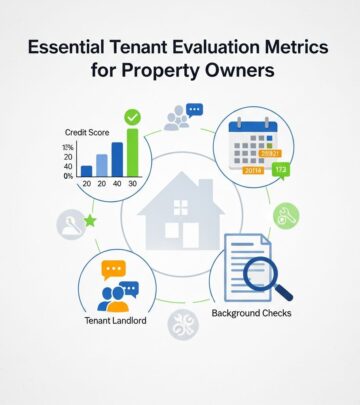
The quality of tenants directly affects credit loss rates. Poor tenant screening practices can result in higher default rates and increased credit losses. Maintaining high credit standards for tenant selection and thorough tenant screening significantly minimizes credit losses. Properties with low-credit tenant rosters or those in economically distressed areas may justify higher credit loss assumptions in underwriting.
Property Management and Maintenance
Effective property management and maintenance practices are critical to minimizing vacancy rates. Well-maintained properties in excellent condition attract and retain quality tenants more readily than properties in poor condition. Property managers are responsible for developing effective marketing and leasing strategies to minimize vacancy rates.
Economic Conditions
Broader economic conditions influence both vacancy and credit loss rates. During economic downturns, even occupied tenants struggle to pay rent, increasing credit losses. For instance, instead of a normal 1% bad debt assumption, an underwriter might use 5% during a recession scenario. Economic shocks can simultaneously increase vacancy and credit loss at once.
Managing Vacancy and Credit Loss Risk
Effective management of vacancy and credit loss requires a multi-faceted approach addressing different aspects of property operations.
Technology and Automation
The use of technology, such as property management software and credit scoring agencies, can significantly mitigate the impact of vacancy and credit losses. Automated systems help track tenant payments, identify delinquencies early, and streamline leasing processes to reduce turnover periods.
Proactive Credit Management
Proactive credit management practices help reduce credit losses and ensure consistent cash flow for property owners. This includes rigorous tenant screening, lease enforcement, and prompt collection efforts for delinquent accounts.
Strategic Marketing and Leasing
Developing effective marketing and leasing strategies minimizes vacancy rates and reduces the time units remain unoccupied. Property managers should employ multiple marketing channels, competitive pricing strategies, and leasing incentives appropriate to market conditions.
Property Condition and Amenities
Maintaining properties in excellent condition and continuously improving amenities attracts higher-quality tenants and supports premium rental rates. This investment in property quality directly reduces vacancy by increasing tenant demand and interest.
Vacancy and Credit Loss in Investment Analysis
Investors use vacancy and credit loss analysis to evaluate potential opportunities and assess investment viability.
Identifying Investment Opportunities
Real estate investors can benefit from vacancy and credit loss analysis by identifying potential investment opportunities. High vacancy rates or credit losses in a specific market may indicate undervalued properties or distressed markets that could offer attractive investment returns. By carefully analyzing these factors, investors can make informed decisions to acquire properties at favorable prices and implement strategies to maximize returns.
Risk Assessment
Investors analyze vacancy rates and credit loss trends to evaluate the potential profitability and risks associated with particular properties or markets. This information helps investors determine investment viability and develop strategies to mitigate risks and optimize returns.
Lender Considerations
Lenders carefully scrutinize vacancy and credit loss because they directly impact a property’s NOI and its ability to service debt. High vacancy rates or significant credit losses raise concerns about a borrower’s ability to generate sufficient income to repay the loan. Lenders may impose stricter lending conditions or offer lower loan amounts to mitigate risks associated with vacancy and credit losses.
Modeling Vacancy and Credit Loss Assumptions
Effective underwriting and financial modeling requires thoughtful consideration of vacancy and credit loss assumptions.
Conservative Underwriting Approaches
Underwriters use vacancy and credit loss analysis as a stress test, often preferring deals where break-even occupancy is 80% or less. This conservative approach provides a margin of safety if actual performance underperforms assumptions.
Dynamic Modeling Scenarios
The modeling of credit losses can be dynamic, allowing for scenario analysis. One might increase the credit loss percentage during a downturn year in scenarios to test property resilience. Similarly, stress testing might model higher structural vacancy in weaker market conditions.
Scenario Testing Examples
A property might model a higher structural vacancy scenario of 15% (meaning only 85% occupancy achievable long-term) to test viability in a softer market. Credit shock scenarios might assume an economic downturn where even occupied tenants struggle, increasing credit loss from 1% to 5% for a year or two, or assuming a major tenant default leading to an unexpected spike in vacancy and credit loss simultaneously.
The Impact on Loan Terms and Structure
Vacancy and credit loss assumptions directly influence loan terms and structure.
Properties requiring significant lease-up and having high current vacancy typically receive lower loan-to-cost ratios, required interest reserves, and tighter monitoring requirements. Loan covenants often establish specific occupancy milestones that must be achieved within defined timeframes. For instance, a loan might stipulate that the property must reach 90% occupancy within 18 months, and failure to meet this milestone could trigger default even if interest payments are current. Additionally, some loans include reappraisal clauses triggered by sharp drops in occupancy, as severely vacant properties are likely to have cash flow problems imminently.
Frequently Asked Questions
Q: What is the difference between vacancy loss and credit loss?
A: Vacancy loss occurs when rental units remain unoccupied, while credit loss results from tenants failing to pay rent or defaulting on lease obligations. Both reduce actual rental income compared to potential income.
Q: How do vacancy and credit losses impact property valuation?
A: Since property values are based on NOI, and vacancy and credit losses reduce NOI, they directly lower property valuation. Higher losses result in lower property values and reduced investor appeal.
Q: What strategies can minimize vacancy and credit losses?
A: Effective strategies include thorough tenant screening, maintaining properties in excellent condition, implementing proactive credit management, using property management technology, and developing strategic marketing and leasing approaches.
Q: How do lenders view vacancy and credit losses?
A: Lenders carefully scrutinize these metrics because they affect NOI and debt service capacity. High vacancy or credit losses may result in stricter lending conditions, lower loan amounts, or additional monitoring requirements.
Q: Why distinguish between in-place and stabilized vacancy assumptions?
A: In-place metrics reflect current performance, while stabilized metrics represent long-term expected performance. This distinction is important for evaluating lease-up properties and setting realistic loan covenants and financial targets.
Conclusion
Vacancy and credit loss represent critical metrics that directly impact real estate investment performance. By understanding these concepts, measuring them accurately, and implementing proactive management strategies, investors can enhance financial performance, mitigate risks, and optimize returns on their real estate investments. Whether you’re analyzing a potential acquisition, monitoring existing properties, or negotiating loan terms, comprehensive attention to vacancy and credit loss assumptions and management practices is essential for successful real estate investing.
References
- Vacancy & Credit Loss: Stabilized vs. In-Place — Roll-Forward Logic and Covenant Sensitivity — MMC Invest. 2024. https://www.mmcginvest.com/post/vacancy-credit-loss-stabilized-vs-in-place-roll-forward-logic-and-covenant-sensitivity
- Vacancy And Credit Losses — Lark. 2024. https://www.larksuite.com/en_us/topics/realestate-glossary/vacancy-and-credit-losses
- Vacancy and Credit Losses — CENTURY 21. 2024. https://www.century21.com/glossary/definition/vacancy-and-credit-losses
- Vacancy and Credit Losses — Bonfire Capital. 2024. https://www.bonfire.capital/terms/vacancy-and-credit-losses
Similar Articles








Read full bio of medha deb