Utility in Economics: Definition, Types, and Examples
Understanding utility: How consumers measure satisfaction and make purchasing decisions in economics.

What is Utility?
In economics, utility refers to the satisfaction or benefit that a consumer receives from consuming a good or service. It is a fundamental concept in microeconomics that helps explain how individuals make purchasing decisions and allocate their limited resources. Utility is subjective and varies from person to person, as different consumers derive different levels of satisfaction from the same product or service.
The concept of utility is rooted in the principle that consumers aim to maximize their satisfaction within their budget constraints. Economists use utility as a tool to understand consumer behavior, predict market demand, and analyze economic outcomes. While utility cannot be directly measured in absolute terms, it can be estimated through various methods and economic models.
Utility serves as the foundation for understanding consumer choice theory and is essential to comprehending how markets function. When consumers evaluate whether to purchase a product, they essentially weigh the utility they expect to gain against the cost they must pay.
Understanding the Concept of Utility
The concept of utility evolved over centuries of economic thought. Early economists recognized that the value of a good to a consumer was not solely determined by its production cost, but rather by the satisfaction it provided. This understanding led to the development of utility theory, which attempts to quantify and explain consumer satisfaction.
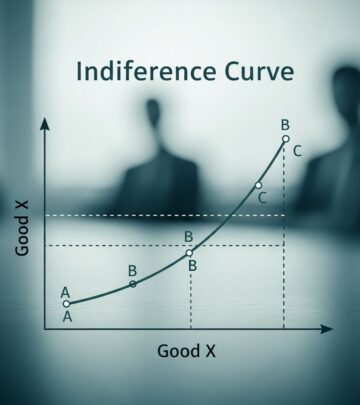
Utility can be understood through the lens of the “utility function,” which represents the relationship between the quantity of a good consumed and the total satisfaction derived from that consumption. Different utility functions can illustrate various consumption patterns and preferences among consumers.
The principle of diminishing marginal utility is central to utility theory. This principle states that as a consumer consumes more units of a good, the additional satisfaction gained from each successive unit decreases. For example, the first slice of pizza might provide tremendous satisfaction, the second slice somewhat less, and by the fifth slice, the satisfaction gained from an additional slice is minimal.
Types of Utility
Utility can be categorized in several ways. Understanding these different types is crucial for analyzing consumer behavior and market dynamics:
Total Utility
Total utility refers to the cumulative satisfaction a consumer receives from consuming a certain quantity of a good or service. It represents the sum of all satisfaction derived from all units consumed. Total utility typically increases as consumption increases, but at a decreasing rate due to diminishing marginal utility.
For instance, if a consumer drinks one glass of water and gains 10 units of satisfaction, then drinks a second glass and gains 8 additional units of satisfaction, the total utility from consuming two glasses would be 18 units. Total utility helps economists understand overall consumer satisfaction levels and can be represented graphically with a utility curve that generally rises but may eventually plateau or decline if consumption becomes excessive.
Marginal Utility
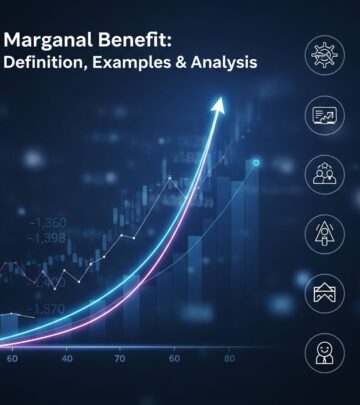
Marginal utility represents the additional satisfaction gained from consuming one more unit of a good or service. It is the change in total utility divided by the change in quantity consumed. Marginal utility is crucial in determining optimal consumption levels and pricing strategies.
The law of diminishing marginal utility states that as consumption of a good increases, the marginal utility derived from each additional unit decreases. This principle has significant implications for consumer decision-making and market pricing. For example, the marginal utility of purchasing a second smartphone is considerably lower than purchasing the first one, as the consumer already has their primary communication and computing needs met.
Positive and Negative Utility
Positive utility refers to the satisfaction or benefit gained from consuming a product. Most consumer purchases result in positive utility. However, negative utility can occur when a product or service causes dissatisfaction or harm. For example, consuming spoiled food results in negative utility due to the discomfort or illness it causes. Understanding both positive and negative utilities helps economists model realistic consumer behavior.
Cardinal vs. Ordinal Utility
Cardinal utility assumes that satisfaction can be measured in absolute numerical terms. Early economists believed utility could be quantified with specific units. Ordinal utility, on the other hand, suggests that while exact measurements may not be possible, consumers can rank their preferences. Modern economics predominantly uses ordinal utility, recognizing that consumers can order their preferences without assigning specific satisfaction values.
Forms of Utility
Beyond the main categories, utility exists in several forms based on how it is created or experienced:
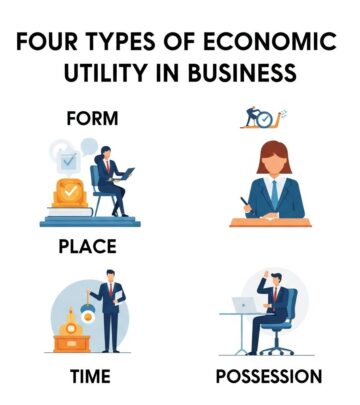
- Form Utility: Created when raw materials are transformed into finished products. A lumber company creates form utility by converting trees into usable wood products.
- Place Utility: Created by making products available at convenient locations. A convenience store creates place utility by stocking products near consumers’ homes.
- Time Utility: Created by making products available when consumers need them. Emergency services available 24/7 create time utility.
- Possession Utility: Created through the exchange or transfer of goods, allowing consumers to own and use products. Retail stores create possession utility by enabling purchases.
- Information Utility: Created by providing relevant information about products and services, helping consumers make informed decisions.
How Utility Influences Consumer Decision-Making
Utility theory explains why consumers make certain purchasing decisions. According to the principle of utility maximization, consumers attempt to allocate their income in a way that maximizes their total satisfaction given their budget constraints. This means comparing the utility gained per dollar spent on different products.
When consumers face purchasing decisions, they consider the ratio of utility to price. A product offering high utility at a reasonable price is more likely to be purchased than one offering low utility at a high price. Rational consumers continuously evaluate these trade-offs to ensure they are getting the best value for their money.
Price changes significantly impact utility-based decision-making. When prices decrease, the marginal utility per dollar spent increases, encouraging greater consumption. Conversely, price increases reduce the attractiveness of a product unless consumers have few alternatives or the product is essential.
Utility and Demand Curves
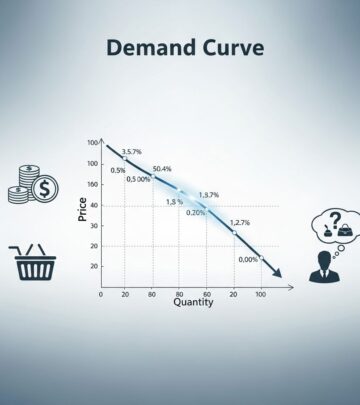
There is a direct relationship between utility and demand curves. The law of demand—which states that as price decreases, quantity demanded increases—is fundamentally rooted in utility theory. As prices fall, the marginal utility per dollar spent on a product increases, making additional purchases more attractive.
Demand curves slope downward because of diminishing marginal utility. As consumers acquire more units of a product, they are willing to pay less for additional units because each successive unit provides less additional satisfaction. This relationship between marginal utility and willingness to pay creates the negatively sloped demand curves observed in real markets.
Practical Examples of Utility
Understanding utility through real-world examples helps clarify its practical application:
Dining and Food Consumption
When dining at a restaurant, your first course provides significant satisfaction. By the third course, you are becoming fuller and the satisfaction from each additional course diminishes. This illustrates diminishing marginal utility in food consumption, which is why all-you-can-eat restaurants often see customers unable to consume unlimited amounts despite the opportunity.
Streaming Services
A consumer subscribing to a streaming service receives high utility from their first month of access to entertainment content. However, as they consume more content, the marginal utility of additional shows and movies may decrease, particularly if they’ve already watched most content relevant to their interests.
Transportation
Owning one car provides significant utility for transportation. The marginal utility of purchasing a second car is considerably lower unless the consumer has specific needs like commercial delivery. The third car would provide even less marginal utility for most consumers.
Utility in Different Economic Systems
While utility theory originated in capitalist economies, its application extends across various economic systems. In market economies, utility guides price formation and resource allocation through consumer preferences. In mixed economies, utility considerations inform both market decisions and government policy regarding public goods and services.
Understanding utility helps policymakers design effective social programs by considering what goods and services provide the greatest benefit to consumers relative to their cost. This utility-based approach can improve the efficiency of resource allocation across different economic contexts.
Frequently Asked Questions (FAQs)
Q: What is the difference between utility and value?
A: Value typically refers to the monetary worth or price of a good, while utility refers to the satisfaction or benefit derived from consuming it. A product can have high utility but low monetary value, or vice versa, depending on market conditions and individual preferences.
Q: Why is marginal utility important in economics?
A: Marginal utility helps economists understand consumer behavior, determine optimal pricing strategies, and predict how changes in quantity and price affect demand. It is fundamental to understanding why consumers eventually reduce their consumption of a product despite continued availability.
Q: Can utility be measured directly?
A: Modern economics typically uses ordinal utility, which ranks preferences without assigning specific numerical values. However, economists use various methods like consumer surveys, revealed preference analysis, and econometric modeling to estimate utility indirectly.
Q: How does utility relate to pricing?
A: Consumers are willing to pay prices proportional to the utility they expect to receive. Sellers set prices considering the utility consumers derive from products. When marginal utility per dollar spent is high, demand increases; when it’s low, demand decreases.
Q: What role does utility play in advertising?
A: Advertising aims to increase consumers’ perceived utility of products. By highlighting benefits and creating emotional connections, advertisers attempt to increase the satisfaction consumers expect to gain, thereby increasing demand and willingness to pay higher prices.
Q: How do companies use utility theory in business?
A: Companies use utility theory to optimize product development, pricing strategies, and marketing campaigns. By understanding what utility different customer segments value most, businesses can tailor their offerings and pricing to maximize profitability and customer satisfaction.
Conclusion
Utility remains a cornerstone concept in economics for understanding consumer behavior and market dynamics. By analyzing how satisfaction decreases with additional consumption through the principle of diminishing marginal utility, economists can predict demand patterns, explain pricing decisions, and understand resource allocation. Whether through cardinal or ordinal measurements, and across different forms including time, place, and possession utility, this concept helps explain why consumers make the choices they do. From individual purchasing decisions to broader market trends, utility theory provides essential insights into how consumers maximize their satisfaction within budget constraints, ultimately shaping the economy’s functioning and determining which products and services succeed in the marketplace.
References
- Microeconomic Theory — Andreu Mas-Colell, Michael D. Whinston, and Jerry R. Green. Oxford University Press, 1995. A foundational text on utility theory and consumer choice.
- Principles of Economics — N. Gregory Mankiw. Cengage Learning, 2020. https://www.cengage.com/c/principles-of-economics-9e-mankiw/
- Consumer Choice and Rational Decision Making — U.S. Federal Reserve Education Resources. Board of Governors of the Federal Reserve System. https://www.federalreservehistory.org/
- The Theory of Demand — Kelvin Lancaster. Journal of Political Economy, Vol. 74, No. 4, 1966. Seminal work on modern utility and demand theory.
- Behavioral Economics and Consumer Choice — Richard H. Thaler. Princeton University Press, 2015. Explores how real consumer behavior often deviates from traditional utility theory predictions.
Similar Articles








Read full bio of Sneha Tete