Utah Mortgage Rates Today: Current Rates & Market Guide
Find current Utah mortgage rates, refinance options, and first-time buyer programs for 2025.
Current Utah Mortgage Rates Today
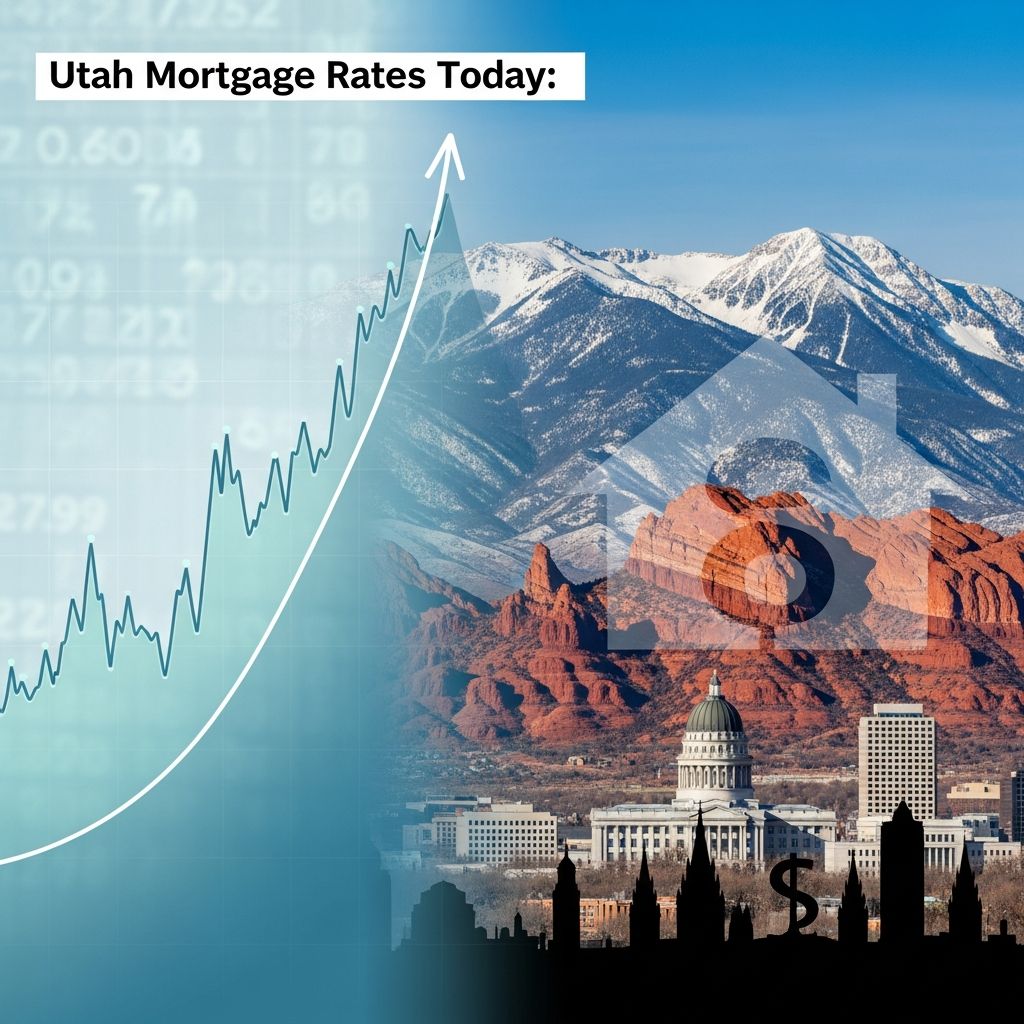
As of Saturday, November 29, 2025, mortgage interest rates in Utah reflect the broader national market trends. The current interest rate for a 30-year fixed mortgage in Utah stands at 6.24 percent, while the 15-year fixed mortgage rate is 5.72 percent. These rates represent significant changes from the historically low mortgage rates that were available during the pandemic era, when borrowers could secure mortgages below 3 percent.
The mortgage landscape has undergone substantial transformation over the past few years. Interest rates have more than doubled from their pandemic lows, though they have moderated from the peak rates reached in 2023. Financial experts anticipate that mortgage rates will remain in the 6 percent range throughout most of 2025 and into 2026, though predicting mortgage rates remains notoriously difficult due to multiple economic factors influencing the lending market.
National Mortgage Rates by Loan Type
While Utah-specific rates provide a foundation for local borrowers, it’s important to understand how Utah rates compare to national averages across different loan products. The following table outlines the current national mortgage rates as of November 29, 2025:
| Product | Interest Rate | APR |
|---|---|---|
| 30-Year Fixed Rate | 6.25% | 6.31% |
| 15-Year Fixed Rate | 5.60% | 5.69% |
| 30-Year Fixed Rate FHA | 6.04% | 6.10% |
| 30-Year Fixed Rate VA | 6.23% | 6.28% |
| 30-Year Fixed Rate Jumbo | 6.41% | 6.44% |
These rates demonstrate the variety of mortgage products available to different borrower types. FHA loans, designed for borrowers with lower credit scores or smaller down payments, offer slightly lower rates than conventional mortgages. VA loans provide competitive rates for eligible military service members, while jumbo loans for purchases exceeding conforming loan limits carry higher interest rates due to increased lender risk.
Refinance Rates in Utah
For homeowners considering refinancing their existing mortgages, current market conditions may present worthwhile opportunities depending on when they originally obtained their loans. Refinance rates in Utah, like those across the nation, have recently fallen below 7 percent due to concerns about potential recession and rising inflation pressures.
If you purchased your home within the last few years during the period when rates hovered near 8 percent, refinancing into current rates could result in meaningful monthly payment reductions. However, homeowners who refinanced or initially obtained mortgages when rates were below 4 percent are unlikely to benefit from refinancing again in the near term, as current rates remain substantially higher.
The national average 30-year fixed refinance APR currently stands at 6.74%, making refinancing decisions highly dependent on individual circumstances, including how long the borrower plans to remain in their home and the refinancing costs involved.
Utah Housing Market and Mortgage Statistics
Understanding the current state of the Utah real estate market provides important context for mortgage decisions. Utah presents unique challenges and opportunities for homebuyers compared to national trends.
Key Market Statistics
The Utah housing market continues to evolve with several important metrics reflecting market conditions as of September 2025:
- Median home sales price (September 2025): $587,100
- Median home value (August 2025): $543,817
- Median down payment (July 2025): $202,000
- Median days on market (September 2025): 55 days
- Percentage of homes sold above list price (September 2025): 19%
- Percentage of homes with price drops (September 2025): 32%
- Homeownership rate (Q1 2025): 68.1%
Market Trends and Analysis
Utah’s real estate market presents a mixed picture for potential homebuyers. The median home sale price in Utah exceeds the U.S. median by more than $150,000, reflecting the state’s desirable location and growing population. Home prices have experienced significant growth, increasing by 7.1 percent over the past year, demonstrating continued appreciation in the market.
However, recent data suggests that the market may be slowly cooling from its peak intensity. Houses are spending longer on the market—averaging 55 days as of September 2025—and a shrinking percentage of homes are selling above their asking prices. Additionally, the percentage of homes receiving price reductions has increased to 32 percent, indicating that sellers are becoming more flexible on pricing as buyer demand moderates.
Utah Conventional Mortgage Requirements
For borrowers seeking conventional mortgages in Utah, lenders have established specific qualification criteria that potential buyers must meet. These requirements ensure that lenders approve mortgages only to borrowers demonstrating sufficient creditworthiness and financial capacity to repay.
To qualify for a conventional mortgage in Utah, you must maintain a minimum credit score of 620 and demonstrate a debt-to-income (DTI) ratio of no more than 45 percent. Your DTI ratio represents the percentage of your gross monthly income consumed by debt payments, including the proposed mortgage payment.
If you plan to make a down payment of less than 20 percent, you will be required to pay private mortgage insurance (PMI). This insurance protects the lender if you default on the mortgage and typically ranges from 0.3 to 1.5 percent of the loan amount annually, depending on your credit score and down payment size. PMI can be removed once you accumulate sufficient equity in the home, typically after reaching 20 percent equity through a combination of down payment and principal payments.
Utah Loan Limits by County
Understanding conforming and FHA loan limits is essential when planning your mortgage in Utah, as these limits vary by county and affect your borrowing capacity and available loan programs.
Most Utah counties maintain a conforming loan limit of $806,500 as established by the Federal Housing Finance Agency (FHFA). This limit applies to conventional mortgages backed by Fannie Mae or Freddie Mac. FHA loan limits, set by the U.S. Department of Housing and Urban Development (HUD), vary more substantially by county based on area median home prices.
However, certain Utah counties with higher median home prices have increased loan limits. Summit County and Wasatch County both have FHJA conforming limits of $1,149,825, reflecting the higher cost of homes in these mountain resort communities. Wayne County offers a unique $997,050 limit for both conventional and FHA mortgages. Most other counties maintain standard limits, though some variation exists in FHA limits based on local housing costs.
Understanding your county’s specific loan limits is crucial because mortgages exceeding conforming limits are classified as jumbo loans, which typically carry higher interest rates and more stringent qualification requirements.
First-Time Homebuyer Programs in Utah
Utah offers several valuable programs designed to help low- and moderate-income first-time homebuyers overcome the barriers to homeownership. These programs are administered through the Utah Housing Corporation, the state’s official housing finance authority.
FirstHome Mortgage Program
The FirstHome mortgage program provides a competitive interest rate specifically designed for first-time homebuyers who demonstrate responsible credit management. To qualify, applicants must have a minimum credit score of 660 or better. This program removes some of the burden associated with obtaining a competitive rate as a first-time buyer and can result in significant interest savings over the life of the loan.
First-Time Homebuyer Assistance Program
The First-Time Homebuyer Assistance Program offers direct financial support to qualified borrowers seeking to purchase newly-constructed homes. Under this program, eligible borrowers can receive up to $20,000 in assistance funds, which can be applied toward down payment or closing costs.
The program comes with specific requirements: the home’s purchase price cannot exceed $450,000, and the property must be newly constructed. A unique feature of this assistance is that the funds do not require repayment if you retain ownership of the home. However, if you sell the property within the program period, you may be required to repay some or all of the assistance funds, depending on the specific program guidelines.
Steps to Get Preapproved for a Mortgage in Utah
For any buyer entering the Utah real estate market, obtaining a mortgage preapproval represents a critical step in the home-buying process. A preapproval accomplishes multiple important objectives that strengthen your position as a buyer.
First, mortgage preapproval provides you with accurate loan pricing tailored to your specific financial situation, including your credit score, down payment amount, and debt obligations. This personalized information helps you understand exactly what monthly payments you can afford and what price range of homes to pursue.
Second, having a preapproval letter demonstrates to sellers that you are a serious and qualified buyer. In competitive markets, this can give your offers a significant advantage over buyers without preapprovals. Sellers are more likely to accept offers from preapproved buyers because they know the sale is less likely to fall through due to financing issues.
Third, the preapproval process provides an opportunity to shop around among multiple lenders. Different lenders may offer varying rates and terms, and comparing preapprovals from several institutions can help you secure the best possible loan terms. Taking time to compare lenders during the preapproval phase can result in substantial savings throughout your mortgage’s life.
Additional Resources for Utah Homebuyers
Utah presents numerous resources and tools designed to help both first-time and experienced homebuyers navigate the mortgage and homebuying process successfully. These resources cover important topics ranging from loan limits to insurance options.
Utah Loan Limits by County: Research the conforming loan limit specific to your city or town to understand borrowing capacity limits for different mortgage types.
How to Buy a House in Utah: Access comprehensive guides that prepare you for a successful house hunt in the Utah market, covering everything from financial preparation to closing day procedures.
Best Homeowners Insurance Companies in Utah: Compare and evaluate recommended carriers offering homeowners insurance policies in Utah to protect your investment appropriately.
Frequently Asked Questions About Utah Mortgage Rates
Q: What are the current mortgage rates in Utah?
A: As of November 29, 2025, the current interest rate for a 30-year fixed mortgage in Utah is 6.24 percent, while the 15-year fixed mortgage rate is 5.72 percent. These rates reflect current market conditions and may change daily based on economic factors.
Q: How do Utah rates compare to national mortgage rates?
A: Utah rates are competitive with national averages. The national 30-year fixed rate stands at 6.25 percent with a 6.31 percent APR, making Utah rates virtually identical to the national average.
Q: Should I refinance my existing mortgage in Utah?
A: Refinancing makes sense if you obtained your original mortgage when rates were significantly higher—particularly around 8 percent. However, if you already have a rate below 4 percent, refinancing is unlikely to provide savings given current rates. Calculate your break-even point by comparing refinancing costs to potential monthly savings.
Q: What credit score do I need for a conventional mortgage in Utah?
A: To qualify for a conventional mortgage in Utah, you need a minimum credit score of 620. However, higher credit scores typically qualify for better interest rates and terms. Your debt-to-income ratio must not exceed 45 percent.
Q: What are the loan limits for different Utah counties?
A: Most Utah counties have a conforming loan limit of $806,500. However, Summit County and Wasatch County have higher limits of $1,149,825, while Wayne County has a limit of $997,050. FHA limits vary by county based on local housing costs.
Q: What first-time homebuyer programs are available in Utah?
A: Utah Housing Corporation offers the FirstHome mortgage program for buyers with credit scores of 660 or better, and the First-Time Homebuyer Assistance Program providing up to $20,000 for down payments or closing costs on newly-constructed homes priced at $450,000 or less.
Q: What is private mortgage insurance (PMI)?
A: PMI is required when your down payment is less than 20 percent. It protects the lender if you default and typically costs between 0.3 to 1.5 percent of the loan amount annually. PMI can be removed once you build 20 percent equity in your home.
Q: Why is mortgage preapproval important?
A: Mortgage preapproval provides accurate pricing for your situation, demonstrates to sellers that you’re a serious buyer, and allows you to shop rates among multiple lenders. This process significantly strengthens your position in the home-buying process.
Q: How much has the Utah median home price increased?
A: The median home sales price in Utah is $587,100 as of September 2025, representing an increase of 7.1 percent over the past year. The median home value stands at $543,817 as of August 2025.
Q: What is Utah’s current homeownership rate?
A: Utah’s homeownership rate in Q1 2025 is 68.1 percent, indicating strong homeownership relative to national averages and reflecting the state’s attractive housing market.
References
- Current Utah Mortgage & Refinance Rates — Bankrate. 2025-11-29. https://www.bankrate.com/mortgages/mortgage-rates/utah/
- 2025 Utah Conforming and FHA Loan Limits by County — Bankrate. 2025. https://www.bankrate.com/mortgages/utah-jumbo-loan-limits-by-county/
- Compare Current Mortgage Rates for Today — Bankrate. 2025-11-29. https://www.bankrate.com/mortgages/mortgage-rates/
- Compare 30-Year Mortgage Rates Today — Bankrate. 2025-11-29. https://www.bankrate.com/mortgages/30-year-mortgage-rates/
- Today’s 30-Year Refinance Rates — Bankrate. 2025. https://www.bankrate.com/mortgages/30-year-refinance-rates/
Similar Articles








Read full bio of Sneha Tete