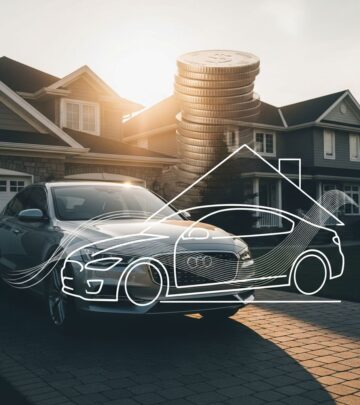
Using Home Equity to Finance Your Car Purchase
Explore whether tapping into your home's equity for a car loan makes financial sense, weighing risks, rates, and smarter alternatives.

Homeowners facing high auto loan rates often consider leveraging their property’s value to fund a vehicle purchase. This approach provides access to funds through home equity loans or lines of credit, potentially at better terms than standard car financing. However, putting a depreciating asset like a car against your home’s stability demands careful evaluation.
What Does It Mean to Borrow Against Your Home Equity?
Home equity represents the portion of your property’s current market value that you own outright, calculated as the home’s appraised value minus any outstanding mortgage balance. For instance, if your house is worth $400,000 and you owe $250,000, your equity totals $150,000. Lenders typically allow borrowing up to 80-90% of this amount, depending on creditworthiness and property type.
A home equity loan delivers a one-time lump sum repaid in fixed monthly installments over 5 to 30 years. Alternatively, a home equity line of credit (HELOC) functions like a credit card, letting you draw funds as needed during a draw period (often 10 years), paying interest only on what you use.
Unlike auto loans restricted to vehicle purchases, these products offer unrestricted use. You can apply the cash toward a car without lender oversight, providing flexibility for other needs too.
Key Differences: Home Equity Financing vs. Traditional Auto Loans
Understanding distinctions helps assess suitability. Home equity options secure against your residence, enabling longer terms and often lower rates, while auto loans tie to the vehicle with shorter durations.
| Feature | Auto Loan | Home Equity Loan | HELOC |
|---|---|---|---|
| Collateral | Vehicle | Home | Home |
| Term Length | 2-7 years | 5-30 years | Draw: 5-10 years; Repay: 10-20 years |
| Rate Type | Fixed | Fixed | Variable |
| Typical Rates (2026 est.) | 5-10% | 4-8% | 4-9% (tied to prime rate) |
| Fees | 1-2% origination | 2-5% closing costs | 1-5% closing + annual fees |
| Tax Deductible? | No | Possibly (if used for home improvements) | Possibly (same caveat) |
Data indicates home equity products comprised growing originations, from 1.6 million in 2018 to over 2 million annually by 2022, though only about 7% funded vehicles. This rarity underscores it’s not the norm for car buys.
Potential Benefits of Financing a Car with Home Equity
- Lower Monthly Payments: Extended terms spread costs. A $30,000 car loan at 6 years might demand $500/month at 7% interest, but a 20-year home equity loan could drop it to $200/month.
- Competitive Interest Rates: Secured by real estate—which appreciates unlike cars—rates are frequently lower. Borrowers with strong credit (FICO 700+) may secure 1-3% below auto rates.
- Tax Advantages: Interest on home equity debt may be deductible if itemizing, effectively reducing costs (consult IRS rules; not applicable for car purchases directly).
- Flexible Access (HELOC): Draw only what’s needed, ideal for phased payments or unexpected costs.
Calculators from financial institutions show home equity often edges out autos in total cost for larger sums over time, saving $1,000+ in present value terms.
The Serious Risks You Can’t Ignore
While appealing, the downsides are substantial, primarily due to collateralizing your home.
- Foreclosure Threat: Defaulting risks losing your house, not just repossession of a car. Vehicles depreciate rapidly (20-30% year one), amplifying mismatch.
- Closing Costs Sting: Expect 2-5% upfront ($1,000-$2,500 on $50,000), dwarfing auto loan fees.
- Market Volatility: Falling home values could leave you owing more than the property’s worth, trapping equity.
- Extended Debt Horizon: 30-year terms mean paying interest on a car long after it’s worthless, inflating total cost.
- Opportunity Cost: Ties up equity better used for appreciating assets or emergencies.
Statistics reveal minimal adoption: Just 0.25% of 56 million annual car sales (circa 2017) used equity financing, favoring cash or dealer loans. Promotional auto rates from manufacturers often beat equity for qualified buyers.
Real-World Cost Comparison Scenarios
Consider a $35,000 car purchase (including taxes/fees). Assumptions: 720 FICO, 7% auto rate, 6% equity rate, 3% down.
| Loan Type | Term | Monthly Payment | Total Interest | Upfront Fees |
|---|---|---|---|---|
| Auto Loan | 60 months | $660 | $5,600 | $350 |
| Home Equity Loan | 15 years | $295 | $18,100 | $1,050 |
| HELOC (full draw) | 10 years repay | $450 | $9,000 | $1,050 |
The auto loan wins short-term affordability despite higher payments; equity shines for cash flow but balloons interest over decades.
When Might This Strategy Make Sense?
Rarely ideal for depreciating cars, but viable in niches:
- High equity, low loan-to-value (<60%).
- Excellent credit securing sub-5% rates vs. poor auto options (10%+).
- Debt consolidation bundling car with high-interest cards.
- Luxury/exotic vehicles where auto financing is costlier.
- Short-term HELOC draw during low-rate environments.
Avoid for used cars or if home values are stagnant/declining.
Smarter Alternatives for Vehicle Financing
- Personal Loans: Unsecured, 5-7% rates for top credit, no collateral risk.
- 0% Dealer Promotions: Capitalize on manufacturer incentives.
- Cash-Out Refinance: If rates drop, but still home-secured.
- Save and Buy Outright: Builds wealth, avoids all debt.
- Lease Instead: Lower upfront, preserves equity.
Pre-qualify multiple lenders; check credit reports via AnnualCreditReport.com.
Frequently Asked Questions (FAQs)
Can I use a home equity loan specifically for a car?
Yes, funds are unrestricted post-disbursement.
Are HELOC rates fixed?
No, typically variable, tied to indexes like prime rate.
Is interest tax-deductible for car buys?
Only if used for home improvements; car purchases don’t qualify.
How much equity do I need?
Usually 15-20% minimum after borrowing.
What if I default?
Risks foreclosure on your home.
Is this common?
No, only ~7% of equity loans fund autos.
Final Thoughts Before Deciding
Run personalized calculators (e.g., from banks/credit unions) factoring your rates, equity, and timeline.[10] Prioritize preserving home security for a depreciating purchase. Consult a financial advisor for tailored advice, especially amid 2026 rate fluctuations.
References
- Should you use a home equity loan to buy a car? — Better Mortgage. 2023. https://better.com/content/home-equity-loan-to-buy-a-car
- Using a Home Equity Loan to Buy a Car — Mortgage Calculator. 2023. https://www.mortgagecalculator.org/calcs/home-equity-vs-auto-loan.php
- Home equity loan vs. vehicle loan when buying a car — myFICO. 2023. https://www.myfico.com/credit-education/financial-calculators/home-equity-loan-vs-vehicle-loan
- Auto Loan vs. Home Equity Loan Calculator — Fifth Third Bank. 2023. https://www.53.com/content/fifth-third/en/personal-banking/planning/financial-calculators/61-auto-loan-vs-home-equity-calculator.html
- Home Equity vs. Auto Loan Calculator — WESTconsin Credit Union. 2023. https://www.westconsincu.org/resources/tools/calculators/auto-loan-calculators/home-equity-vs-auto-loan-calculator
Similar Articles








Read full bio of Sneha Tete