Using Checks with Outdated Addresses
Discover if it's safe and legal to use personal checks showing your old address after moving, and learn best practices for financial transactions.

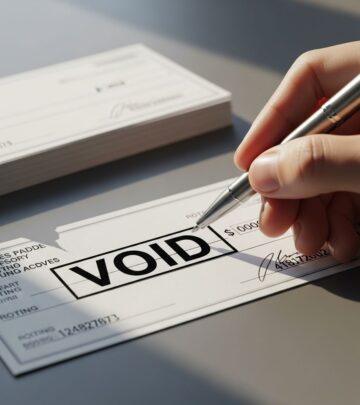
Personal checks bearing an old address remain valid for use in most cases, as banks primarily verify account details like the routing and account numbers rather than the printed address. This flexibility accommodates frequent moves without immediate reprinting needs.
Legal Validity of Checks with Former Addresses
Under U.S. banking regulations, the Uniform Commercial Code (UCC) governs check processing, emphasizing the drawer’s signature, date, payee, amount, and bank identifiers over personal details like addresses. An outdated address does not invalidate a check unless it raises fraud suspicions or mismatches verified account holder data.
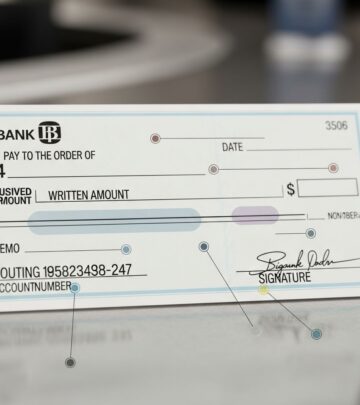
Merchants and banks focus on magnetic ink character recognition (MICR) lines at the check’s bottom, which encode routing, account, and check numbers. These elements confirm funds availability, making the imprinted street address secondary. For instance, if a check clears through the automated clearing house (ACH) system, address discrepancies rarely trigger rejection.
- Checks process via MICR data, ignoring printed addresses.
- UCC Article 3 prioritizes essential elements for negotiability.
- Only extreme mismatches, like name alterations, prompt holds.
How Banks and Merchants Handle Address Mismatches
Financial institutions verify payer identity against their records during deposits or cashes. If the account matches and sufficient funds exist, an old address poses no barrier. Post-deposit, electronic verification occurs rapidly, often within seconds.
However, some retailers impose stricter policies, requesting photo ID matching the check’s details. A clear discrepancy might lead to refusal, though this varies by merchant risk tolerance. Larger chains often accept checks regardless, relying on bank guarantees.
| Entity | Typical Policy | Verification Method |
|---|---|---|
| Banks | Accept if account matches | MICR + signature |
| Merchants | May require ID | Visual + bank call if needed |
| Government Payments | Strict ID match | Multiple docs |
Potential Risks and Precautions When Using Old Checks
While generally safe, risks include delayed processing if manual reviews flag inconsistencies, or fraud alerts if the address links to stolen checks. To mitigate, carry ID proving current residency and inform payees of your move.
Reprinting checks costs $20–50 for 100–200 units, but digital payments like ACH transfers or apps reduce reliance on paper checks. Transition gradually to avoid unnecessary expenses.
- Carry driver’s license or utility bill as backup.
- Opt for electronic alternatives for high-value payments.
- Monitor account statements post-transaction.
Updating Addresses on Credit Reports After a Move
Credit bureaus like Experian, Equifax, and TransUnion pull address data from creditors, not directly from you. Notify lenders of changes; they report updates monthly, typically within 30–45 days.
Old addresses persist as historical identifiers without affecting scores, which ignore location data entirely. P.O. boxes or joint account addresses may also appear legitimately.
Expediting Credit Report Address Changes
For faster updates, submit proof directly to bureaus: utility bills, leases, or bank statements dated within 60–90 days, plus photo ID. Online disputes process quickest.
- Gather documents: ID, recent bills.
- File online via bureau portals.
- Track with confirmation numbers.
Disputing Unrecognized or Incorrect Addresses
Unfamiliar addresses signal potential identity theft. Dispute immediately online, by mail, or phone. Bureaus investigate within 30 days, contacting data furnishers.
Common legitimate sources include authorized user accounts, past mailing addresses, or employer links. Removal isn’t always possible or necessary if verified accurate.
If denied, escalate to the Consumer Financial Protection Bureau (CFPB) with records.
Step-by-Step Guide to Updating Financial Records
Comprehensive updates prevent old data reappearance. Contact all entities holding your info.
Notify Key Institutions
- Banks and credit cards: Online portals or calls.
- Utilities and insurers: Written confirmation.
- IRS and SSA: Form 8822 for tax address.
- Voter registration: Local election office.
Credit Bureau Submission Process
| Bureau | Online Method | Mail Requirements |
|---|---|---|
| Experian | Dispute portal + uploads | ID + 2 proofs |
| Equifax | Online dispute | Certified mail |
| TransUnion | Service center | 2 address docs |
Impact on Credit Scores and Financial Health
Addresses bear no weight in FICO or VantageScore models, which evaluate payment history (35%), amounts owed (30%), and length of history (15%). Focus on timely payments over address accuracy.
Accurate records aid fraud detection; outdated info might delay new account approvals if verifiers note discrepancies under FCRA rules.
Alternatives to Traditional Checks in 2026
With digital adoption rising, consider Zelle, Venmo, or bank bill pay for address-agnostic transfers. Billions in checks still circulate, but fintech reduces paper use by 10% yearly.
- Pros: Instant, trackable, no printing costs.
- Cons: Fees for some services, less tangible record.
Frequently Asked Questions
Can stores refuse my check due to an old address?
Yes, merchants set policies; many overlook it if ID matches.
Does an old address hurt my credit score?
No, addresses don’t factor into scores.
How long until my new address shows on credit reports?
30–45 days after creditor reports.
What if I spot a strange address on my report?
Dispute as potential fraud.
Should I destroy old checks?
Securely shred to prevent misuse; update proactively.
Best Practices for Seamless Transitions
Forward mail via USPS, update DMV, and consolidate records. Proactive notifications ensure continuity in bill pay and statements.
In summary, old-address checks work fine short-term; prioritize creditor updates for long-term accuracy.
References
- Do You Need to Update the Address on Your Credit Report? — Experian. 2023. https://www.experian.com/blogs/ask-experian/changing-your-address-on-your-credit-report/
- Step-by-Step Guide to Fixing an Outdated Credit Report Address — Shepherd Outsourcing Services. 2024. https://www.shepherdoutsourcingservices.com/blog/remove-incorrect-address-credit-report
- How to Remove an Incorrect Address From Your Credit Report — Experian. 2023. https://www.experian.com/blogs/ask-experian/removing-an-incorrect-address-in-your-credit-report/
- How To Change Personal Info on Your Credit Report — LendingTree. 2024. https://www.lendingtree.com/credit-repair/how-to-change-personal-information-on-your-credit-report/
- How To Update Personal Information on Your Credit Report — Credit Karma. 2024. https://www.creditkarma.com/credit/i/update-personal-information-credit-report
- § 1022.82 Duties of users regarding address discrepancies — Consumer Financial Protection Bureau. 2010 (last updated 2023). https://www.consumerfinance.gov/rules-policy/regulations/1022/82
Similar Articles








Read full bio of Sneha Tete