Using Your Car as Collateral for a Personal Loan
Explore how to use your vehicle as collateral for a personal loan and weigh the risks and benefits.

Can You Use Your Car as Collateral for a Personal Loan?
If you need extra cash and own a vehicle with substantial equity, using your car as collateral for a personal loan can be a viable option. This approach allows you to borrow money while leveraging the value of an asset you already own. However, this strategy comes with significant considerations, including the potential risk of losing your vehicle if you fail to repay the loan. Understanding the mechanics of using your car as collateral, the different loan types available, and the associated advantages and disadvantages is essential before making this financial decision.
A car can serve as collateral for a loan even if your credit score is relatively low, making it an accessible option for borrowers with less-than-perfect credit histories. However, this accessibility comes with the caveat that lenders can repossess your vehicle if you default on payments. The annual percentage rates on secured vehicle loans are usually lower than what unsecured lenders offer, but the financial risk is substantially greater since you could lose your primary means of transportation.
Advantages of Using Your Car as Collateral
Using your vehicle as collateral for a personal loan offers several compelling benefits that make it an attractive option for many borrowers.
Easier Approval Process
One of the most significant advantages is that you’ll have a better chance of approval, even with bad credit. Since the lender can repossess your car if you default on the loan, they face reduced risk. This security allows lenders to be more flexible with their credit requirements and approve borrowers who might otherwise be denied for unsecured personal loans.
Lower Interest Rates
Lenders base their rates on two primary factors: the likelihood that you’ll repay the debt and the value of your collateral. Since they can recoup their losses by repossessing your car, they’re typically willing to offer lower rates when your vehicle serves as collateral. This can result in substantial savings over the life of the loan, especially if you’re borrowing a significant amount.
Faster Approvals and Funding
Some auto equity and auto title lenders don’t conduct traditional credit checks, which can expedite the approval process considerably. This means you could receive same-day or next-day funding, which can be invaluable when you need cash urgently for emergencies or time-sensitive financial obligations.
Disadvantages of Using Your Car as Collateral
While there are notable benefits, using your car as collateral also carries significant risks and drawbacks that deserve careful consideration.
Risk of Repossession
The most serious consequence of defaulting on a loan secured by your vehicle is repossession. If you fall behind on payments, the lender can legally seize your collateral to repay the debt. If the car backing the loan is your only source of transportation, losing it could severely disrupt your daily life, affecting your ability to work, attend school, or handle important responsibilities. Additionally, an auto repossession on your credit report will cause severe damage to your credit score, making it harder to qualify for credit in the future.
Higher Rates Than Auto Refinance Loans
While secured personal loans backed by your car offer lower rates than unsecured personal loans, you’ll still pay a higher annual percentage rate than you would for a traditional auto refinance loan. This is because you’re increasing the amount that’s secured by your car, which changes the lender’s risk assessment.
Vehicle Must Meet Lender Requirements
Not all vehicles are eligible for financing. Lenders have specific requirements regarding factors such as the age of the vehicle, its mileage, and its overall condition. Older vehicles with high mileage or those in poor condition may not qualify, limiting your options if you drive an older car.
Risk of Negative Equity
Car values depreciate over time, and the more financing you have secured by your vehicle, the more likely you are to end up upside down on the loan. This means your car would be worth less than the loan balance, making it difficult to sell or trade in for a new vehicle in the future. This situation can trap you in a cycle of debt that’s hard to escape.
Using Your Car as Collateral When You Still Owe Money
If you have enough equity in your vehicle to meet a lender’s requirements, you may still be able to use the vehicle as collateral even when you owe money on it. This depends on the equity you have in the vehicle. If your car is worth more money than the balance of the loan debt, you have equity in the vehicle that may serve as valuable collateral for a new secured loan.
Types of Loans That Use Your Car as Collateral
Several different types of loans allow you to use your car as collateral. Each has distinct characteristics, approval requirements, and repayment terms you should carefully evaluate before choosing one.
Secured Personal Loans
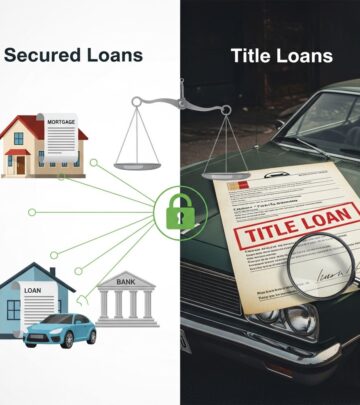
A secured personal loan is a personal loan that requires collateral—in this case, a vehicle—in exchange for borrowing money. Because the loan is backed by collateral, it can be easier to qualify for compared to unsecured personal loans. That lower risk means lenders may be willing to extend more competitive interest rates to qualified borrowers. However, very few traditional lenders offer secured personal loans, so you may have limited options and might find yourself choosing between options that don’t quite fit your specific needs.
Auto Equity Loans
An auto equity loan allows you to borrow money based on the difference between what your car is worth and what you still owe on it—known as your “equity.” For example, if your vehicle is worth $20,000 and you still owe $12,000, you have $8,000 in equity that you can borrow against. This means you can take out an auto equity loan even if you still have an active auto loan on the vehicle.
Auto equity loans often have lower interest rates and longer repayment terms than car title loans. However, not many banks offer auto equity loans, making them difficult to find. Additionally, this approach results in having two loans—your original auto loan and the auto equity loan—which could complicate your repayment schedule and financial management.
Car Title Loans
Car title loans are a more specialized type of collateral-based loan. Loan amounts are typically small and usually made only against vehicles that are paid off. You can typically only borrow between 25 and 50 percent of your car’s value. However, interest rates are normally extremely high, with some lenders charging an annual percentage rate of over 300 percent.
In addition to the high cost, most lenders require you to repay the balance in 15 to 30 days—an extremely quick timeline that few borrowers are able to manage. Car title loans are akin to payday loans in this respect, making them an especially risky financial option. They should only be used as a last resort if you need fast funding and have exhausted all other options.
Comparison of Loan Types
| Loan Type | Interest Rates | Loan Amount | Repayment Terms | Credit Requirements |
|---|---|---|---|---|
| Secured Personal Loans | Competitive, varies by lender | Varies by lender | Flexible, typically longer | May be more lenient |
| Auto Equity Loans | Lower than title loans, higher than auto refinance | Based on equity amount | Generally longer than title loans | Depends on lender |
| Car Title Loans | Very high, often over 300% APR | 25-50% of car value | Very short, 15-30 days | Minimal, mainly title ownership |
Key Considerations Before Pledging Your Vehicle
Before you decide to use your car as collateral for a personal loan, take time to carefully evaluate several important factors:
Assess Your Financial Stability
Ensure you’re in a strong enough financial position to reliably make payments on the loan. Missing payments could result in losing your vehicle, which could have cascading negative effects on your life and finances.
Evaluate Your Equity
Determine exactly how much equity you have in your vehicle and whether it meets the lender’s minimum requirements. Remember that vehicle values depreciate, so factor that into your calculations.
Compare All Available Options
Before settling on a car-backed loan, explore other borrowing options. You might qualify for an unsecured personal loan with reasonable rates, or there might be alternative solutions to your financial needs.
Understand the Terms Thoroughly
Read and understand all loan terms, including the interest rate, repayment schedule, fees, and the specific circumstances under which the lender can repossess your vehicle.
Frequently Asked Questions
Q: Can I use my car as collateral if I still owe money on an auto loan?
A: Yes, you may be able to use your car as collateral if you have enough equity in the vehicle. If your car’s value exceeds what you owe on your existing auto loan, the difference represents equity that can potentially serve as collateral for a new loan.
Q: What happens if I default on a car-backed personal loan?
A: If you default on a loan secured by your vehicle, the lender can legally repossess your car to recoup their losses. This will also damage your credit score significantly, making it harder to obtain credit in the future.
Q: Are car title loans a good option for emergency funding?
A: Car title loans should only be considered as a last resort. While they offer quick funding, the extremely high interest rates (often over 300% APR) and very short repayment terms (15-30 days) make them financially risky and difficult for most borrowers to repay.
Q: What’s the difference between an auto equity loan and a car title loan?
A: Auto equity loans are based on the difference between your car’s value and what you owe, typically have lower rates and longer terms, and may be used even if you still owe on your original auto loan. Car title loans are based on a percentage of your car’s value, have very high rates, extremely short terms, and are usually only available for paid-off vehicles.
Q: How quickly can I get funding with a car-backed personal loan?
A: Some lenders offer same-day or next-day funding, particularly for car title loans and some auto equity loans. However, the speed of funding depends on the specific lender and loan type you choose.
Q: What factors determine if my car is eligible for a secured loan?
A: Lenders consider factors such as the vehicle’s age, mileage, overall condition, current market value, and whether any existing liens are on the vehicle. Each lender has specific eligibility requirements.
Making Your Decision
Using your car as collateral for a personal loan can be an effective way to access funds at a lower interest rate, especially if you have bad credit or need quick funding. However, the risk of losing your vehicle makes this option suitable primarily for borrowers who are confident in their ability to repay the loan on schedule.
Before proceeding, carefully weigh the advantages against the disadvantages, explore alternative financing options, and ensure that pledging your vehicle aligns with your overall financial strategy and stability. Consider consulting with a financial advisor to determine whether this borrowing method is appropriate for your specific situation.
References
- Can I Use My Car As Collateral For A Personal Loan? — Bankrate. 2024. https://www.bankrate.com/loans/personal-loans/using-car-as-collateral-for-personal-loan/
- What is an Auto Equity Loan and How Does it Work? — OneMain Financial. 2024. https://www.onemainfinancial.com/resources/loan-basics/what-is-an-auto-equity-loan
- What Are Secured Loans And How Do They Work? — Bankrate. 2024. https://www.bankrate.com/loans/personal-loans/what-is-a-secured-loan/
- How Secured Auto Loans Work — Bankrate. 2024. https://www.bankrate.com/loans/auto-loans/secured-auto-loans/
- 8 types of personal loans and their uses — Bankrate. 2024. https://www.bankrate.com/loans/personal-loans/types-of-personal-loans/
Similar Articles








Read full bio of Sneha Tete