How to Use Your Home Equity to Pay Off Debt
Leverage your home equity with HELOCs and home equity loans to consolidate debt and secure lower interest rates.

When managing debt becomes overwhelming, many people focus solely on cutting expenses and increasing income to accelerate payoff. However, one of the most powerful financial assets you may already possess could significantly transform your debt repayment strategy: your home equity.
Home equity represents the difference between your home’s current market value and the outstanding balance on your mortgage. For homeowners who have built substantial equity over time, tapping into this resource through a Home Equity Line of Credit (HELOC) or home equity loan can provide a strategic pathway to consolidating expensive debts and securing dramatically lower interest rates. This approach has experienced a resurgence in popularity, with demand for HELOCs jumping 20% since 2021 as borrowers recognize the advantages of leveraging their home’s value to address other financial obligations.
Understanding Home Equity Lines of Credits (HELOCs)
A HELOC, sometimes referred to as a second mortgage, functions as a flexible credit line secured by your home. Unlike traditional loans that disburse funds as a lump sum, a HELOC allows you to borrow and spend up to a predetermined credit limit, then repay the money according to a schedule mutually agreed upon between you and your lender.
The mechanics of a HELOC work similarly to a credit card in terms of flexibility. You establish a maximum borrowing limit based on your home’s equity, and you can draw funds as needed during the borrowing period. This flexibility distinguishes HELOCs from home equity loans, which distribute funds immediately as a single payment and begin accruing interest on the full borrowed amount right away.
Current HELOC interest rates typically start around 9%, substantially lower than the average credit card APR, which exceeds 22%. This significant rate differential creates compelling opportunities for debt consolidation, particularly for individuals carrying substantial credit card balances or other high-interest obligations.
Pros and Cons of Using a HELOC to Pay Off Your Debts
Like any financial strategy, using a HELOC for debt consolidation presents both advantages and disadvantages that deserve careful consideration.
Advantages of HELOC Debt Consolidation
Lower Interest Rates: The most compelling advantage of HELOC debt consolidation is the substantial reduction in interest rates. Because you’re using your home as collateral, lenders offer significantly lower rates compared to unsecured credit products like personal loans and credit cards. This rate advantage directly translates to reduced interest payments over time and faster debt elimination.
Spending Flexibility: HELOCs come without restrictions governing how you use the borrowed funds. Whether you want to consolidate credit card debt, pay off personal loans, or address other financial obligations, the choice remains entirely yours. This flexibility extends beyond debt consolidation, as some borrowers view their HELOC as an emergency fund for unexpected expenses.
Fixed-Rate Options: While variable-rate HELOCs dominate the market, some lenders now offer fixed-rate HELOC products specifically designed for debt consolidation. These fixed-rate options allow you to lock in today’s rates and avoid future payment fluctuations.
Disadvantages of HELOC Debt Consolidation
Variable Interest Rates: Most HELOCs come with variable interest rates, meaning your monthly payments may fluctuate based on market conditions. If interest rates rise, your expected payments increase accordingly, potentially straining your budget and extending your payoff timeline. This rate uncertainty makes long-term financial planning more difficult compared to fixed-rate alternatives.
Home Value Risk: By using your home as collateral, you create a potentially dangerous scenario if your home’s value declines. Should your property value drop significantly, you could find yourself owing more than your home is worth—a situation known as being underwater on your mortgage. This underwater status can complicate future refinancing or home sales.
Temptation to Accumulate More Debt: HELOCs typically allow borrowing up to 85% of your home’s total equity. For homeowners with substantial equity, this can mean access to enormous credit lines. A homeowner with $150,000 in equity, for example, could access up to $127,500. This abundant available credit can tempt borrowers to take on additional debt beyond their original consolidation goals, perpetuating problematic spending patterns. Financial advisors often counsel clients to carefully examine whether accessing such substantial credit lines aligns with their actual needs.
Closing Costs and Fees: Obtaining a HELOC involves upfront expenses including application fees, appraisal costs, and origination fees. These costs can reach several hundred to several thousand dollars depending on your loan amount and lender, reducing the net benefit of the lower interest rate.
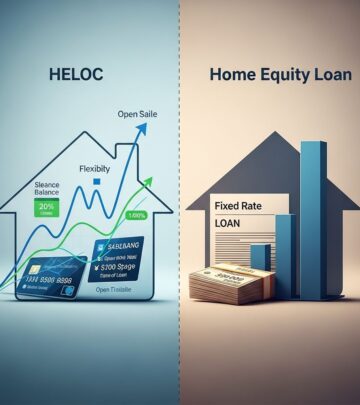
Comparing HELOCs and Home Equity Loans
While both products leverage your home’s equity, they serve different purposes and borrower preferences:
| Feature | HELOC | Home Equity Loan |
|---|---|---|
| Disbursement | Flexible, draw as needed | Lump sum payment |
| Interest Rate | Usually variable | Fixed or variable |
| Payment Structure | Interest-only initially, then principal + interest | Principal + interest from start |
| Best For | Ongoing access to credit, flexibility | One-time needs, predictable payments |
| Ideal Use Case | Emergency funds, multiple debts | Single debt consolidation |
Step-by-Step Guide: How to Use a HELOC to Pay Off Your Loans
Successfully using a HELOC for debt consolidation requires following a strategic process from application through final repayment.
Step 1: Determine Your Available Equity
Before applying, calculate your home equity by subtracting your remaining mortgage balance from your home’s current market value. Most lenders allow you to borrow up to 85% of this equity amount.
Step 2: Assess Qualification Requirements
Lenders evaluate your creditworthiness through several metrics. Your debt-to-income ratio plays a crucial role in approval decisions. This ratio, calculated by dividing your total monthly debt payments by your gross monthly income, shows lenders whether you can comfortably afford additional payments. For example, if you earn $6,000 monthly and carry $2,500 in monthly debt obligations, your debt-to-income ratio would be 42%. Most lenders prefer ratios below 43%, though this varies by institution.
Step 3: Apply and Cover Upfront Costs
During the application process, prepare to pay origination fees, application fees, and appraisal costs. These upfront expenses vary by lender and loan amount but represent necessary investment in accessing your home’s equity.
Step 4: Begin the Draw Period
Once your HELOC is funded, you enter the borrowing or draw period, typically lasting five to ten years. During this phase, you can withdraw funds as needed. Depending on your HELOC agreement, you may be required to take an initial minimum withdrawal or maintain minimum draw amounts with each transaction. As soon as you receive these funds, use them to pay off your existing high-interest debts completely.
Step 5: Make Strategic Payments During the Draw Period
During the draw period, you have the option to make interest-only payments or pay down both principal and interest. While interest-only payments minimize your monthly obligations, they don’t reduce your principal balance. To avoid balloon payments and unmanageable obligations later, financial experts recommend paying more than interest to steadily reduce your principal. This disciplined approach prevents future payment shock and ensures genuine debt elimination rather than mere postponement.
Step 6: Enter the Repayment Period
After the draw period concludes, you enter the repayment period, which typically lasts ten to fifteen years. During this phase, you no longer have access to the credit line and must pay off your remaining balance. If prepayment penalties don’t apply, consider paying off your HELOC early to minimize total interest paid. However, check your agreement carefully, as some lenders charge prepayment penalties that could offset early payoff benefits.
When to Choose a Home Equity Loan Instead
If you’ve carefully calculated that you need a specific amount to consolidate your debts and don’t anticipate needing additional credit access, a home equity loan may serve you better than a HELOC. Home equity loans provide a fixed lump sum, allowing you to borrow exactly what you need and nothing more. This structure eliminates temptation to borrow excessively and provides payment certainty from day one, as most home equity loans feature fixed interest rates and fixed monthly payments similar to traditional mortgages.
Frequently Asked Questions About Home Equity Debt Consolidation
Q: How much can I borrow against my home equity?
A: Most lenders allow you to borrow up to 85% of your home’s equity. Your specific borrowing limit depends on your home’s appraised value, your remaining mortgage balance, and your lender’s risk assessment.
Q: Will using a HELOC affect my credit score?
A: Opening a HELOC involves a hard inquiry and new account, which may temporarily reduce your credit score. However, using a HELOC for debt consolidation can ultimately improve your score by reducing your credit utilization ratio and demonstrating responsible debt management.
Q: What happens if my home value decreases?
A: If your home’s value drops significantly, you could end up owing more than your home is worth. This underwater status can complicate future refinancing or home sales and increases your financial risk.
Q: Can I pay off my HELOC early without penalties?
A: Some lenders allow penalty-free early payoff, while others charge prepayment penalties. Review your HELOC agreement carefully before making early payments, or ask your lender about their prepayment policies.
Q: Is a HELOC better than a personal loan for debt consolidation?
A: HELOCs typically offer lower interest rates than personal loans because they’re secured by your home. However, this also means using your home as collateral, which increases risk. Personal loans provide unsecured borrowing with higher rates but no home collateral at risk.
Q: What should I do with my HELOC after consolidating my debt?
A: Many financial advisors recommend maintaining your available credit line as an emergency fund for unexpected expenses. This prevents you from accumulating new debt through credit cards if emergencies arise. Others prefer to avoid temptation by not carrying an active HELOC.
Key Considerations Before Using Home Equity for Debt Consolidation
Before proceeding with a HELOC or home equity loan, honestly assess your spending habits and financial discipline. Using home equity to consolidate debt only works if you address the underlying behaviors that created the debt. If you consolidate credit card debt but then resume using those cards, you’ll end up carrying both the home equity debt and new credit card balances—substantially worsening your financial situation.
Additionally, carefully evaluate whether the interest savings justify the upfront costs and risk of using your home as collateral. Calculate the total interest you’ll pay with a HELOC versus maintaining current debts, factoring in origination fees and other closing costs. Sometimes refinancing your mortgage to a lower rate provides better value than a HELOC.
Home equity debt consolidation can be an effective strategy for managing high-interest debt, but it requires careful planning, honest self-assessment, and disciplined execution. For homeowners with substantial equity and genuine commitment to debt elimination, the interest rate advantages and psychological benefits of consolidating multiple payments into one often justify pursuing this strategy.
References
- How to Use Your Home Equity to Pay Off Debt — Money.com. 2025. https://money.com/use-home-equity-to-pay-off-debt/
- Pros and Cons of Using a HELOC to Consolidate Your Debt — Money.com. 2025. https://money.com/heloc-to-consolidate-debt-pros-cons/
- How to Get a Home Equity Loan — Money.com. 2025. https://money.com/get-a-home-equity-loan/
- What Is Debt Consolidation and How Does It Work? — Money.com. 2025. https://money.com/understanding-debt-consolidation/
- Federal Reserve Bank of New York – Credit and Liquidity Programs and the Federal Reserve Balance Sheet — Federal Reserve System. 2024. https://www.newyorkfed.org/
- Consumer Financial Protection Bureau – HELOC and Home Equity Loan Resources — U.S. Consumer Financial Protection Bureau. 2024. https://www.consumerfinance.gov/
Similar Articles








Read full bio of medha deb