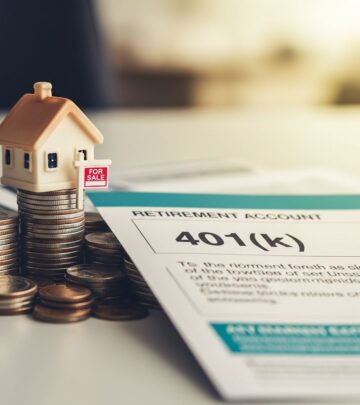
Can I Use My 401(k) To Buy A House: 2 Smart Options
Learn how to tap your 401(k) for a down payment and understand the tax implications.

Can I Use My 401(k) To Buy a House?
Saving enough money for a down payment on a house represents one of the largest financial hurdles prospective homeowners face today. According to recent data, the average home price in the United States has climbed significantly, making the initial down payment requirement increasingly challenging for many buyers. The Federal Housing Administration (FHA) requires a minimum down payment of 3.5%, while many conventional lenders insist on at least 5%. When you place less than 20% down, you’ll be required to pay private mortgage insurance (PMI), which substantially increases your monthly mortgage payments and overall borrowing costs.
Given these substantial financial barriers, many potential homebuyers wonder whether they can access their 401(k) retirement savings to help bridge the gap. The answer is yes—but the decision to do so requires careful consideration of the long-term financial consequences and available alternatives.
Understanding Down Payment Requirements
The down payment landscape varies depending on the type of mortgage you pursue. FHA loans allow qualified borrowers to put down as little as 3.5% of the purchase price, making them an attractive option for those with limited cash reserves. However, conventional mortgages typically require 5% to 20% down, depending on your creditworthiness and financial profile. For a home priced at $430,000—near the national average—even a 5% down payment would require $21,500, which many first-time buyers simply don’t have available.
Understanding these baseline requirements helps illustrate why some buyers turn to their 401(k) accounts. However, before you tap into your retirement savings, it’s essential to understand the two primary methods available and their respective consequences.
Two Ways to Access Your 401(k) for a Home Purchase
If you decide to access your 401(k) for a down payment, you have two primary options: borrowing against your account balance or making an early withdrawal. Each approach has distinct advantages and disadvantages that deserve careful evaluation.
Make a Loan from Your 401(k)
Borrowing from your 401(k) is generally considered the more favorable option of the two approaches. If your employer’s retirement plan permits 401(k) loans—and not all plans do—you can typically borrow up to 50% of your vested account balance or $50,000, whichever amount is less. For account balances of $10,000 or less, some plans allow you to borrow up to your entire balance.
When you take out a 401(k) loan, you’ll need to make regular repayment installments, typically at least quarterly, with interest. The repayment period usually spans five years, though some plans may offer different terms. Importantly, the interest you pay goes back into your own account, meaning you’re essentially paying yourself back.
Advantages of 401(k) Loans
401(k) loans offer several meaningful benefits compared to early withdrawals. First, you won’t face the standard 10% early withdrawal penalty that applies to most 401(k) distributions before age 59½. Second, the loan won’t appear on your credit report or impact your credit score, which can be crucial when applying for a mortgage. Third, the borrowed funds typically don’t count toward your debt-to-income ratio, preserving your borrowing capacity for your mortgage application.
Disadvantages of 401(k) Loans
However, 401(k) loans come with significant drawbacks. You must repay the borrowed funds, which means making additional monthly payments beyond your mortgage obligation. This additional debt service can negatively impact your debt-to-income ratio calculation with mortgage lenders, potentially reducing the loan amount you qualify for or increasing your interest rate. Furthermore, if you leave your job before repaying the loan, many plans require immediate repayment in full. If you cannot pay back the borrowed amount, it’s treated as an early withdrawal, triggering both income taxes and the 10% penalty on the remaining balance.
Additionally, while your borrowed funds are outside the market, they’re not growing through investment returns. This opportunity cost—the potential growth you miss out on—can significantly impact your long-term retirement security, especially for younger workers with decades until retirement.
Make a Withdrawal from Your 401(k)
A withdrawal represents the alternative method for accessing 401(k) funds for a home purchase. The IRS allows early withdrawals before age 59½ for what it classifies as an “immediate and heavy financial need,” which can include purchasing a home. If your employer’s plan permits hardship distributions, you may qualify to withdraw funds without meeting the standard retirement age requirement.
However, financial advisors strongly recommend against this approach for most homebuyers. The tax consequences are substantial and permanent.
Advantages of 401(k) Withdrawals
The primary advantage of making a withdrawal is that you don’t need to repay the money. Unlike a loan, which creates an ongoing obligation, withdrawn funds are yours to keep. Additionally, withdrawals don’t affect your debt-to-income ratio or credit score, which means they won’t negatively impact your mortgage qualification process.
Disadvantages of 401(k) Withdrawals
The disadvantages far outweigh the benefits. Early withdrawals from your 401(k) incur a 10% penalty on the amount withdrawn, plus you must pay ordinary income taxes on the distribution. Together, these can reduce the actual amount available for your down payment by 30% to 40% or more, depending on your tax bracket. For example, a $50,000 withdrawal might net only $30,000 to $35,000 after taxes and penalties, meaning you’d need to withdraw significantly more to reach your down payment goal.
More critically, withdrawals permanently reduce your retirement savings. That $50,000 you withdraw today would have decades to grow through compound returns, potentially becoming several hundred thousand dollars by retirement. Additionally, you lose the employer match on that withdrawn amount if your employer offers matching contributions—another permanent loss of wealth-building opportunity.
How Much of Your 401(k) Can You Use?
The IRS places limits on how much you can access from your 401(k) for a home purchase within a 12-month period. You can withdraw or borrow up to $50,000 from your account during any rolling 12-month period. This maximum applies regardless of whether you’re borrowing or withdrawing, and the money can be used for the down payment and closing costs on your home purchase.
However, this $50,000 limit cannot be used to make mortgage payments after you’ve purchased the home. It’s strictly for the upfront costs associated with acquiring the property.
Better Alternatives to Consider
Before accessing your 401(k), explore these more favorable options that can help you achieve homeownership without jeopardizing your retirement.
Tap Your IRA or Roth IRA Instead
If you’re a first-time homebuyer needing $10,000 or less for a down payment, consider accessing an IRA or Roth IRA instead of your 401(k). Normally, you cannot withdraw funds from an IRA before age 59½ without incurring a 10% penalty. However, the IRS allows a special exception for qualified first-time homebuyer distributions. You can withdraw up to $10,000 from your IRA without the 10% early withdrawal penalty, provided the funds are used to buy or build your first home. While you’ll still owe income taxes on the withdrawn amount (except in a Roth IRA, where qualified distributions are tax-free), the avoided 10% penalty provides meaningful savings compared to 401(k) early withdrawals.
Pursue Government-Backed Mortgages
Government-backed home loans, including FHA, VA, and USDA mortgages, often represent excellent alternatives to raiding your retirement savings. FHA loans allow borrowers with credit scores of 580 or higher to put down as little as 3.5%, and the upfront mortgage insurance premium and ongoing PMI can be financed into your loan. This means you don’t need substantial cash reserves on hand. VA loans and USDA loans offer even more generous terms, with some VA loans requiring zero down payment for eligible borrowers. These options allow you to preserve your retirement savings while still achieving homeownership.
Postpone Your Home Purchase
While delaying homeownership requires patience and discipline, postponing your purchase until you’ve accumulated sufficient down payment savings from regular income can prove substantially beneficial. By waiting and saving methodically, you’ll avoid the tax penalties, compound growth losses, and ongoing debt obligations associated with 401(k) access. Additionally, a longer savings period allows you to improve your credit score, build your emergency fund, and strengthen your overall financial position before taking on mortgage debt.
When Accessing Your 401(k) Might Make Sense
While financial experts generally advise against using your 401(k) for a down payment, certain specific scenarios may warrant consideration. You might evaluate a 401(k) loan if you want to capitalize on rapidly appreciating home values in your local market, secure a mortgage at particularly favorable interest rates, build equity in a property sooner, or obtain a more affordable long-term housing payment. In competitive real estate markets where prices are climbing quickly, some buyers feel the urgency to purchase before being permanently priced out. However, even in these situations, thoroughly analyzing whether the benefits outweigh the retirement savings costs remains essential.
Important Considerations Before Proceeding
If you decide to pursue a 401(k) loan or withdrawal despite these cautions, several critical factors demand attention. First, confirm that your employer’s 401(k) plan actually permits loans or hardship withdrawals—not all plans do. Contact your HR department or plan administrator to understand your specific plan’s rules and requirements. Second, understand that any borrowed funds must be documented clearly for your lender, as mortgage lenders require assurance that funds used for down payments are legitimate and not undisclosed debt.
Third, carefully calculate the full impact on your debt-to-income ratio and credit profile. Even though 401(k) loans don’t directly impact your credit score, they do increase your monthly debt obligations, which affects your DTI calculation and your mortgage qualification capacity. Fourth, consider what happens if you change jobs—most plans require full repayment within 60 days if you leave employment, and failure to repay triggers significant tax consequences.
Frequently Asked Questions
Q: What is the maximum amount I can borrow from my 401(k) for a home purchase?
A: You can typically borrow up to 50% of your vested account balance or $50,000, whichever is less. For accounts with balances of $10,000 or less, you may be able to borrow your entire balance. This limit applies over any rolling 12-month period.
Q: Will a 401(k) loan affect my mortgage qualification?
A: While the loan won’t impact your credit score, it does increase your monthly debt obligations, which can negatively affect your debt-to-income ratio and reduce the mortgage amount you qualify for.
Q: What happens to my 401(k) loan if I leave my job?
A: Most plans require full repayment within 60 days if you leave employment. If you cannot repay the balance, it’s treated as an early withdrawal, subject to income taxes and a 10% penalty on the outstanding amount.
Q: Are there alternatives to using my 401(k) for a down payment?
A: Yes. Consider using a Roth IRA or traditional IRA (up to $10,000 for first-time homebuyers), pursuing an FHA, VA, or USDA loan with lower down payment requirements, or saving up your down payment gradually.
Q: How much will early withdrawal penalties cost me?
A: Early withdrawals before age 59½ are subject to a 10% penalty plus ordinary income taxes on the withdrawn amount. Combined, these can reduce your available funds by 30% to 40% or more, depending on your tax bracket.
Q: Can I use 401(k) funds for closing costs?
A: Yes. The $50,000 maximum you can access covers both down payment and closing costs associated with purchasing your home.
References
- Can I Use My 401(k) To Buy a House? — Money Magazine. 2024. https://money.com/use-401k-to-buy-a-house/
- How To Use Your 401(k) to Buy a House — Credible. 2024. https://www.credible.com/mortgage/401k-house-down-payment
- Think Twice Before Borrowing From 401(k) for a Home Down Payment — Investment News. 2024. https://www.investmentnews.com/retirement-planning/think-twice-before-borrowing-from-401k-for-a-home-down-payment-advisors-say/241461
- How to Use Your 401k to Buy a House — JVM Lending. 2024. https://www.jvmlending.com/blog/how-to-use-your-401k-to-buy-a-house/
- Thinking of Tapping Your 401(k) for a Mortgage Down Payment? — Money Magazine. 2024. https://money.com/retirement-savings-mortgage-down-payment/
- Can I Use My 401K or IRA To Buy A House? — Greenbush Financial. 2024. https://www.greenbushfinancial.com/all-blogs/using-retirement-accounts-payment-house
Similar Articles








Read full bio of Sneha Tete