US National Debt by Year: Historical Trends and Analysis
Track America's national debt growth from 1900 to today with comprehensive historical data and trends.
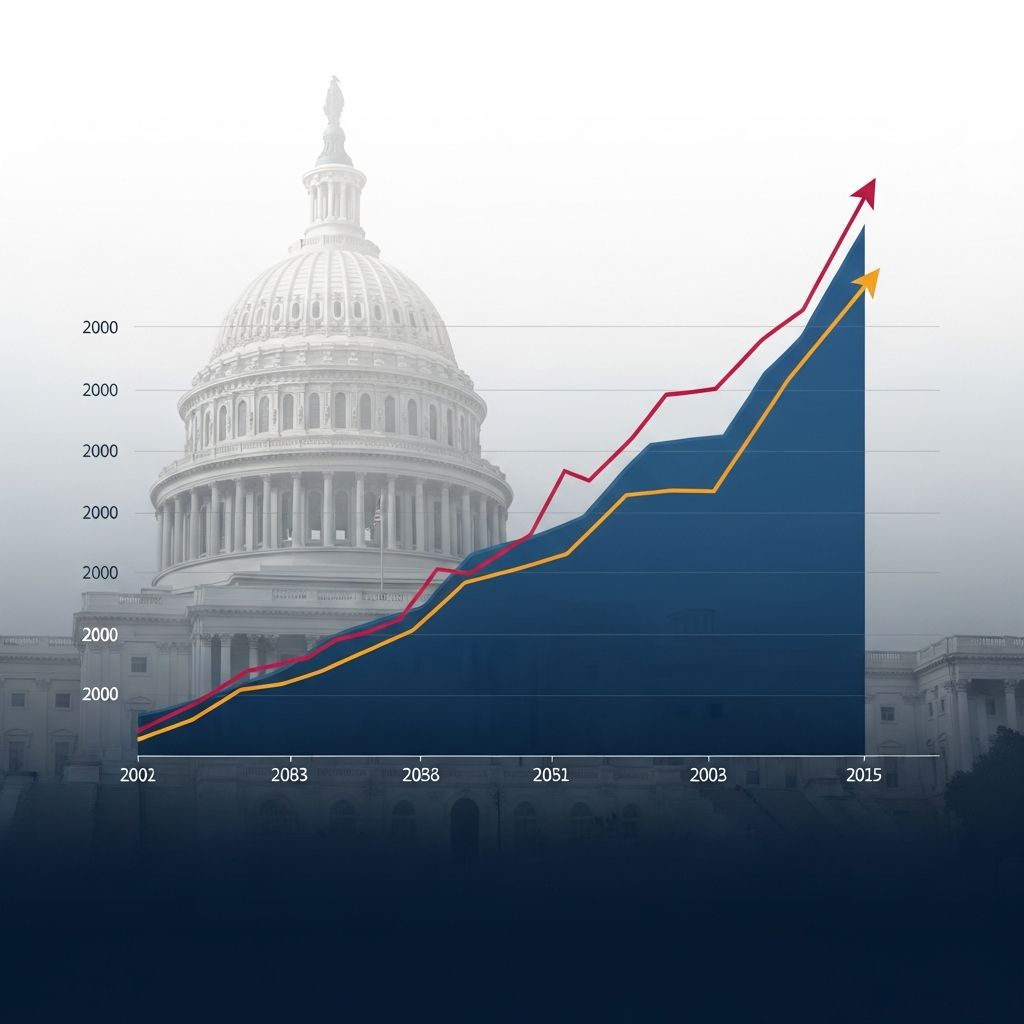
The United States national debt represents the total amount of money owed by the federal government to various creditors, including domestic and foreign investors, institutions, and governments. Understanding the historical trajectory of this debt is crucial for comprehending America’s economic health and fiscal policy decisions. This comprehensive analysis examines the US national debt by year, tracing its evolution from the early 20th century to the present day.
Understanding the US National Debt
The national debt consists of two primary components: intragovernmental holdings and public debt. Intragovernmental holdings represent money owed by one part of the federal government to another, primarily through Social Security and other trust funds. Public debt, conversely, includes obligations to private investors, corporations, state and local governments, and foreign entities. Together, these components constitute the total national debt.
The national debt serves as a critical indicator of fiscal responsibility and economic stability. When the government spends more than it collects in revenue, it must borrow to finance the deficit. This borrowing occurs through the issuance of Treasury securities, including bills, notes, and bonds. These instruments are purchased by investors seeking relatively safe, government-backed investments with predictable returns.
Why National Debt Matters
- Reflects the government’s fiscal deficit and spending patterns
- Influences interest rates and investment decisions
- Affects inflation and currency value internationally
- Impacts future tax obligations and public spending
- Signals economic confidence to global markets
Historical Overview of US National Debt
The United States national debt has experienced dramatic fluctuations throughout the 20th and 21st centuries, largely corresponding to major historical events and policy decisions. Understanding this history provides context for current debt levels and future projections.
Early 20th Century (1900-1940)
In 1900, the US national debt stood at approximately $1.3 billion, representing a relatively modest burden for the growing American economy. During the early decades of the 20th century, the debt remained relatively stable until World War I forced substantial government spending. By 1920, the national debt had surged to approximately $24 billion, reflecting the enormous costs of military mobilization and wartime expenses.
The 1920s and 1930s witnessed debt fluctuations as the nation attempted to manage post-war obligations. The Great Depression of the 1930s necessitated increased government spending through New Deal programs, pushing the national debt to approximately $43 billion by 1940. This represented a significant increase from the post-war period, as the government intervened extensively in the economy to address unemployment and economic stagnation.
World War II Era (1940-1945)
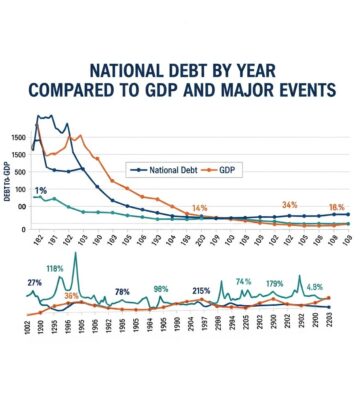
The most dramatic surge in national debt occurred during World War II. The enormous costs of financing the war effort resulted in unprecedented debt accumulation. By 1945, the national debt had skyrocketed to approximately $260 billion, representing an increase of over 500% in just five years. This represented the peak of the debt-to-GDP ratio in American history, reaching approximately 119%.
Post-War Period and Cold War (1945-1989)
Following World War II, the national debt remained substantial but grew more slowly than GDP, effectively reducing the debt-to-GDP ratio. By 1960, the national debt stood at approximately $287 billion. The sustained economic growth of the post-war period, coupled with inflation, helped reduce the relative burden of existing debt.
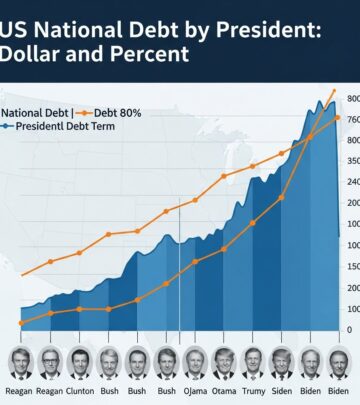
Throughout the Cold War, military spending contributed significantly to debt growth, particularly during the 1980s when defense expenditures increased under the Reagan administration. By 1989, the national debt had reached approximately $2.9 trillion, reflecting decades of cumulative deficits.
1990s Economic Growth and Budget Surpluses
The 1990s represented a unique period in recent American fiscal history. Strong economic growth, combined with fiscal discipline and tax increases, temporarily reversed the trajectory of debt accumulation. The Balanced Budget Act of 1997 helped facilitate budget surpluses in the late 1990s. By 2000, the national debt stood at approximately $3.4 trillion, but the debt-to-GDP ratio had stabilized.
Modern Era National Debt Growth (2000-Present)
2000-2008: Pre-Financial Crisis
The early 2000s witnessed renewed debt growth due to tax cuts, increased military spending following the September 11 attacks, and rising healthcare costs. By 2008, just before the financial crisis, the national debt had grown to approximately $10.0 trillion. This period demonstrated how policy decisions and unforeseen events significantly impact debt trajectories.
2008-2009: Financial Crisis and Recession
The 2008 financial crisis and subsequent Great Recession triggered massive government interventions that substantially increased the national debt. Emergency bailouts, stimulus spending, and reduced tax revenues from economic contraction combined to accelerate debt growth. By 2009, the national debt exceeded $11.9 trillion.
2010-2020: Continued Growth and COVID-19
Throughout the 2010s, the national debt continued its upward trajectory, reaching approximately $23.2 trillion by 2019. The COVID-19 pandemic in 2020 necessitated unprecedented fiscal stimulus spending, pushing the national debt past $26.9 trillion by year-end 2020. This represented one of the largest annual increases in debt history.
2021-Present: Current Debt Levels
The national debt has continued to increase, reaching approximately $33.2 trillion by 2023 and surpassing $34 trillion in 2024. This represents a compound annual growth rate that significantly outpaces economic growth, steadily increasing the debt-to-GDP ratio.
Key Factors Driving National Debt Growth
Deficit Spending
The fundamental driver of national debt accumulation is deficit spending—when government expenditures exceed revenues. Persistent budget deficits, sometimes exceeding $1 trillion annually in recent years, require government borrowing to finance the shortfall.
Entitlement Spending
Social Security, Medicare, and Medicaid represent the largest and fastest-growing government expenditures. As the population ages and healthcare costs rise, these programs consume an increasing share of the federal budget, contributing to ongoing deficits.
Defense Spending
Military expenditures remain a substantial portion of federal spending, ranging from 12-15% of the federal budget. Defense spending spikes during military conflicts and geopolitical tensions, contributing to debt growth.
Interest on Existing Debt
As debt accumulates, interest payments become increasingly significant. Rising interest rates increase the cost of servicing existing debt, requiring larger portions of the federal budget be devoted to interest payments rather than productive investments or programs.
Economic Recessions and Crises
During economic downturns, government revenues decline while spending on unemployment benefits, welfare programs, and stimulus measures increases, widening budget deficits and accelerating debt growth.
Debt-to-GDP Ratio: A Critical Metric
While absolute debt figures are important, the debt-to-GDP ratio provides more meaningful context by comparing debt to the size of the economy. This ratio indicates whether debt is growing faster or slower than economic output.
- 2000: Approximately 35% debt-to-GDP ratio
- 2009: Approximately 84% debt-to-GDP ratio
- 2015: Approximately 104% debt-to-GDP ratio
- 2020: Approximately 129% debt-to-GDP ratio
- 2024: Approximately 123% debt-to-GDP ratio
A debt-to-GDP ratio exceeding 100% indicates that national debt surpasses the value of all goods and services produced in a year. While developed nations can sustain higher ratios than developing countries due to strong institutions and currency credibility, ratios above 120% are generally considered concerning by fiscal analysts.
Composition of National Debt Holders
Domestic Holders
Approximately 70% of US national debt is held domestically. Major domestic holders include the Social Security Trust Fund, Medicare Trust Funds, the Federal Reserve, state and local governments, and private investors including banks, insurance companies, and mutual funds. American households hold Treasury securities either directly or through retirement accounts and investment portfolios.
Foreign Holders
International creditors hold approximately 30% of US national debt. Major foreign holders include the governments of Japan, China, the United Kingdom, and other nations. These holdings represent part of foreign currency reserves and investment portfolios.
Consequences and Implications of Rising National Debt
Interest Rate Effects
Rising national debt can put upward pressure on interest rates, as the government must offer more attractive yields to attract buyers for Treasury securities. Higher interest rates increase borrowing costs for businesses and consumers, potentially slowing economic growth.
Crowding Out Private Investment
When government borrowing absorbs capital that might otherwise fund private business expansion, it can reduce productivity gains and economic growth. This “crowding out” effect may dampen long-term economic potential.
Inflation Concerns
Excessive debt monetization—when central banks purchase government debt—can contribute to inflation by increasing money supply faster than economic growth. Recent inflation concerns have partly been attributed to pandemic-era fiscal stimulus and debt accumulation.
Fiscal Sustainability Questions
Policymakers and economists increasingly question the long-term sustainability of current debt trajectories. Without significant policy changes, debt-to-GDP ratios are projected to continue rising, eventually reaching unsustainable levels.
Policy Options for Addressing National Debt
Revenue Enhancement
- Increasing tax rates on income, corporations, or specific economic activities
- Expanding the tax base by broadening tax-eligible income
- Improving tax compliance and collection efficiency
- Implementing new taxes or fees on previously untaxed activities
Spending Restraint
- Reducing discretionary spending on defense, infrastructure, or other programs
- Implementing efficiency improvements to reduce waste
- Means-testing entitlement programs to target benefits to those most in need
- Adjusting benefit formulas for Social Security and Medicare
Economic Growth
Policies that accelerate economic growth, such as investments in education, infrastructure, and innovation, can increase government revenues and improve the debt-to-GDP ratio without raising taxes or cutting spending. Higher GDP growth reduces the relative burden of existing debt.
Frequently Asked Questions
Q: What is the current US national debt?
A: As of 2024, the US national debt exceeds $34 trillion, representing an increase of trillions of dollars over the past decade. The debt continues to grow due to ongoing budget deficits.
Q: Who owns the US national debt?
A: Both domestic and foreign entities hold US national debt. Approximately 70% is held by domestic creditors, including the federal government itself (intragovernmental holdings), while about 30% is held by foreign governments and entities, with Japan and China being major holders.
Q: How does national debt affect the economy?
A: National debt can influence interest rates, inflation, investment patterns, and long-term economic growth. Excessive debt can crowd out private investment and limit government flexibility in responding to crises, while moderate debt levels can support economic stability.
Q: Is the US national debt sustainable?
A: Current projections suggest that without significant policy changes, the national debt trajectory is not sustainable long-term. Rising debt-to-GDP ratios and increasing interest payments consume larger portions of the federal budget, eventually limiting fiscal flexibility.
Q: Why does the US continue to accumulate debt?
A: The US accumulates debt because government spending consistently exceeds revenues. Factors include mandatory spending on entitlements, defense commitments, disaster response, and political reluctance to raise taxes or cut popular programs, creating structural budget deficits.
Q: What would happen if the US defaulted on its debt?
A: A US debt default would have catastrophic global consequences, including financial market collapse, loss of confidence in the dollar, dramatic increases in borrowing costs, and severe economic recession or depression affecting countries worldwide.
References
- Federal Debt: Total Public Debt — U.S. Department of the Treasury. Bureau of the Fiscal Service. https://fiscalservice.treasury.gov/reports-statements/debt-to-the-penny.html
- Historical Debt Outstanding — U.S. Department of the Treasury. https://www.treasurydirect.gov/NP/debt/current_debtmaturity.html
- The Fiscal Impact of the COVID-19 Pandemic — Congressional Budget Office. 2021. https://www.cbo.gov/publication/56979
- Long-Term Budget Outlook — Congressional Budget Office. 2024. https://www.cbo.gov/publication/60038
- Federal Reserve Holdings of U.S. Treasury Securities — Federal Reserve System. Board of Governors. https://www.federalreserve.gov/monetarypolicy/bst_recenttrends.htm
Similar Articles








Read full bio of Sneha Tete