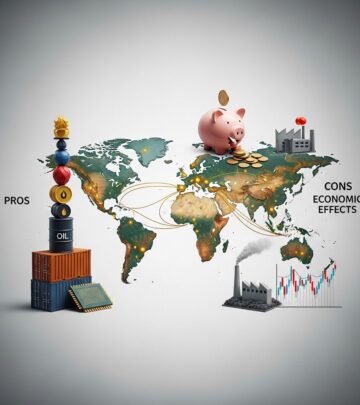
U.S. Exports: Top Categories, Challenges & Opportunities
Explore America's leading export sectors, from energy to pharmaceuticals, and understand the challenges and growth opportunities ahead.

Understanding U.S. Exports: Top Categories, Challenges, and Opportunities
The United States remains one of the world’s largest exporters, with a diverse portfolio of products and services that generate substantial revenue and support millions of jobs across the nation. In 2024, total U.S. exports reached $2.06 trillion, reflecting the country’s strong position in global markets. Understanding which sectors lead American export activity, the obstacles they face, and the potential for future growth is essential for policymakers, businesses, and investors seeking to navigate the evolving international trade landscape.
The Top U.S. Export Categories
American exports span multiple industries, with certain sectors consistently outperforming others. The diversity of top export categories reflects the breadth of U.S. industrial capacity and technological expertise.
Energy and Mineral Fuels
Energy products constitute the largest export category for the United States. Mineral fuels, oils, and distillation products generated $320.14 billion in exports during 2024, making this sector the undisputed leader in American export activity. This dominance stems from the nation’s significant oil drilling and gas extraction operations, which alone generated $177.3 billion in exports in 2025, combined with petroleum refining that contributed $118.6 billion. The energy sector’s prominence reflects both abundant domestic resources and advanced extraction and refining technologies. The shale revolution transformed the U.S. from a net energy importer to a global energy exporter, fundamentally reshaping international energy markets and strengthening America’s geopolitical position.
Machinery and Industrial Equipment
Machinery, nuclear reactors, and boilers represent the second-largest export category, with $252.43 billion in exports recorded in 2024. This sector encompasses a wide range of sophisticated industrial equipment used across manufacturing, energy generation, and infrastructure development globally. American machinery exports benefit from the nation’s strong engineering capabilities, advanced manufacturing technologies, and reputation for quality and reliability. Industries within this category continue to innovate, incorporating automation, digitalization, and sustainability features that enhance their competitive advantage in international markets.
Electrical and Electronic Equipment
The electrical and electronic equipment sector generated $213.92 billion in exports during 2024, securing its position as a major export driver. This category includes components, semiconductors, telecommunications equipment, and various consumer and industrial electronics. The U.S. leads in high-value semiconductor manufacturing and design, with companies pushing the boundaries of computing power and efficiency. As global demand for digital infrastructure, renewable energy systems, and consumer electronics continues expanding, this sector remains positioned for sustained growth.
Aerospace and Aircraft Manufacturing
Aircraft, spacecraft, and related components generated $134.24 billion in exports in 2024, with the broader aircraft, engine, and parts manufacturing industry exporting $156.4 billion in 2025. Over the 12 months through August 2025, civilian aircraft, engines, equipment, and parts were the most exported goods by value, accounting for a significant portion of total exports. The aerospace sector benefits from decades of technological development, substantial research and investment, and the presence of world-class manufacturers. Despite facing challenges such as pandemic-related production disruptions and supply chain constraints, pent-up global demand for new aircraft and replacement parts has driven robust export activity in recent years.
Pharmaceutical and Medical Products
The pharmaceutical and medical sectors collectively represent critical export categories. Pharmaceutical products generated $94.39 billion in exports in 2024, while biotechnology contributed $92.8 billion in 2025. Medical instruments and supplies added another $37.8 billion in exports, reflecting the substantial global demand for American healthcare innovations. The U.S. pharmaceutical industry’s strength derives from significant research and development investments, a robust intellectual property framework, and a culture of innovation. American brands command premium prices globally due to their perceived quality and efficacy. Over the 12 months through August 2025, pharmaceutical preparations ranked among the top three most exported goods by value.
Automotive Vehicles and Components
Automobile and light-duty motor vehicle manufacturing generated $58.3 billion in exports in 2025, while the broader vehicles category (excluding railway and tramway vehicles) contributed $143.77 billion in 2024. This sector encompasses finished vehicles as well as components, parts, and engines exported to manufacturers worldwide. American automotive exports have remained resilient despite global competition, with domestic manufacturers leveraging advanced manufacturing techniques, design capabilities, and strong brand recognition.
Chemical Products and Materials
Chemical manufacturing represents another significant export category. Organic chemicals contributed $51.88 billion in exports during 2024, while plastic and resin manufacturing added $42.5 billion in 2025. These materials serve as inputs for countless downstream industries, from pharmaceuticals and cosmetics to construction and consumer goods. The chemical sector’s export success reflects both raw material advantages and advanced processing technologies developed within the United States.
Key Export Destinations
Geographic distribution of U.S. exports reveals strong trade relationships with specific partners. Over the 12 months through August 2025, the U.S. exported most to Canada ($337.87 billion), Mexico ($335.31 billion), and China ($123.04 billion), which together accounted for 37.62 percent of all U.S. exports. These three countries represent America’s most important trading partners, reflecting geographic proximity, supply chain integration, and established trade relationships. Canada and Mexico are particularly significant due to the United States-Mexico-Canada Agreement (USMCA), which facilitates trade flows and investment within North America. China remains a substantial export market despite trade tensions and tariff disputes.
Challenges Facing U.S. Exporters
Despite America’s strong export position, the sector faces numerous obstacles that constrain growth and competitiveness.
Supply Chain Disruptions
Global supply chain fragility has emerged as a critical challenge for American exporters. The COVID-19 pandemic exposed vulnerabilities in complex international supply networks, creating bottlenecks that persisted for years. Manufacturing sectors relying on just-in-time inventory systems faced particular difficulties acquiring necessary materials and components. While supply chains have gradually stabilized, geopolitical tensions, natural disasters, and port congestion continue creating intermittent disruptions that raise costs and delay shipments.
Trade Policy Uncertainty
Changing trade policies and tariff regimes create substantial uncertainty for exporters. Tariffs imposed on major trading partners can trigger retaliatory measures affecting American goods. Trade negotiations with various countries introduce unpredictability regarding market access, regulatory compliance, and competitive conditions. Small and medium-sized exporters particularly struggle with the complexity of navigating evolving trade rules and compliance requirements across different markets.
Currency Fluctuations
Exchange rate volatility affects export competitiveness and profitability. A stronger dollar makes American products more expensive for foreign buyers, potentially reducing demand. Conversely, a weaker dollar benefits exporters but may increase the costs of imported inputs. Companies must manage currency risk through various hedging strategies, adding complexity and cost to export operations.
Global Competition
American exporters face intense competition from established manufacturers in other developed nations and increasingly from emerging economies. Foreign competitors often benefit from lower labor costs, government subsidies, or tariff protections. Maintaining competitive advantage requires continuous innovation, efficiency improvements, and differentiation through quality or specialized capabilities.
Regulatory and Compliance Burdens
Export regulations vary significantly across markets, requiring companies to navigate complex compliance frameworks. Regulations cover product standards, environmental requirements, labor practices, intellectual property protection, and security certifications. Compliance costs, particularly for smaller exporters, can represent significant barriers to market entry. Additionally, sanctions regimes targeting specific countries or industries restrict export opportunities and require constant monitoring to avoid violations.
Transportation and Logistics Costs
Rising transportation costs, fuel prices, and congestion at ports increase the expense of exporting goods. Container shipping costs, truck fuel prices, and labor expenses all fluctuate based on market conditions. These cost pressures squeeze profit margins, particularly for price-sensitive commodities, and can make certain export markets less economically viable.
Opportunities for U.S. Export Growth
Despite challenges, substantial opportunities exist for expanding American export activity and capturing new markets.
Emerging Market Demand
Growing middle classes in developing economies create expanding markets for American products. Countries in Southeast Asia, India, Latin America, and Africa increasingly demand consumer goods, capital equipment, industrial machinery, and technology products. Targeted strategies to penetrate these markets, including localized marketing and distribution partnerships, can unlock significant growth potential.
Infrastructure and Development Projects
Global infrastructure investment, particularly in developing nations, creates demand for American machinery, equipment, and technical expertise. The World Bank and regional development banks finance infrastructure projects that utilize exported capital goods. American companies can compete for these opportunities by offering advanced technology, financing solutions, and project management capabilities.
Digital Transformation and Services
Services exports, including software, consulting, financial services, and technical support, represent a growing opportunity. The U.S. maintains strong competitive advantages in digital technology, artificial intelligence, cloud computing, and business services. As companies worldwide undergo digital transformation, demand for American technology and expertise continues expanding.
Renewable Energy and Sustainability Solutions
Global commitment to decarbonization and renewable energy adoption creates markets for American clean technology exports. Solar panels, wind turbine components, energy storage systems, grid modernization equipment, and environmental remediation technologies all represent export opportunities. American innovation in these sectors positions companies to capture significant market share as countries transition to sustainable energy systems.
Advanced Manufacturing and Customization
Shifting from mass production to advanced, customized manufacturing creates opportunities for high-value exports. American companies leveraging additive manufacturing, robotics, artificial intelligence, and flexible production systems can serve niche markets with specialized requirements. This higher-value approach enhances profitability and reduces direct competition from lower-cost producers.
Trade Agreement Expansion
Negotiating new trade agreements or expanding existing ones can reduce tariff barriers and improve market access. Bilateral and multilateral trade negotiations provide opportunities to secure preferential treatment for American exports. Regional trade partnerships beyond the Western Hemisphere could open markets in Asia-Pacific and Europe.
Supply Chain Reshoring and Nearshoring
Companies recognizing supply chain vulnerabilities increasingly consider reshoring production to the United States or nearshoring to nearby countries. This trend creates opportunities for American equipment manufacturers, materials suppliers, and logistics providers. Supporting infrastructure investment and workforce development can enhance the U.S. value proposition for reshored and nearshored operations.
Sector-Specific Growth Prospects
Different export sectors face distinct opportunities and challenges. The aerospace industry benefits from recovering air travel demand and military modernization spending. The pharmaceutical sector gains from aging global populations and increasing healthcare access. The energy sector remains strong given continued fossil fuel demand, though long-term prospects depend on energy transition policies. Technology and semiconductor exports enjoy strong growth prospects driven by artificial intelligence, 5G deployment, and digital infrastructure expansion.
Frequently Asked Questions
Q: What are the top U.S. export categories?
A: The leading U.S. export categories include mineral fuels and oils ($320.14 billion in 2024), machinery and industrial equipment ($252.43 billion), electrical and electronic equipment ($213.92 billion), vehicles ($143.77 billion), aircraft and aerospace products ($134.24 billion), and pharmaceutical products ($94.39 billion).
Q: Which countries import the most U.S. goods?
A: Canada, Mexico, and China are America’s largest export markets. Over the 12 months through August 2025, these three countries received $337.87 billion, $335.31 billion, and $123.04 billion respectively in U.S. exports.
Q: What challenges do U.S. exporters face?
A: Major challenges include supply chain disruptions, trade policy uncertainty, currency fluctuations, intense global competition, regulatory compliance burdens, and rising transportation costs. These factors constrain profitability and market access for American exporters.
Q: What opportunities exist for export growth?
A: Opportunities include expanding demand in emerging markets, global infrastructure projects, digital transformation services, renewable energy solutions, advanced manufacturing capabilities, trade agreement expansion, and supply chain reshoring initiatives.
Q: How much did total U.S. exports reach in 2024?
A: Total U.S. exports in 2024 reached $2.06 trillion, demonstrating the substantial economic importance of export sectors across the American economy.
Q: What is the significance of the pharmaceutical export sector?
A: Pharmaceutical exports worth $94.39 billion in 2024 reflect the U.S. leadership in drug development and manufacturing. Combined with biotechnology and medical instruments, the healthcare sector represents over $225 billion in annual exports, underscoring America’s competitive advantage in life sciences.
References
- Biggest Exporting Industries in United States in 2025 — IBISWorld. 2025. https://www.ibisworld.com/united-states/industry-trends/biggest-exporting-industries/
- United States Exports By Category — Trading Economics / United Nations COMTRADE Database. 2025. https://tradingeconomics.com/united-states/exports-by-category
- Monthly Trade Update – August 2025 — U.S. Senate Joint Economic Committee. August 2025. https://www.jec.senate.gov/public/
- U.S. International Trade in Goods and Services, June 2025 — U.S. Bureau of Economic Analysis (BEA). June 2025. https://www.bea.gov/news/2025/us-international-trade-goods-and-services-june-2025
Similar Articles








Read full bio of medha deb