US Economy Facts: Key Indicators and Economic Data
Comprehensive overview of US economic performance, growth trends, and vital statistics.
Understanding the US Economy: Key Facts and Indicators
The United States economy represents the world’s largest developed economy, characterized by a mixed system combining market principles with government regulation. Understanding the current state and trajectory of the US economy requires examining multiple economic indicators that collectively paint a picture of national financial health. From gross domestic product growth to employment figures and inflation rates, these metrics provide crucial insights into economic performance and future prospects.
Gross Domestic Product and Economic Growth
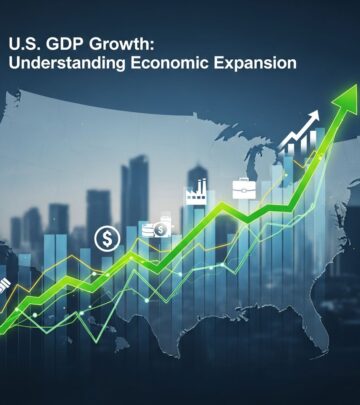
The Gross Domestic Product (GDP) serves as the primary measure of economic activity and growth. Real gross domestic product increased at an annual rate of 3.8 percent in the second quarter of 2025, according to the third estimate released by the U.S. Bureau of Economic Analysis. This represents a significant rebound from the first quarter of 2025, when real GDP decreased 0.6 percent. The stronger-than-anticipated figure in Q2 2025 primarily reflected an upward revision to consumer spending, with personal consumption expenditures (PCE) rising 2.5 percent compared to the previous estimate of 1.6 percent.
The second quarter performance marked the strongest economic growth since the third quarter of 2023, demonstrating resilience in the face of economic headwinds. This upturn in real GDP primarily reflected a downturn in imports and an acceleration in consumer spending that were partly offset by a downturn in investment. Real final sales to private domestic purchasers, the sum of consumer spending and gross private fixed investment, increased 2.9 percent in the second quarter, revised up 1.0 percentage point from the previous estimate.
Looking at long-term trends, the United States GDP growth rate is projected to trend around 2.00 percent in 2026, according to econometric models, with expectations of 2.10 percent by the end of the current quarter. The average annual rate of real GDP growth from 2019 to 2024 was 2.4 percent, indicating relatively steady but moderate expansion over this period.
Consumer Spending and Personal Consumption
Consumer spending represents a critical component of economic growth, accounting for a substantial portion of overall GDP. In the second quarter of 2025, personal consumption expenditures demonstrated robust growth with services spending accelerating to 2.6 percent compared to the previous estimate of 1.2 percent. Spending on goods remained resilient at 2.2 percent, showing that consumers maintained purchasing power across both service and goods categories.
Economic forecasts suggest that real consumer spending will grow by 1.9 percent in 2025, with expectations of only a modest decline to 1.9 percent in 2026 despite anticipated softer inflation. This stability in consumer spending reflects ongoing confidence in the economy and the resilience of the American consumer base. Business investment is also projected to rise 3.6 percent in 2025, approximately the same growth rate recorded in 2024.
Employment and Labor Market Conditions
Employment serves as another crucial indicator of economic health. Total nonfarm payroll employment edged up by 119,000 in September 2025, though employment has shown little net change since April 2025, according to the U.S. Bureau of Labor Statistics. This relatively flat employment growth suggests a cooling labor market as the year progresses toward its conclusion.
Economic forecasts anticipate that unemployment conditions may shift in coming years. The unemployment rate is expected to average 5 percent in 2027, up from 4.2 percent in 2025, reflecting anticipated economic cooling and potential recession in the fourth quarter of 2026. Weaker immigration projections also weigh on both real GDP and employment growth forecasts, potentially constraining labor supply and economic expansion.
Inflation and Price Stability
Inflation represents a significant concern for policymakers, consumers, and businesses alike. By September 2025, inflation had fallen to 2.9 percent, despite earlier concerns about President Donald Trump’s tariff policy causing a potential spike in consumer prices. This decline demonstrates the effectiveness of monetary policy and suggests that inflation pressures may be moderating from earlier peaks.
Economic data received through September 30, 2025, suggest that U.S. economic growth solidified in the third quarter of 2025 with steady conditions maintained. The decline in inflation is expected to give consumers more purchasing power, supporting continued consumer spending growth. However, higher interest rates implemented to combat inflation may dampen economic growth in subsequent quarters.
Economic Outlook and Forecasts
Looking ahead, economic forecasts present a mixed picture of growth and potential challenges. The U.S. economy is expected to grow at around 2.0 percent in 2025, moderating slightly to 1.9 percent in 2026, constrained by tariffs and tighter immigration policies, but supported by ongoing consumer spending.
More detailed forecasts suggest that despite much lower tariffs compared to previous periods, the US economy is still expected to grow at a slower rate in 2025 compared with the previous two years. The effect of tariff rate differences is expected to show up more clearly in inflation data during 2026. Softer inflation is projected to give consumers more purchasing power, while strong immigration during certain periods puts upward pressure on aggregate demand.
Economic modeling suggests that the economy enters a recession in the fourth quarter of 2026 and emerges in the second half of 2027 as the Federal Reserve provides more monetary accommodation and inflation begins to subside. Output is not projected to return to its previous high until the first quarter of 2028, indicating a prolonged recovery period following the anticipated recession.
Key Economic Indicators Summary
A comprehensive view of the US economy requires understanding multiple interconnected indicators:
| Economic Indicator | Q2 2025 / Recent Figure | Forecast/Trend |
|---|---|---|
| Real GDP Growth | 3.8% (annualized) | 2.0% (2026) |
| Consumer Spending (PCE) | 2.5% | 1.9% (2026) |
| Inflation Rate | 2.9% (Sept 2025) | Moderating |
| Unemployment Rate | 4.2% (2025) | 5.0% (2027) |
| Business Investment | 3.6% (2025) | Steady growth |
Government Economic Data and Corporate Profits
Real gross domestic income (GDI), which measures income generated in the production of goods and services, increased 3.8 percent in the second quarter of 2025. The average of real GDP and real GDI increased 3.8 percent, providing a comprehensive measure of economic activity. Corporate profits, which reflect business earnings, increased modestly with profits from current production increasing $6.8 billion in the second quarter.
These measures provide important context for understanding economic performance from different perspectives. While GDP measures output and spending, GDI measures the income generated from that production, and the two should align over time. Strong alignment between GDP and GDI growth suggests a healthy, balanced economic expansion.
Sector-Specific Economic Performance
Different sectors of the economy contribute varying amounts to overall GDP growth. Agricultural production contributed $196.00 billion to GDP in the second quarter of 2025, while utilities contributed $340.60 billion to $354.80 billion, reflecting the essential nature of energy and resource provision to the broader economy. Understanding sectoral performance helps economists and policymakers identify areas of strength and potential weakness within the broader economic structure.
Frequently Asked Questions About the US Economy
Q: What does GDP growth of 3.8% mean for the average American?
A: A GDP growth rate of 3.8% indicates strong economic expansion, suggesting increased business activity, consumer spending, and potential job creation. This strong growth can lead to more employment opportunities and potentially higher wages, though benefits are distributed unevenly across the economy.
Q: Why did the US economy contract in Q1 2025?
A: The 0.6% contraction in the first quarter of 2025 was largely driven by a spike in imports, as US companies stocked up ahead of widespread tariffs. This contraction was temporary, followed by robust 3.8% growth in Q2 2025, suggesting the economy recovered quickly from this import-driven decline.
Q: How does inflation at 2.9% affect consumers?
A: An inflation rate of 2.9% represents moderate price increases, which is generally considered healthy for economic growth. However, it means that the purchasing power of each dollar decreases slightly over time. Wages need to keep pace with inflation to maintain living standards.
Q: What does a projected recession in late 2026 mean?
A: Economic forecasts suggesting recession in Q4 2026 indicate anticipated economic contraction lasting into 2027. This means potential job losses, slower growth, and reduced consumer spending. However, forecasts also project recovery beginning in late 2027 as monetary policy accommodates and inflation moderates.
Q: How do tariffs impact GDP growth?
A: Tariffs can reduce GDP growth by increasing business costs, raising consumer prices, and potentially reducing international trade volumes. Economic models suggest tariffs will constrain US economic growth in 2025-2026, though the full impact appears in inflation data during 2026.
Q: Why is consumer spending so important to the US economy?
A: Consumer spending accounts for approximately 70% of US GDP, making it the largest component of economic activity. Strong consumer spending drives business revenue, employment, and overall economic growth. When consumers are confident and spending, the entire economy tends to expand.
Q: How does employment growth relate to overall economic health?
A: Employment growth indicates businesses are confident enough to hire new workers, typically accompanying economic expansion. The modest employment growth in 2025 suggests a gradually cooling labor market, which can eventually lead to wage moderation and slower consumer spending.
References
- United States GDP Growth Rate — Trading Economics / U.S. Bureau of Economic Analysis. 2025-09-25. https://tradingeconomics.com/united-states/gdp-growth
- United States Economic Forecast Q3 2025 — Deloitte. 2025. https://www.deloitte.com/us/en/insights/topics/economy/us-economic-forecast/united-states-outlook-analysis.html
- Gross Domestic Product, 2nd Quarter 2025 (Third Estimate) — U.S. Bureau of Economic Analysis. 2025. https://www.bea.gov/news/2025/gross-domestic-product-2nd-quarter-2025-third-estimate-gdp-industry-corporate-profits
- The Employment Situation — September 2025 — U.S. Bureau of Labor Statistics. 2025-10. https://www.bls.gov/news.release/pdf/empsit.pdf
- Economy Statement for the Treasury Borrowing Advisory Committee — U.S. Department of Treasury. 2025-10-01. https://home.treasury.gov/news/press-releases/sb0301
- US Economic Outlook November 2025 — EY. 2025-11. https://www.ey.com/en_us/insights/strategy/macroeconomics/us-economic-outlook
Similar Articles








Read full bio of medha deb