US National Debt by President: Dollar and Percent
Comprehensive analysis of how US national debt has grown under each presidential administration since World War II.
Understanding US National Debt by President
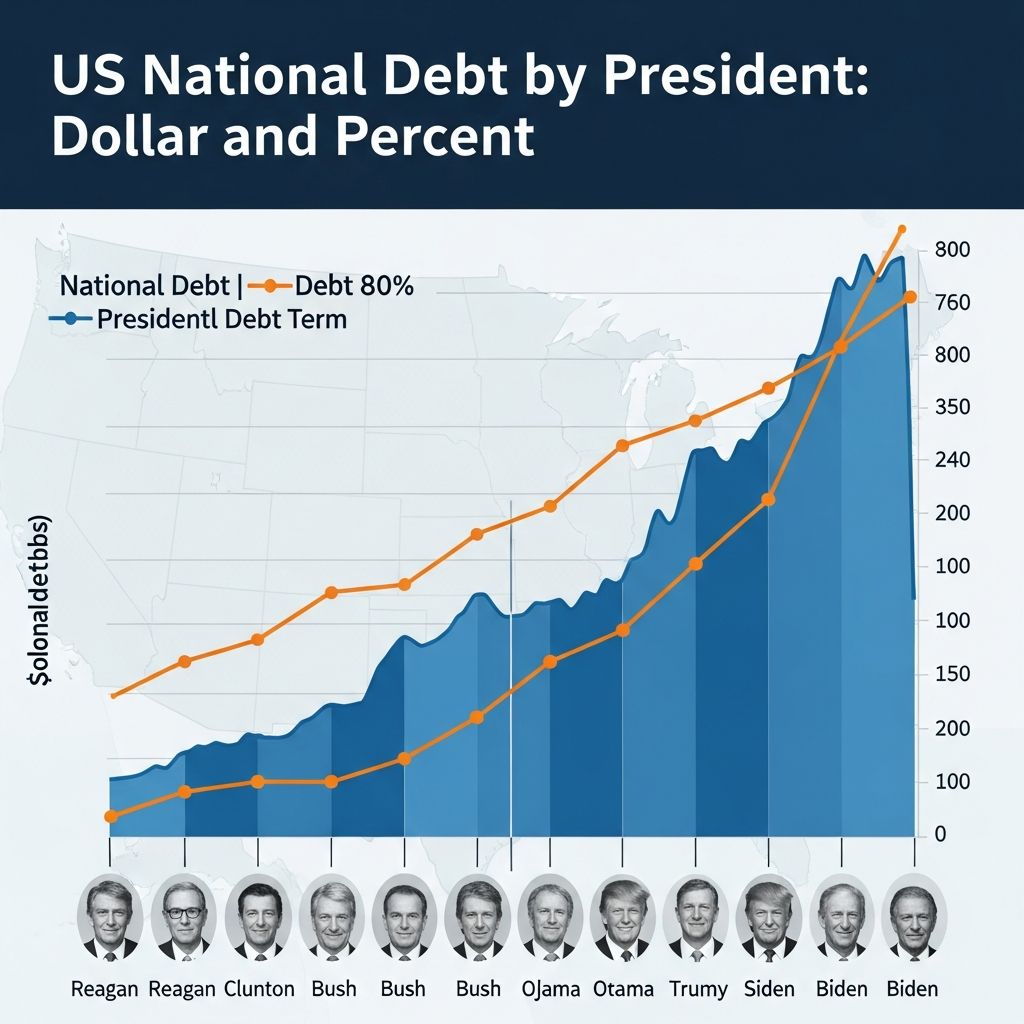
The national debt of the United States represents the total amount of money that the federal government owes to creditors, both domestic and foreign. This debt accumulates when the government spends more money than it collects in revenue, creating annual budget deficits. Understanding how the national debt has grown under different presidential administrations provides valuable insight into fiscal policy, economic conditions, and the long-term financial health of the nation. The data spanning from World War II to the present reveals significant variations in debt growth rates depending on presidential policies, economic circumstances, and unforeseen events like wars, recessions, and pandemics.
Historical Overview of Federal Debt Since 1941
The federal government’s debt burden has undergone dramatic transformations since the American Revolutionary War, but the modern era of debt accumulation truly began during World War II. During President Franklin D. Roosevelt’s administration from 1941 to 1945, the national debt increased by approximately $203 billion, rising from 100% to 117.5% of GDP. This massive increase was necessary to finance military operations during the global conflict. Following the war, there was a period of debt reduction during President Harry Truman’s tenure, as the government benefited from economic growth and didn’t face the same extraordinary military expenditures.
The Eisenhower era from 1953 to 1957 marked a period of declining debt-to-GDP ratios, falling from 71.4% to 60.4%. This represented one of the more fiscally conservative periods in American history. However, the trend would shift as the government undertook new responsibilities and faced different economic challenges. The Vietnam War and Great Society programs under President Lyndon B. Johnson added $43 billion to the debt between 1965 and 1969, though the debt-to-GDP ratio actually improved slightly due to economic growth.
The Rise of Deficits: 1970s Through 1980s
The 1970s and early 1980s marked the beginning of more persistent debt accumulation. During the Nixon-Ford administrations (1969-1977), the debt increased by $278 billion, from $101 billion to $379 billion. President Jimmy Carter’s single term saw an increase of $288 billion in debt, though the debt-to-GDP ratio improved from 35.8% to 32.5%. The most significant debt expansion, however, occurred during Ronald Reagan’s presidency.
President Reagan’s two terms (1981-1989) witnessed unprecedented peacetime debt growth. During his first term (1981-1985), the national debt increased by $823 billion, and the debt-to-GDP ratio jumped from 32.5% to 43.8%. In his second term (1985-1989), debt increased by an additional $1,050 billion, pushing the debt-to-GDP ratio to 53.1%. This doubling of the national debt is often attributed to Reagan’s economic policies, known as “Reaganomics,” which included significant tax cuts combined with increased military spending during the final years of the Cold War. The combination of reduced federal revenue from tax cuts and increased government spending on defense created substantial budget deficits.
Debt Growth Under Bush Sr. and Clinton
President George H.W. Bush continued the trend of debt accumulation during his single term (1989-1993). The national debt increased by $1,483 billion, and the debt-to-GDP ratio rose from 53.1% to 66.1%. This period included the savings and loan crisis and the economic recession of 1990-1991, which reduced government revenues while increasing spending on social programs and financial stabilization measures.
President Bill Clinton’s two terms (1993-2001) demonstrated the possibility of debt reduction relative to GDP growth. During his first term (1993-1997), while the absolute debt increased by $1,018 billion, the debt-to-GDP ratio actually fell slightly from 66.1% to 65.4%. In his second term (1997-2001), the debt increased by only $401 billion, and the debt-to-GDP ratio dropped significantly to 56.4%. Clinton benefited from the economic expansion of the 1990s, the technology boom, and implemented a combination of spending controls and tax increases that produced budget surpluses by the end of his presidency.
The 2000s: Wars, Tax Cuts, and Financial Crisis
President George W. Bush faced dramatic changes in circumstances that significantly impacted debt accumulation. During his first term (2001-2005), following the September 11, 2001 terrorist attacks, the government increased spending on national security and launched military operations in Afghanistan and Iraq. Simultaneously, Bush implemented major tax cuts. The national debt increased by $2,135 billion, and the debt-to-GDP ratio rose from 56.4% to 63.5%. The second Bush term (2005-2009) proved even more costly for federal finances. The debt increased by $3,971 billion, and the debt-to-GDP ratio jumped to 84.2%. This dramatic increase reflected both the ongoing costs of military operations and the massive government response to the 2008 financial crisis, which required unprecedented bailout programs.
The Obama Administration and Deficit Spending
President Barack Obama inherited a nation in the midst of the Great Recession and faced the continuation of two wars. His administration (2009-2013) presided over the largest increase in national debt to that point: $6,061 billion. The debt-to-GDP ratio reached 102.7%, the highest level since World War II. However, much of this increase resulted from the financial crisis that had unfolded before Obama took office and the economic stabilization measures deemed necessary to prevent another Great Depression. Despite the substantial debt increase, the economy began recovering, unemployment declined, and by the end of Obama’s presidency, deficit spending as a percentage of GDP had begun to decrease.
Understanding Debt-to-GDP Ratios
A crucial metric for understanding national debt is the debt-to-GDP ratio, which measures the national debt as a percentage of the country’s gross domestic product. This ratio is more meaningful than absolute dollar amounts because it shows debt relative to the nation’s economic capacity to service that debt. A higher debt-to-GDP ratio indicates that debt represents a larger burden on the economy. When this ratio exceeds 100%, as it did in 2012, it means the national debt exceeds the entire annual output of the economy. While this situation sounds alarming, many developed nations maintain debt-to-GDP ratios above 100% for extended periods. However, sustained high ratios can limit government’s fiscal flexibility and eventually crowd out private investment.
Gross Federal Debt Versus Public Debt
An important distinction exists between gross federal debt and publicly held debt. Gross federal debt includes intra-governmental debt, which represents money owed by one branch of the federal government to another, such as amounts owed to the Social Security Trust Funds. Publicly held debt, by contrast, represents the portion of the national debt owed to private investors, foreign governments, and other external creditors. This distinction matters because intra-governmental debt, while contributing to the total federal liability, represents internal accounting rather than external obligations. The publicly held debt figure provides a clearer picture of the government’s actual external financial obligations.
Comparative Analysis of Presidential Administrations
Examining the data across administrations reveals several important patterns. The largest absolute increases in national debt occurred during periods of major national emergencies or investments: World War II under Roosevelt, the Cold War and Vietnam War under Johnson, the Reagan defense buildup, and the 2008 financial crisis recovery under Obama. However, it’s crucial to recognize that debt growth measured in absolute dollars becomes less meaningful over time as the overall size of the economy and government budget grows. The debt-to-GDP ratio provides a more accurate comparison across different eras.
When comparing deficit growth as a percentage of GDP, President George W. Bush had the third-largest primary deficit growth at 5.2% of GDP, behind only Abraham Lincoln during the Civil War (9.4%) and George W. Bush himself during his first term when considering his full administration (11.7%). This demonstrates how the 2008 financial crisis and military spending during the Bush administration created unprecedented peacetime deficit growth.
Recent Debt Trends and Current Challenges
The national debt has continued to grow in recent years despite periods of economic expansion. During the Trump administration (2017-2021), the national debt increased by approximately $7.8 trillion, nearly twice the total amount Americans owed in student loans, auto loans, and credit card debt combined. Despite Trump’s campaign promise to reduce the national debt, the actual trajectory moved in the opposite direction. The debt-to-GDP ratio reached its highest level relative to the US economy since the end of World War II. While the COVID-19 pandemic necessitated massive government spending that economists largely agreed was appropriate for economic stabilization, significant portions of the debt increase predated the pandemic and resulted from the 2017 Tax Cuts and Jobs Act, which reduced corporate tax rates from 35% to 21%, and had an estimated impact of increasing deficits by approximately $1.9 trillion over 11 years.
The current trajectory suggests continued challenges ahead. The federal government continues to run large and growing budget deficits that are approaching $1 trillion annually, even as the US economy expands. This combination of strong economic growth alongside large deficits is unusual and unsustainable long-term, as it suggests structural imbalances in the federal budget rather than cyclical economic weakness.
Factors Influencing Debt Accumulation
Multiple factors beyond presidential control influence national debt levels. Economic recessions reduce tax revenue while increasing spending on unemployment insurance and other safety net programs. Wars and military operations require substantial government expenditures. Natural disasters necessitate emergency spending. Additionally, demographic changes—particularly the aging of the Baby Boom generation—have increased mandatory spending on Social Security and Medicare. These structural factors have contributed to persistent deficits regardless of which party controls the presidency.
However, presidential policy choices also matter significantly. Tax policy, spending priorities, and budgetary discipline all influence deficit levels. Presidents can choose to invest in defense or social programs, to cut taxes or raise revenues, and to prioritize deficit reduction or other objectives. These choices, combined with inherited economic conditions and unforeseen events, determine the trajectory of national debt during each administration.
Frequently Asked Questions About National Debt by President
Q: Why did the national debt increase so much during Obama’s presidency?
A: President Obama inherited a nation in the midst of the Great Recession, with the financial system on the brink of collapse. His administration implemented significant government spending to stabilize the economy, prevent further job losses, and begin recovery. While the absolute debt increase was substantial, much of it occurred during the economic emergency, and deficit spending as a percentage of GDP had begun declining by the end of his presidency as the economy recovered.
Q: Did the Reagan tax cuts help reduce the national debt?
A: Contrary to some economic theories, Reagan’s tax cuts did not produce sufficient economic growth to offset lost federal revenue. Instead, combined with increased military spending, they resulted in the largest peacetime debt accumulation up to that point. The national debt nearly doubled during his two terms, and the debt-to-GDP ratio increased from 32.5% to 53.1%.
Q: Is a debt-to-GDP ratio above 100% necessarily bad?
A: A debt-to-GDP ratio above 100% indicates the national debt exceeds annual economic output, which many view as concerning. However, many developed nations maintain such ratios for extended periods. The sustainability of high debt ratios depends on interest rates, economic growth rates, and the government’s ability to service debt through tax revenue.
Q: How does the Clinton administration’s debt reduction compare to other presidents?
A: President Clinton’s administration benefited from strong economic growth during the 1990s technology boom and implemented spending controls combined with tax increases. While the absolute debt continued to increase, the debt-to-GDP ratio fell from 66.1% to 56.4%, making Clinton the only recent president to reduce the debt burden relative to the size of the economy.
Q: What is the difference between gross federal debt and publicly held debt?
A: Gross federal debt includes intra-governmental obligations, such as money owed to the Social Security Trust Funds. Publicly held debt represents the portion owed to external creditors, including private investors and foreign governments. Publicly held debt is often considered a more accurate measure of external financial obligations.
References
- History of the United States Public Debt — Wikipedia. Accessed November 29, 2025. https://en.wikipedia.org/wiki/History_of_the_United_States_public_debt
- Federal Debt: Total Public Debt (GFDEBTN) — Federal Reserve Economic Data (FRED), St. Louis Federal Reserve. Updated Q2 2025. https://fred.stlouisfed.org/series/GFDEBTN
- Donald Trump Built a National Debt So Big (Even Before the COVID-19 Crisis) — U.S. House Committee on Government Operations. February 5, 2025. https://docs.house.gov/meetings/GO/GO00/20250205/117856/HHRG-119-GO00-20250205-SD008.pdf
- History of the Debt — U.S. Department of the Treasury. https://treasurydirect.gov/government/historical-debt-outstanding/
- Deficit Tracker — Bipartisan Policy Center. November 2025. https://bipartisanpolicy.org/report/deficit-tracker/
- Key Facts About the U.S. National Debt — Pew Research Center. August 12, 2025. https://www.pewresearch.org/short-reads/2025/08/12/key-facts-about-the-us-national-debt/
Similar Articles








Read full bio of medha deb