Upgrade Your Starter Credit Card: Step-By-Step Guide
Discover the ideal moment to switch from your basic credit card to premium options for better rewards and financial growth.

Your first credit card served its purpose: building initial credit history with basic features and no-frills access. But as your financial habits evolve, sticking with a starter card limits your earning potential and perks. Upgrading unlocks rewards, better rates, and enhanced benefits tailored to your lifestyle.
Signs You’re Ready for a Credit Card Upgrade
Determining the right time to move beyond your entry-level card involves assessing your credit health and spending patterns. Here are clear indicators that signal readiness.
- Consistent On-Time Payments: If you’ve paid every bill promptly for at least six months, your payment history strengthens your profile for better cards.
- Improving Credit Score: A score in the fair range (630-689) opens doors to rewards cards that starter options can’t match.
- Low Utilization Rate: Keeping balances below 30% of your limit shows responsible use, making issuers more likely to approve upgrades.
- Increased Spending Capacity: Higher monthly expenses mean you could benefit from cash back or travel rewards on everyday purchases.
- Account Age Milestone: Holding your card for a minimum of six to twelve months builds the history needed for premium approvals.
Track your progress using free credit monitoring tools to confirm these benchmarks before proceeding.
Key Advantages of Moving to a Premium Card
Upgrading isn’t just cosmetic; it delivers tangible financial gains. Starter cards often lack incentives, while upgraded versions reward loyalty and spending.
| Benefit | Starter Card | Upgraded Card |
|---|---|---|
| Rewards Earning | Minimal or none | 1-5% cash back, miles, points |
| Intro APR Offers | Rare | 0% for 12-21 months on balance transfers |
| Credit Utilization Impact | High if maxed | Lowered by higher limits or new accounts |
| Perks | Basic fraud protection | Travel insurance, lounge access, concierge |
These perks compound over time. For instance, frequent travelers gain from airport priority passes, while shoppers enjoy bonus categories on groceries or gas. Balance transfers to 0% APR cards can save hundreds in interest, accelerating debt payoff.
Upgrade vs. New Application: Weighing Your Options
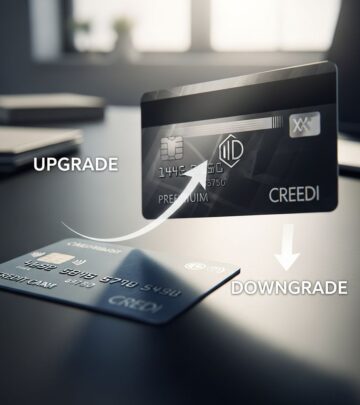
Two paths exist: product change (upgrade within the same issuer) or applying fresh. Each has trade-offs.
- Product Change Pros: Retains account history, avoids hard inquiries, keeps the same number in many cases. Ideal if loyal to one bank.
- Product Change Cons: No welcome bonus, potentially fewer perks than new cards.
- New Application Pros: Welcome bonuses (50,000+ points), higher limits, broader choices.
- New Application Cons: Hard inquiry dings score temporarily (5-10 points), new account ages your profile.
Choose upgrades for stability; new cards for maximum rewards if your score supports it.
Step-by-Step Guide to Requesting an Upgrade
Initiating a change is straightforward but requires preparation. Follow these steps for success.
- Review Eligibility: Check issuer policies—many require 12 months for fee-bearing upgrades per CARD Act rules.
- Contact Issuer: Call customer service or use online chat. Ask about product changes, confirm no hard pull, and verify account retention.
- Compare Offers: Evaluate fees, rewards alignment with habits (e.g., travel vs. cash back), and APR.
- Request Change: Provide reasoning like improved score or spending needs. Approval often instant.
- Update Payments: If card number changes, adjust autopay and merchants promptly.
- Monitor Transition: Watch statements for 1-2 cycles to ensure rewards and history carry over.
Timing matters: Upgrade post-holidays or before big spends to leverage new benefits immediately. Avoid if planning mortgages, as inquiries cluster.
Credit Score Implications of Upgrading
Many fear score drops, but smart upgrades minimize risks. Product changes typically skip hard inquiries, preserving scores. New accounts boost available credit, lowering utilization—a FICO factor worth 30%. However, issuers may review credit softly.
Short-term: Possible 5-point dip from inquiries. Long-term: Positive from history and limits. Maintain low balances post-upgrade to amplify gains.
Common Mistakes to Sidestep
Avoid pitfalls that undermine upgrades.
- Overspending on New Limits: Higher credit tempts debt; stick to budgets.
- Mismatched Rewards: Skip airline miles if you drive everywhere—opt for versatile cash back.
- Ignoring Fees: Weigh annual costs against perks; downgrade if unused.
- Premature Changes: Wait 12 months to avoid bonus clawbacks or gaming flags.
- Multiple Applications: Space requests 3-6 months to limit inquiries.
Real-World Upgrade Scenarios
Consider these examples:
- Grocery Shopper: Upgrade to 3% grocery rewards card; save $300/year on $1,000 monthly spends.
- Traveler: Switch to premium for lounge access, offsetting $95 fee with one trip.
- Debt Manager: Transfer $5,000 balance to 0% APR, save $500 interest over 12 months.
Personalize based on habits for optimal value.
Alternatives if Upgrade Isn’t Viable
Not ready? Downgrade to fee-free versions or add authorized users for shared benefits. Build score further before retrying.
Frequently Asked Questions
Does upgrading affect my credit score?
Usually minimally or positively, especially without hard inquiries.
How long should I wait after getting my starter card?
At least 6-12 months with perfect payments.
Can I upgrade to a card with an annual fee right away?
No, CARD Act requires one year for fee increases.
Will I lose my rewards or history?
Product changes preserve both; confirm with issuer.
Is it better to apply for a new card?
Yes for bonuses, but upgrades safer for scores.
References
- How to Know When It’s Time to Upgrade From Your ‘Basic’ Credit Card — Credit Sesame. 2023. https://www.creditsesame.com/blog/credit-cards/how-to-know-when-it-s-time-to-upgrade-from-your-basic-credit-card/
- 4 major considerations before upgrading your credit card — The Points Guy. 2023. https://thepointsguy.com/credit-cards/upgrade-credit-card-or-apply-for-new-one/
- Should You Upgrade or Downgrade Your Credit Card? — Citizens Bank. 2024. https://www.citizensbank.com/learning/downgrading-vs-upgrading-your-credit-card.aspx
- How to know when to upgrade or downgrade your credit card — Credit Karma. 2024. https://www.creditkarma.com/credit-cards/i/credit-card-downgrade-upgrade
- Upgrading Your Credit Card: What to Know — Capital One. 2024. https://www.capitalone.com/learn-grow/money-management/upgrade-or-apply-for-new-credit-card/
- Does Upgrading Your Credit Card Hurt Your Credit Score? — Bankrate. 2024. https://www.bankrate.com/credit-cards/advice/does-a-credit-card-upgrade-hurt-score/
Similar Articles








Read full bio of Sneha Tete