Updating Phone Numbers On Fraud Alerts: 3-Step Guide
Learn essential steps to add or change contact details on your fraud alert for stronger identity protection against credit fraud.
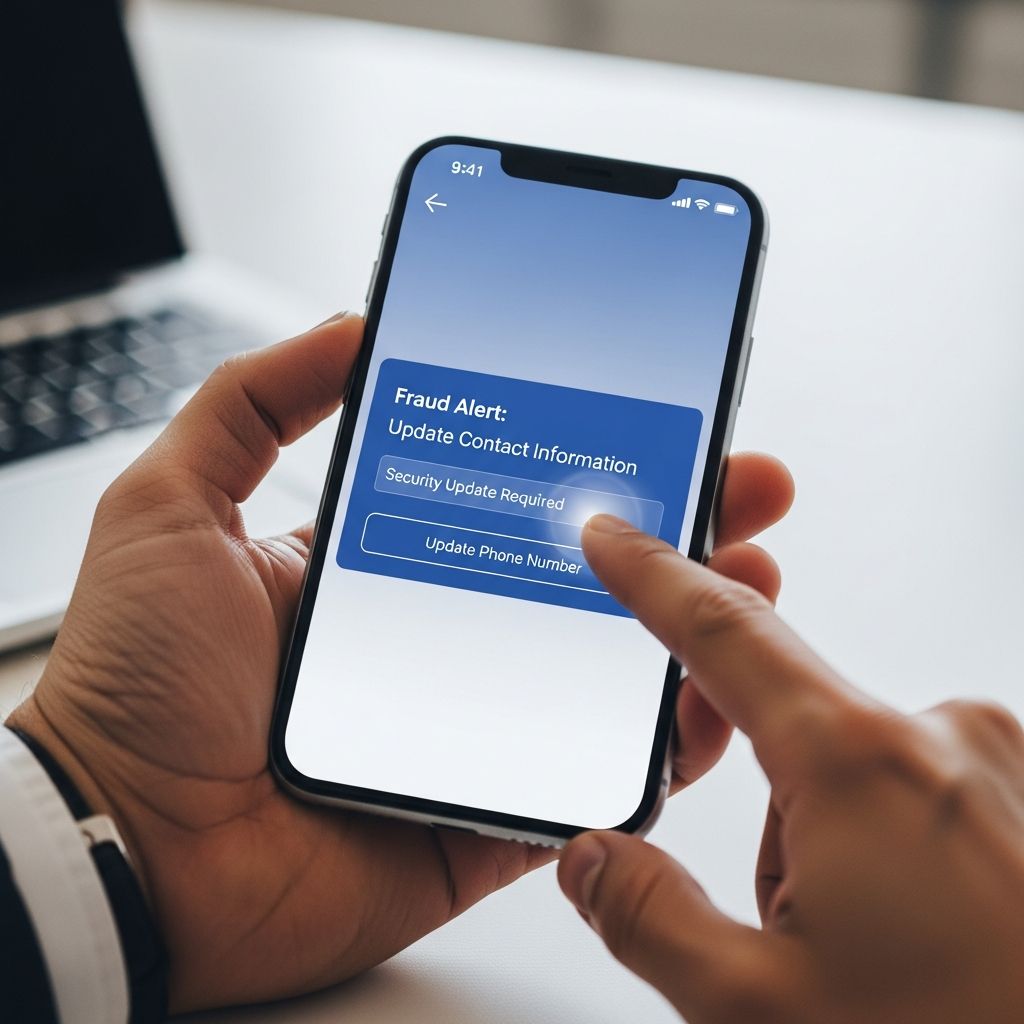
Fraud alerts serve as a critical defense mechanism on your credit report, prompting creditors to verify your identity before approving new accounts. For extended fraud alerts, including a reliable telephone number ensures lenders can reach you directly. This guide explains how to add or modify this contact information across major credit bureaus, drawing from official procedures to keep your protection current.
Understanding Fraud Alert Basics
Fraud alerts notify potential lenders of possible identity theft risks, requiring them to take extra steps like contacting you before extending credit. There are three primary types, each with distinct durations and requirements.
| Type | Duration | Key Requirement | Purpose |
|---|---|---|---|
| Initial Fraud Alert | 1 year (renewable) | Suspicion of identity theft | Basic protection for at-risk consumers |
| Extended Fraud Alert | 7 years | Identity theft report or police report | Enhanced verification for confirmed victims |
| Active Duty Alert | 1 year | Military deployment orders | Protection for service members |
Only extended alerts typically require a phone number for creditor contact. Initial and active duty alerts may not mandate it but allow updates for better communication.
Why Update Your Phone Number?
A current phone number on your fraud alert enables swift verification, preventing fraudulent accounts. If your contact details change due to relocation, new service providers, or preference, updating promptly maintains alert effectiveness. Outdated information could delay lender outreach, risking approval of scam applications in your name.
- Ensures creditors reach the right person quickly.
- Supports extended alerts’ seven-year protection span.
- Aligns with FCRA (Fair Credit Reporting Act) standards for consumer safeguards.
Step-by-Step: Updating with Experian
Experian offers user-friendly online, phone, and mail options for modifications.
- Online Update: Log into your Experian account, navigate to the Fraud Alert Center, and select “Manage Alert.” Enter the new number directly.
- Phone Request: Call the fraud department number listed on your credit report. Expect identity verification questions.
- Mail Submission: Send details to Experian, P.O. Box 9554, Allen, TX 75013. Include full name, SSN, DOB, addresses for past two years, old/new phone numbers, and two IDs: one government-issued (e.g., driver’s license) and one address-proof (e.g., utility bill).
Online methods process fastest, often in real-time for initial alerts.
Managing Updates at Equifax and TransUnion
Contact one bureau to initiate alerts across all three, but updates require individual handling per bureau.
Equifax Procedures
Create a myEquifax account for online management or call 888-378-4329. Mail requests need verification documents similar to Experian: written request with personal details and proofs of identity/address. Phone updates may require mailed follow-up if verification fails.
TransUnion Processes
TransUnion mirrors this: online portals, phone lines, or mail to specified addresses. Always confirm receipt and check your updated report.
Tip: After updates, request free credit reports to verify changes.
Placing a New Extended Fraud Alert
If starting fresh, submit an FTC Identity Theft Report or police report. File via FTC’s dedicated site for step-by-step guidance.
- Gather: Identity theft documentation, personal identifiers (SSN, addresses, DOB).
- Submit to any bureau; they notify others.
- Include preferred phone number upfront.
Extended alerts grant two free credit reports within 12 months from each bureau.
Verification Documents Checklist
Standard proofs ensure secure processing:
- Government ID: Driver’s license, passport, military ID.
- Address Proof: Bank statement, utility bill, insurance doc (recent).
- Personal Info: Name, SSN, DOB, recent addresses.
Scan/color copies for mail/online; protect originals.
Additional Protections for Representatives
Personal representatives (e.g., with Power of Attorney) can manage alerts. Provide legal documentation proving authority.
Proactive Strategies to Prevent Credit Fraud
Beyond alerts, layer defenses:
- Regular Monitoring: Access free weekly reports via AnnualCreditReport.com or bureau sites.
- Secure Habits: Shred sensitive papers, use HTTPS sites, avoid public Wi-Fi for finances.
- Credit Cards: Opt for those with zero-liability fraud policies; pay in full monthly.
- Monitoring Services: Consider paid plans for dark web scans and triple-bureau tracking (free for military).
- Freezes: Credit freezes block new accounts entirely—free and reversible.
Frequently Asked Questions (FAQs)
What if I don’t have an identity theft report for an extended alert?
Start with an initial alert, then gather a police/FTC report to upgrade. FTC provides templates.
How long until changes take effect?
Online: Immediate to days. Mail: 1-2 weeks. Confirm via report pull.
Can I remove a fraud alert anytime?
Yes, contact the bureau(s) with verification. Notifies others if initial/extended.
Does updating affect my credit score?
No, alerts don’t impact scores; they protect without penalty.
Free for military?
Active duty alerts and some monitoring are free.
Table: Comparison of Update Methods
| Method | Speed | Verification Needed | Best For |
|---|---|---|---|
| Online | Fastest | Account login | Existing users |
| Phone | Quick | Questions/docs | Simple changes |
| Slower | Full docs | No online access |
Choose based on urgency and access.
Staying vigilant with updates fortifies your financial security. Regularly review reports and adjust contacts as life changes occur.
References
- How to Add a Telephone Number to a Fraud Alert — Experian. 2020-03-21. https://www.experian.com/blogs/ask-experian/how-to-add-a-telephone-number-to-a-fraud-alert/
- Place a Fraud Alert — Experian. Accessed 2026. https://www.experian.com/help/fraud-alert/
- 7 Things to Know About Fraud Alerts — Equifax. Accessed 2026. https://www.equifax.com/personal/education/identity-theft/articles/-/learn/7-things-to-know-about-fraud-alerts/
- Credit Freezes and Fraud Alerts — Federal Trade Commission (consumer.ftc.gov). Accessed 2026. https://consumer.ftc.gov/articles/credit-freezes-and-fraud-alerts
Similar Articles








Read full bio of Sneha Tete