Updating Personal Info on Credit Reports
Learn effective strategies to keep your credit reports accurate by updating addresses, names, and other details with major bureaus.
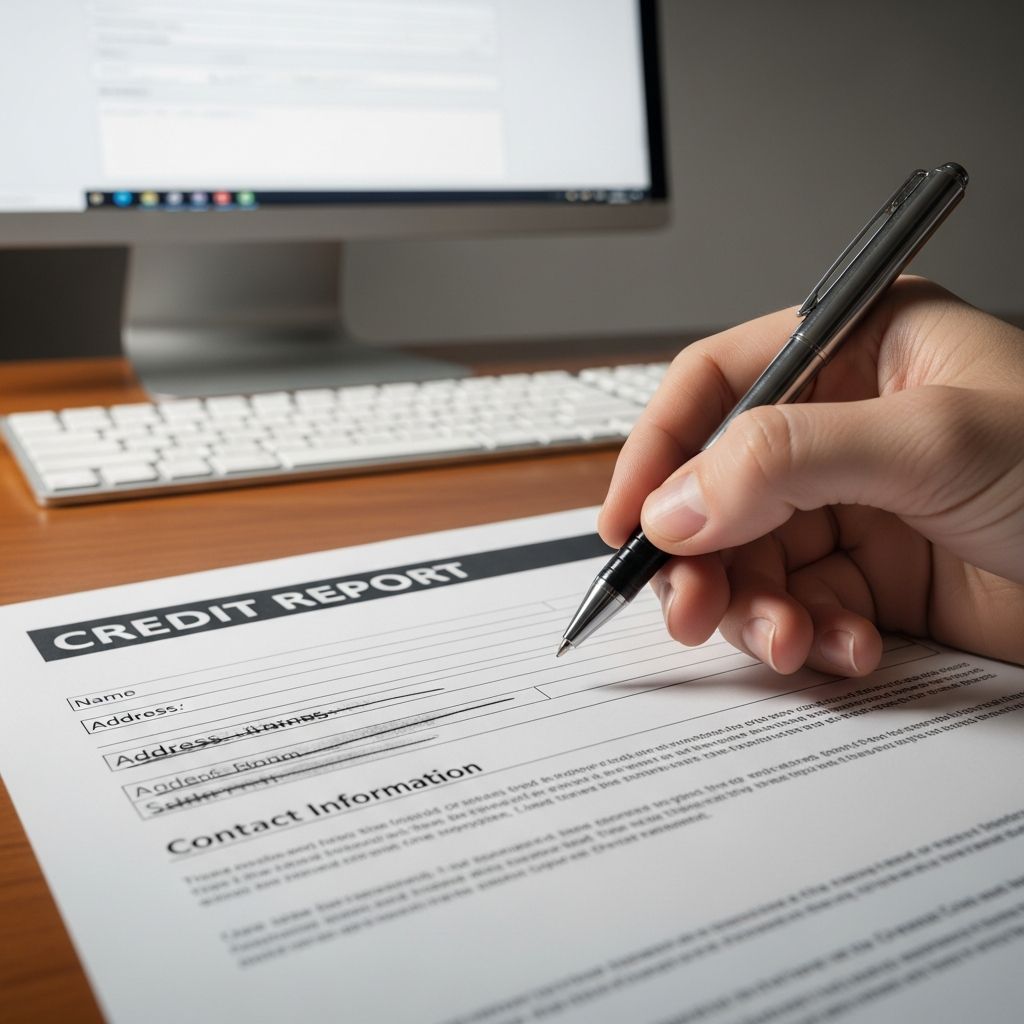
Keeping personal details current on your credit reports ensures lenders and others can properly identify you, even though this data does not influence your credit score. Changes typically flow from creditors to the three major bureaus—Equifax, Experian, and TransUnion—automatically, but direct action is needed in specific cases like first or middle name alterations.
Why Accurate Personal Data Matters
Personal information such as your name, address, phone number, and employer serves as identifiers on credit reports. While these elements do not factor into scoring models like FICO or VantageScore, inaccuracies can complicate loan approvals or identity verification. For instance, an outdated address might delay matching your application to the correct history. Updating via creditors is usually sufficient, as they report monthly.
Credit reports under the Fair Credit Reporting Act (FCRA) must reflect verifiable data. Bureaus investigate disputes within 30 days, ensuring timely corrections.
Automatic Updates Through Creditors
Most personal info refreshes without bureau contact. When you notify banks, credit card issuers, or mortgage servicers of changes, they relay updates during routine reporting cycles, often within 30-45 days.
- Addresses: Update with all active accounts; new data appends to reports alongside old ones for verification.
- Employers and Phone Numbers: These appear when applying for credit; changes propagate similarly.
- Last Names: Common after marriage or divorce; creditor notification suffices as Social Security numbers link histories.
This method minimizes effort since creditors handle transmission. Monitor reports post-update via annualcreditreport.com to confirm.
When Direct Bureau Contact Is Essential
Certain changes demand disputes with bureaus to link histories properly. First or middle name modifications, due to their rarity outside legal proceedings, require proof to prevent fragmentation of credit files.
| Change Type | Creditor Update? | Bureau Dispute Needed? | Examples |
|---|---|---|---|
| Last Name | Yes | Usually No | Marriage, Divorce |
| First/Middle Name | Yes, but also | Yes | Court Order, Adoption |
| Address | Yes | If Not Updated | Recent Move |
| SSN/DOB | N/A | Yes, with Proof | Rare Corrections |
Use disputes for removals like obsolete phone numbers or employers via online portals.
Step-by-Step Guide: Equifax Updates
Equifax offers a streamlined myEquifax portal for disputes, ideal for name changes across first, middle, or last names.
- Access the myEquifax Dispute Center online.
- Select the inaccurate info section.
- Upload supporting documents like court orders, driver’s licenses, or Social Security cards.
- Review and submit; track progress via account.
For full legal name shifts, also update government IDs first, as states vary in requirements. Equifax verifies within 30 days.
Navigating Experian Corrections
Experian supports online, phone, or mail for updates, mandatory for addresses and names.
- Online Dispute Center: Best for minor info; upload proofs like utility bills or paystubs.
- Phone/Mail: Required for addresses (two proofs) or major changes; call 888-397-3742 or mail to P.O. Box 4500, Allen, TX 75013.
Required documents include marriage certificates, passports, or W-2s. Changes process in 30 days, potentially longer for verification.
Handling TransUnion Modifications
TransUnion mandates online disputes for deletions and mail/phone for addresses or vital data.
- Create/login to TransUnion account at their service center.
- Initiate dispute for phone, address, or employer removals.
- For names, DOB, or SSN, mail documents to P.O. Box 2000, Chester, PA 19016.
- New addresses: Provide two proofs via phone (800-916-8800) or mail.
Expect 30-day turnaround; old data often remains as aliases.
Required Documentation Overview
Gather these before disputing to avoid delays:
- Court-approved name change orders
- Government-issued IDs (driver’s license, passport)
- Social Security card or verification letter
- Utility bills, leases for addresses
- Employment proofs (paystubs, tax forms)
- Birth certificates or vital records
Photocopies suffice; originals stay with you. Bureaus discard after review per FCRA.
Timeline and Monitoring Progress
Bureaus must complete investigations within 30 days of dispute receipt, notifying you of outcomes. Creditor updates vary by billing cycles, up to 45 days.
Check status:
- Equifax/TransUnion: Online portals
- Experian: Phone or app notifications
- Free weekly reports at annualcreditreport.com
If unresolved, escalate with more docs or CFPB complaint.
Common Pitfalls to Avoid
Errors in updates can arise from incomplete proofs or mismatched SSNs. Always:
- Notify all creditors promptly.
- Retain copies of submissions.
- Dispute with all three bureaus separately.
- Verify post-update to ensure linkage.
Mismatched names without bureau notice risk new files, lowering average account age.
Special Scenarios: Marriage, Divorce, and More
Marriage/Divorce: Last name shifts auto-update via creditors; add spouses cautiously to avoid joint liability.
Identity Theft: Freeze reports and dispute fraudulent info with FTC identitytheft.gov affidavit.
Military Moves: Use SCRA protections for frequent relocations; creditors must accommodate.
Impact on Credit Health
Personal data changes do not alter scores directly but ensure seamless applications. Multiple addresses/employers aid verification without harm; old info persists as identifiers.
Frequently Asked Questions (FAQs)
Does changing my address affect my credit score?
No, addresses are not scored but help verify identity.
How do I update my name after marriage?
Inform creditors; no bureau contact needed for last names.
What if my dispute is denied?
Provide additional proof or contact the creditor reporting the data.
Can I remove old addresses from my report?
Yes, via dispute if inaccurate; relevant old ones may stay.
Is there a fee to update info?
No, disputes are free under FCRA.
Pro Tips for Long-Term Accuracy
Regularly review reports, set alerts for changes, and centralize updates via services like Credit Karma for monitoring. Proactive management prevents issues during major life events.
References
- How To Change Personal Information on Your Credit Report — LendingTree. 2023-10-15. https://www.lendingtree.com/credit-repair/how-to-change-personal-information-on-your-credit-report/
- How To Update Personal Information on Your Credit Report — Credit Karma. 2024-05-22. https://www.creditkarma.com/credit/i/update-personal-information-credit-report
- Disputing Errors on Your Credit Reports — Consumer Financial Protection Bureau (via FTC). 2023-11-01. https://consumer.ftc.gov/articles/disputing-errors-your-credit-reports
- Changing Your Legal Name on Equifax Credit Report — Equifax. 2024-02-10. https://www.equifax.com/personal/education/credit/report/articles/-/learn/change-update-name-credit-report/
- How do I dispute an error on my credit report? — Consumer Financial Protection Bureau. 2024-01-15. https://www.consumerfinance.gov/ask-cfpb/how-do-i-dispute-an-error-on-my-credit-report-en-314/
Similar Articles








Read full bio of Sneha Tete