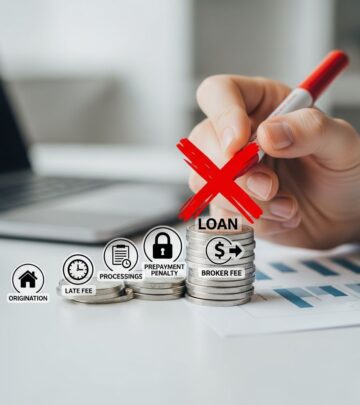
Unseen Expenses of Personal Loans and Smart Avoidance Tactics
Discover the overlooked fees in personal loans that inflate your debt and learn proven strategies to sidestep them for smarter borrowing.

Personal loans offer quick cash for needs like debt consolidation or emergencies, but beyond the stated interest rate, various concealed charges can substantially increase the total repayment amount. These expenses often catch borrowers unprepared, turning a manageable loan into a financial strain. By understanding these pitfalls and adopting proactive measures, individuals can secure better terms and preserve more of their hard-earned money.
Why Hidden Costs Matter in Borrowing Decisions
The allure of personal loans lies in their accessibility and flexibility, yet focusing solely on the interest rate overlooks the full picture. Fees such as processing charges and penalties for early repayment can elevate the effective cost by several percentage points. For instance, a seemingly low-rate loan might end up costing 10% more due to upfront deductions and ancillary charges. This section delves into the mechanics of these costs and their long-term impact on personal finances.
Borrowers with strong credit profiles may negotiate better rates, but even they face standardized fees that lenders embed in agreements. Regulatory disclosures like the Truth in Lending Act require transparency, yet fine print often obscures the details. Recognizing this empowers consumers to evaluate options critically rather than impulsively.
Primary Upfront Charges You Must Anticipate
Most personal loans come with initial fees deducted directly from the disbursed amount, meaning you receive less than requested while repaying the full principal. These charges compensate lenders for administrative efforts but erode the loan’s value immediately.
- Origination or Processing Fees: Typically 1% to 10% of the loan principal, these cover application review and fund setup. On a $20,000 loan, a 5% fee means $1,000 less in your pocket, yet interest accrues on the entire sum.
- Application Fees: Less common but charged by some for credit checks, ranging from $25 to $100. These add hurdle before approval.
To illustrate, consider a table comparing loan proceeds after fees:
| Loan Amount | Origination Fee (5%) | Net Proceeds | Interest on Full Amount |
|---|---|---|---|
| $10,000 | $500 | $9,500 | Yes |
| $20,000 | $1,000 | $19,000 | Yes |
| $30,000 | $1,500 | $28,500 | Yes |
This structure disadvantages borrowers, as monthly payments remain based on the original figure.
Penalties for Timing Mistakes: Late and Early Repayments
Payment scheduling errors trigger additional levies that compound quickly. Late submissions not only incur fines but also harm credit scores, leading to higher future borrowing rates.
- Late Payment Fees: Often $30 or 5% of the due amount, whichever is greater. Multiple instances over a loan term can add hundreds, plus interest on unpaid balances.
- Insufficient Funds Fees: When auto-payments bounce, expect $25-$35 per event, sometimes paired with bank overdraft charges.
- Prepayment Penalties: Charged for settling the loan ahead of schedule, usually 1-2% of remaining balance. Though rarer in personal loans, they offset lost interest for lenders.
Avoid these by setting calendar reminders, opting for autopay from a stable account, and confirming no early payoff restrictions before signing.
Optional Add-Ons That Sneak In as Costs
Lenders sometimes promote extras that sound protective but inflate expenses unnecessarily. These are frequently opt-in but presented as standard.
- Credit Insurance or Loan Protection: Covers payments during unemployment or illness, costing 1-2% of the loan annually. Often bundled without opt-out clarity, it can double costs for low-risk borrowers.
- Stamp Duty and Legal Fees: Vary by region, minimal but unavoidable in some jurisdictions.
Always request itemized quotes and decline non-essential coverage. Compare policies separately if needed, as standalone insurance may be cheaper.
Decoding Loan Documents for Full Transparency
Loan agreements are dense, but key sections reveal all charges. Demand the Truth in Lending disclosure, which itemizes fees and computes the APR—a truer cost metric than interest alone.
Steps to scrutinize effectively:
- Locate ‘Fees and Charges’ sections for explicit listings.
- Verify APR includes all mandatory fees, not just interest.
- Question ambiguous terms like ‘additional administrative costs’ in writing.
- Simulate total repayment using online calculators.
- Cross-check with reviews on neutral platforms.
Credit unions and online lenders often disclose more upfront, with lower origination rates for excellent credit.
Real-World Scenarios: How Fees Accumulate
Consider a $15,000 loan at 8% over 36 months. Base payments total $470 monthly, or $16,920 overall. Add 4% origination ($600 deducted), three annual late fees ($90/year x3=$270), and bundled insurance ($300/year x3=$900). Net cost jumps to $18,690—a 24% increase.
Early payoff example: On a $25,000 balance, a 2% penalty ($500) offsets half the interest savings from acceleration. Shop for no-penalty options to maximize benefits.
Strategic Ways to Minimize and Eliminate Extra Charges
Empowered shopping yields fee-free or low-fee loans. Prioritize:
- Lenders waiving origination for top-tier credit (700+ FICO).
- Credit unions with member perks like no prepay penalties.
- APR comparisons over nominal rates.
- Pre-qualification without hard inquiries.
Build credit beforehand via timely payments and low utilization. For urgent needs, borrow only essentials to shrink fee bases proportionally.
Regulatory Safeguards and Consumer Resources
The Consumer Financial Protection Bureau (CFPB) mandates clear disclosures and tracks complaints. Use their database to vet lenders. State regulations may cap fees; check local rules.
Frequently Asked Questions
Are origination fees tax-deductible?
Generally no, as personal loans lack business or home contexts qualifying for deductions. Consult a tax advisor.
How does APR differ from interest rate?
APR incorporates fees, providing a holistic cost view. Always compare APRs across offers.
Can I negotiate fees away?
Yes, especially with strong credit or competing quotes. Request waivers politely.
Do all lenders charge prepayment penalties?
No, many modern online lenders omit them to attract customers.
What’s the impact of late fees on credit?
They signal risk, dropping scores 100+ points and raising future rates.
Final Thoughts on Prudent Borrowing
Armed with this knowledge, approach personal loans as calculated tools, not quick fixes. Calculate total ownership costs, read every clause, and explore alternatives like balance transfers or savings. Responsible use preserves financial health amid 2026’s economic landscape.
References
- Hidden Personal Loan Fees to Watch Out For — Symple Lending. 2023. https://symplelending.com/insights/hidden-personal-loan-fees-to-watch-out-for
- 5 Hidden Costs of Personal Loans — Experian. 2024. https://www.experian.com/blogs/ask-experian/hidden-costs-of-personal-loans/
- Personal Loan Hidden Charges: Know Before You Borrow — RupeeQ. 2024. https://rupeeq.com/blog/what-are-the-hidden-costs-of-personal-loans/
- Hidden Personal Loan Fees — The Yukon Project. 2023. https://theyukonproject.com/personal-loans/hidden-personal-loan-fees/
- 5 costs to watch for when getting a personal loan in 2026 — Fortune. 2026-01-15. https://fortune.com/article/personal-loan-costs/
- Personal Loan Origination Fees: What To Know — Bankrate. 2025. https://www.bankrate.com/loans/personal-loans/personal-loan-origination-fees/
Similar Articles








Read full bio of Sneha Tete