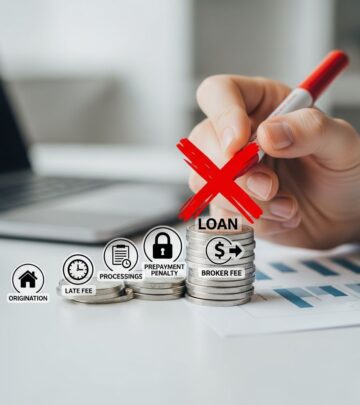
Unseen Expenses of Personal Loans
Discover the overlooked fees and charges that can inflate your personal loan costs and learn strategies to minimize them effectively.

Personal loans offer quick access to funds for debt consolidation, home improvements, or emergencies, but borrowers often focus solely on the advertised interest rate. In reality, the total cost extends far beyond that figure, encompassing various fees that can substantially elevate what you ultimately repay. Understanding these elements empowers you to make informed choices and potentially save hundreds or thousands of dollars.
Why Personal Loan Costs Matter More Than You Think
The allure of personal loans lies in their unsecured nature—no collateral required—and flexible use. However, lenders build in multiple charges to offset risks and operational expenses. While interest remains the primary unavoidable expense, ancillary fees can turn a seemingly affordable loan into a financial burden if not anticipated.
Consider a typical scenario: You borrow $10,000 at a 10% interest rate over 36 months. The monthly payment might appear manageable, but add in fees, and your effective cost rises. Savvy borrowers scrutinize the annual percentage rate (APR), which incorporates interest plus most fees, providing a truer picture of borrowing expenses.
Interest Charges: The Core Inevitable Cost
Every personal loan accrues interest, calculated as a percentage of the outstanding balance. This is the lender’s profit for providing funds, and it’s non-negotiable. Rates typically range from 6% to 36%, depending on your credit score, income, and loan term.
- Fixed vs. variable rates: Most personal loans feature fixed rates, offering payment predictability. Variable rates, less common, fluctuate with market indices.
- Simple interest formula: Interest = Principal × Rate × Time. Shorter terms mean less total interest paid, though higher monthly payments.
To illustrate, a $20,000 loan at 12% APR over 5 years results in about $5,800 in interest alone. Strategies like extra principal payments can reduce this, but only if your loan lacks prepayment penalties.
Origination Fees: The Upfront Deduction Trap
One of the most prevalent hidden costs is the origination fee, charged by many lenders to cover loan processing and underwriting. Ranging from 1% to 10% of the loan amount, it’s often deducted directly from proceeds, meaning you receive less than requested but repay the full principal.
For a $15,000 loan with a 5% origination fee, you’d get $14,250 but owe $15,000 plus interest. This fee is baked into the APR, so always compare offers using APR rather than interest rate alone.
| Loan Amount | Origination Fee (5%) | Funds Received | Total Repaid (Est. at 10% APR, 3 yrs) |
|---|---|---|---|
| $10,000 | $500 | $9,500 | $11,900 |
| $20,000 | $1,000 | $19,000 | $23,800 |
| $50,000 | $2,500 | $47,500 | $59,500 |
Opt for lenders like LightStream that charge zero origination fees to maximize your funds.
Late Payment Penalties: Avoidable but Costly Oversights
Missing a payment triggers late fees, typically $15 to $40 or 5% of the due amount, whichever is greater. Beyond the fee, it harms your credit score and may increase your interest rate via penalty APR.
Many lenders offer a 10-15 day grace period, but don’t rely on it. Enroll in autopay to ensure timely payments, and set bank alerts for low balances to dodge insufficient funds fees (often $15-$35 extra). Consistent on-time payments build credit while avoiding these hits.
Prepayment Penalties: Punishing Early Repayment
Some lenders impose prepayment penalties if you pay off early, designed to guarantee their expected interest income. These can be 1-2% of the remaining balance or a few months’ interest.
Thankfully, fewer lenders charge this today, especially post-Truth in Lending Act enhancements. Always review loan terms for phrases like “prepayment penalty” and choose no-penalty options to enable aggressive payoff strategies.
Application and Administrative Charges
Not all lenders require application fees ($25-$100), but those that do may charge regardless of approval. These cover credit checks and processing. Administrative fees for paperwork or account setup are similar rarities.
Shop lenders without these; reputable ones often waive them to attract borrowers. If unavoidable, factor into your cost calculus.
Other Sneaky Charges to Watch For
- Returned payment fees: For bounced autopay attempts, adding $25-$50 per incident.
- Credit check fees: Rare, but some pass on hard inquiry costs.
- Annual fees: Uncommon for personal loans, unlike credit cards.
These extras compound if unmanaged, emphasizing the need for full disclosure review under federal regulations.
Calculating Your True Loan Cost
Use online calculators to project total costs. Input principal, term, APR, and fees for accurate monthly payments and totals. Compare multiple offers side-by-side.
Pro Tip: Lower APR trumps no-fee if the difference is significant, as APR reflects holistic costs.
Strategies to Minimize Personal Loan Expenses
- Boost your credit score: Higher scores unlock lower rates (e.g., 670+ FICO often gets sub-10% APR).
- Shorten loan term: Pay more interest overall? No—shorter terms save big despite higher payments.
- Seek no-fee lenders: Platforms listing zero-origination options simplify shopping.
- Negotiate rates: Pre-approvals from multiple lenders give leverage.
- Extra payments: Target principal to cut interest accrual.
Real-World Examples of Cost Differences
Loan A: $25,000, 8% interest, 3% origination, 36 months. Effective APR ~9.5%, total paid: $28,200.
Loan B: Same, no origination. APR 8%, total: $27,500. Savings: $700.
Frequently Asked Questions
What is the average origination fee for personal loans?
Typically 1%-10%, with many lenders at 3%-6%. Shop for 0% where possible.
Does APR include all fees?
APR covers interest and most upfront fees like origination but excludes late fees.
Can I avoid late fees?
Yes, via autopay and grace periods. Check lender policy.
Are prepayment penalties common?
Declining, but verify contract language.
How do I compare loan offers?
Prioritize APR, then fees and terms. Use prequalification to avoid credit dings.
Navigating Regulations Protecting Borrowers
The Truth in Lending Act mandates clear fee and APR disclosure, enabling apples-to-apples comparisons. State laws may cap fees further. Report predatory practices to the Consumer Financial Protection Bureau.
Long-Term Financial Planning with Loans
Integrate loans into a broader strategy: emergency funds prevent reliance, debt snowball methods accelerate payoff. Personal loans beat high-interest credit cards for consolidation if managed well.
In 2026, with rates stabilizing post-inflation, timing matters. Lock in fixed rates now if qualifying.
References
- 5 costs to watch for when getting a personal loan in 2026 — Fortune. 2026. https://fortune.com/article/personal-loan-costs/
- Best Personal Loans With No Origination Fee in 2026 — NerdWallet. 2026. https://www.nerdwallet.com/personal-loans/best/no-origination-fee
Similar Articles








Read full bio of medha deb