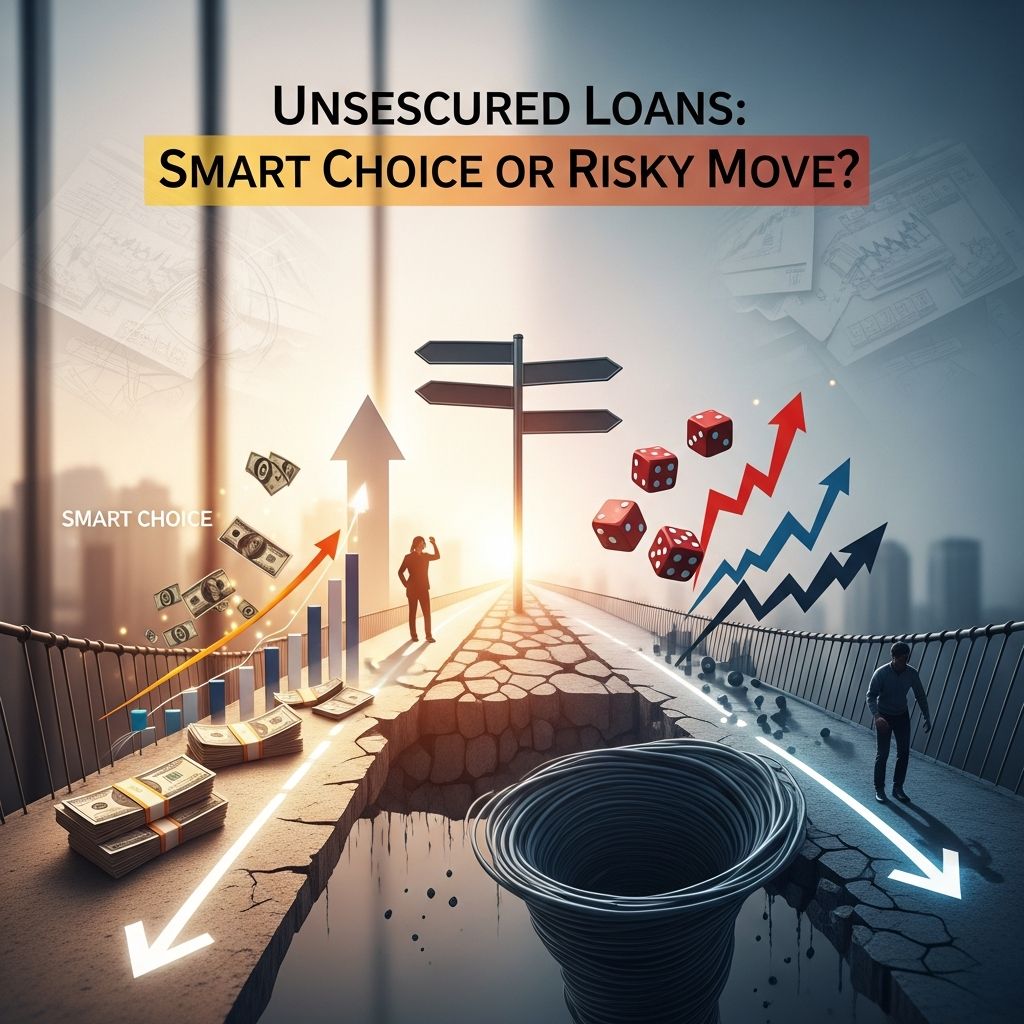
Unsecured Loans: Smart Choice or Risky Move?
Explore the advantages, pitfalls, and strategic uses of unsecured loans to decide if they fit your financial needs without risking your assets.
Unsecured loans offer borrowers a way to access funds quickly without pledging assets like homes or vehicles as collateral. These loans rely solely on the borrower’s creditworthiness and income, making them ideal for those who want to avoid risking personal property but come with trade-offs like elevated interest rates.
Understanding the Fundamentals of Unsecured Borrowing
At their core, unsecured loans represent a form of credit extended based on trust in the borrower’s ability to repay rather than possession of tangible security. Lenders assess factors such as credit scores, employment stability, and debt-to-income ratios to determine eligibility. Common examples include personal loans from banks or online platforms, credit cards, and certain student loans. Unlike traditional mortgages or auto financing, approval processes bypass asset appraisals, often leading to disbursements within days.
This structure appeals to individuals facing urgent needs, such as medical emergencies or home repairs, where speed trumps collateral requirements. Fixed monthly payments with set interest rates further simplify budgeting, as borrowers know exact obligations throughout the term.
Key Advantages That Make Unsecured Loans Appealing
Unsecured loans shine in scenarios demanding flexibility and minimal hassle. Here are the primary benefits:
- Asset Protection: Without collateral, defaulting won’t result in losing valuable possessions, safeguarding homes, cars, or savings from repossession.
- Rapid Funding: Skipping collateral verification accelerates approvals, often delivering cash in 1-3 business days—crucial for time-sensitive expenses.
- Versatile Applications: Funds can address diverse needs, from consolidating high-interest debts to covering unexpected bills or funding vacations, without usage restrictions.
- Fixed Repayment Predictability: Consistent payments aid financial planning, contrasting variable-rate options that fluctuate.
- Credit Building Potential: Timely repayments can boost credit profiles, opening doors to better future terms.
These perks position unsecured loans as a convenient tool for creditworthy individuals avoiding asset encumbrance.
Potential Drawbacks and Hidden Costs
Despite conveniences, unsecured loans carry notable downsides stemming from lender risk exposure:
- Elevated Interest Rates: Absent collateral, rates typically exceed secured counterparts, inflating total repayment—sometimes by thousands over the loan life.
- Stringent Qualification Criteria: Excellent credit (often 670+ FICO) and steady income are prerequisites, excluding those with fair or poor histories.
- Limited Borrowing Limits: Amounts cap lower, usually $1,000-$50,000, insufficient for major purchases like homes.
- Shorter Terms and Higher Payments: Repayment spans 1-7 years, yielding larger monthly outlays that strain budgets.
- Default Consequences: While assets stay safe, late payments trigger fees, score damage, and potential collections or lawsuits.
Borrowers must calculate affordability meticulously to sidestep cycles of debt.
Secured Loans vs. Unsecured: A Side-by-Side Analysis
To contextualize, compare unsecured loans against secured alternatives via this table:
| Feature | Unsecured Loan | Secured Loan |
|---|---|---|
| Collateral | None required | Asset pledged (e.g., home, car) |
| Interest Rates | Higher (8-36% APR) | Lower (3-15% APR) |
| Approval Speed | Fast (days) | Slower (weeks, due to appraisals) |
| Loan Size | Smaller ($1K-$50K) | Larger (up to asset value) |
| Risk to Assets | Low | High (repossession possible) |
| Qualification | Strict credit focus | More lenient with collateral |
| Fund Use | Flexible | Often purpose-specific |
This breakdown, drawn from lender practices, highlights trade-offs: unsecured prioritizes safety and speed, secured offers affordability for larger sums.
Ideal Scenarios for Pursuing Unsecured Loans
Unsecured loans suit specific situations best. Consider them for:
- Debt Consolidation: Merging credit card balances (avg. 20%+ APR) into one lower-rate loan (10-15%) slashes interest and simplifies payments.
- Emergency Expenses: Covering urgent repairs or medical costs without liquidating savings.
- Credit Improvement: Responsible use enhances scores for future secured borrowing.
- Short-Term Needs: Bridging gaps until payday or bonuses arrive.
Avoid them for non-essentials if rates exceed benefits, prioritizing savings instead.
Navigating the Application Process Effectively
Securing favorable terms demands preparation:
- Check Credit Report: Dispute errors; aim for 700+ scores.
- Compare Lenders: Shop banks, credit unions, online platforms for rates via prequalification (soft inquiries).
- Calculate Affordability: Ensure payments fit <36% debt-to-income ratio.
- Gather Documents: Proof of income, ID, bank statements.
- Read Fine Print: Note fees, prepayment penalties, APR.
Online tools from reputable lenders streamline this, often with instant decisions.
Strategies to Minimize Risks and Maximize Value
Optimize unsecured borrowing with these tactics:
- Boost Credit Pre-Application: Pay down debts, avoid new inquiries.
- Opt for Shorter Terms: Higher payments save on interest despite intensity.
- Automate Payments: Prevent misses that harm scores.
- Extra Principal Payments: Reduce balance faster if no penalties apply.
- Avoid Overborrowing:
Borrow only necessities to preserve cash flow.
Monitoring via apps ensures on-track progress.
Frequently Asked Questions (FAQs)
Are unsecured loans hard to get approved for?
They demand strong credit and income verification, but fair-credit options exist at higher rates.
Can I use an unsecured loan for anything?
Yes, most lack usage limits, unlike auto or mortgage loans.
What happens if I can’t repay an unsecured loan?
Lenders pursue collections, fees accrue, and credit suffers—no asset seizure, though.
Are unsecured loan rates fixed or variable?
Typically fixed, ensuring stable payments.
Is an unsecured personal loan better than a credit card?
Often yes, for lower rates on lump sums vs. cards’ higher, revolving APRs.
Final Thoughts on Making Informed Decisions
Unsecured loans empower without asset risks but require discipline amid higher costs. Evaluate personal finances thoroughly: if credit solidifies and purpose justifies expense, they prove valuable. Otherwise, explore alternatives like 0% cards or savings. Responsible use builds wealth; overextension erodes it.
References
- What Are Unsecured Loans and Should You Get One? — National Debt Relief. 2023. https://www.nationaldebtrelief.com/blog/debt-guide/personal-loan-debt/should-you-get-an-unsecured-loan-know-the-pros-cons-and-risks-before-you-decide/
- Pros and Cons of Unsecured Loans: What You Need to Know — Crestmont Capital. 2024. https://www.crestmontcapital.com/blog/pros-and-cons-of-unsecured-loans-what-you-need-to-know
- What is an Unsecured Personal Loan? — Citi. 2025. https://www.citi.com/personal-loans/learning-center/basics/unsecured-personal-loan
- The Pros and Cons of Unsecured Loans — Peach State Credit Union. 2024. https://www.peachstatefcu.org/blog/the-pros-and-cons-of-unsecured-loans
- Unsecured vs Secured Loans: What’s the Difference? — TD Bank. 2025. https://www.td.com/us/en/personal-banking/learning/unsecured-vs-secured-loan
Similar Articles








Read full bio of medha deb