Unraveling Credit Score Drops
Discover the top reasons behind sudden credit score declines and proven strategies to rebuild your financial standing effectively.
Your credit score serves as a critical benchmark for lenders, influencing everything from loan approvals to interest rates. A sudden decline can feel alarming, but understanding the underlying factors empowers you to take corrective action. This guide breaks down the primary reasons for score drops, drawing from established credit scoring models like FICO, and offers practical solutions to restore your financial profile.
Core Components of Credit Scoring Models
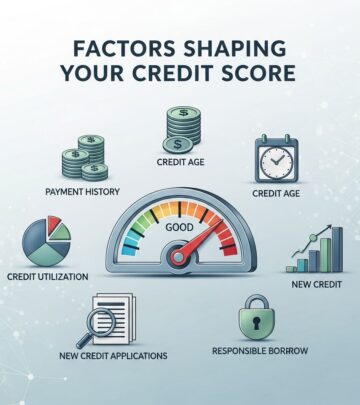
Credit scores, such as FICO or VantageScore, are calculated using data from your credit reports maintained by bureaus like Experian, Equifax, and TransUnion. Payment history weighs heaviest at 35%, followed by amounts owed (30%), length of credit history (15%), new credit (10%), and credit mix (10%). Changes in any area can trigger drops, often visible within days of updates to your report.
Monitoring tools from these bureaus allow weekly free checks, helping you spot issues early. Scores range from 300 to 850, with 670+ considered good. Even minor shifts matter, as they signal risk to lenders.
Payment Irregularities: The Leading Culprit
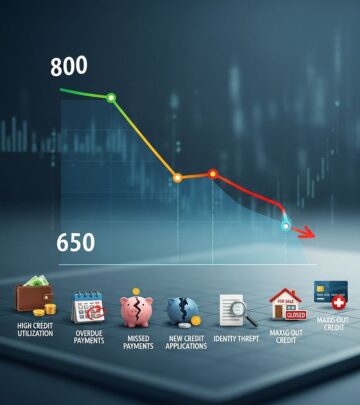
Timely payments form the foundation of a strong score. Delays beyond 30 days prompt reporting to bureaus, causing immediate drops of 50-100 points or more, depending on your prior standing. Repeated lates compound damage, while 60-90 day delinquencies hit harder.
- Grace Periods: Most creditors offer 30 days before reporting; use this to catch up and avoid notation.
- Missed Payments Entirely: These evolve into collections if unresolved, lingering 7 years and slashing scores by up to 150 points.
- Automation Helps: Set up autopay for minimums to prevent oversights amid busy schedules.
Recovery starts with consistent on-time payments post-incident. Scores rebound gradually, often within months if no further issues arise.
High Credit Utilization: A Silent Score Killer
Amounts owed, particularly revolving debt like credit cards, impact 30% of your score via utilization ratio—balances divided by limits. Ideal is under 30%; exceeding 50% signals overextension.
For example, $3,000 balances on $10,000 limits yield 30% utilization. A $7,000 limit cut with same balances jumps it to 43%, dropping scores 20-50 points.
| Scenario | Total Limits | Balances | Utilization | Score Impact |
|---|---|---|---|---|
| Balanced Use | $15,000 | $3,000 | 20% | Minimal/Negligible |
| High Use | $10,000 | $6,000 | 60% | -30 to -60 points |
| Limit Reduction | $10,000 → $6,000 | $3,000 | 50% | -20 to -40 points |
Strategies include paying balances monthly, requesting limit increases (without hard pulls if possible), and avoiding maxing cards. Utilization recalculates monthly, so prompt action yields quick gains.
New Credit Applications and Inquiries
Applying for credit triggers hard inquiries, each dinging scores 5-10 points and lasting 12 months (2 years for visibility). Multiple in short periods (e.g., rate shopping) amplify effects, suggesting desperation.
- Rate Shopping Exception: Mortgage/auto inquiries within 14-45 days count as one.
- Soft vs. Hard: Pre-approvals are soft (no impact); stick to these for scouting.
- New Accounts: Fresh cards/loans shorten average account age (15% factor), dropping scores temporarily.
Limit applications to necessities; space them 6+ months apart. Impacts fade over time.
Closing Accounts: Counterintuitive Consequences
Shutting cards, especially old ones, reduces available credit, spiking utilization, and shortens history length. A paid-off card with low/no balance might help keep open for mix benefits.
Illustration: Three cards, $15,000 limits, $3,000 balances (20%). Closing $5,000-limit card leaves $10,000 limits (30% utilization)—a score dip despite payoff.
Keep oldest accounts active with minimal use; negotiate to reopen if closed by issuer.
Derogatory Marks and Report Errors
Severe issues like charge-offs, collections, liens, judgments, or bankruptcies devastate scores, persisting 7-10 years. Initial hits are steep, with slow recovery.
Errors—wrong lates, duplicate accounts—also drag scores. AnnualCreditReport.com offers free weekly reports; dispute inaccuracies online via bureaus.
- Dispute Process: Submit evidence; 30% of disputes yield changes.
- Collections Strategy: Negotiate pay-for-delete (not guaranteed) or pay via goodwill letters.
Unexpected Triggers: Loans, Co-Signing, and Mix Changes
Paying off installment loans (mortgages, autos) alters credit mix (10%), potentially dropping scores short-term despite debt reduction.
Co-signing exposes you to another’s habits: their lates or high use hit your report too, plus initial inquiry.
Limit reductions by issuers (inactivity, risk changes) mimic utilization hikes; call to inquire/restore.
Step-by-Step Recovery Blueprint
- Get Reports: Pull free from AnnualCreditReport.com; review all three bureaus.
- Prioritize Payments: Use debt snowball/avalanche; aim for 1-2% utilization.
- Build Positives: Add secured cards if thin file; become authorized user on good-standing account.
- Monitor Progress: Track via Credit Karma or bureau apps (VantageScore/FICO views).
- Seek Help: Nonprofit credit counseling (NFCC.org) over debt settlement.
Expect 3-6 months for noticeable rebounds; perfect habits yield 100+ point gains yearly.
Preventive Measures for Score Stability
Proactive habits insulate against drops:
- Freeze credit to block fraud inquiries.
- Maintain 6-month emergency fund for payments.
- Use 50/30/20 budgeting: 50% needs, 30% wants, 20% savings/debt.
- Review statements monthly; alert issuers to anomalies.
Tools like Experian Boost add utility/phone payments to reports, lifting scores 10-30 points for many.
FAQs: Addressing Common Concerns
Why did my score drop with no changes from me?
Issuer limit changes, report errors, or co-signed account activity often culprit. Check reports promptly.
How long until score recovers from a late payment?
Single 30-day late: 6-12 months with perfect history; multiples take 2+ years.
Does checking my own score hurt it?
No—soft inquiries invisible to lenders/scorers.
Can I remove accurate negatives?
Rarely; time reduces impact. Disputes only for errors.
What’s worse: high utilization or late payment?
Late payment (35% factor) > utilization (30%), but both avoidable.
Long-Term Strategies for Peak Scores
Aim for 750+ via diversification: mix cards/loans, 10+ years history, <10% utilization. Avoid payday loans/high-APR debt. Homeownership builds positive installment history.
For subprime starters, secured cards report to all bureaus; graduate to unsecured after 6-12 months on-time.
In 2026 economy, with rising rates, pristine scores secure better terms—worth the discipline.
References
- Why Did My Credit Score Drop? Here Are 11 Common Reasons — FinEdge CU. 2023. https://www.finedgecu.org/blogs?blog_id=89
- Why Did My Credit Score Drop? 10 Common Reasons — Upstart. 2024-05-15. https://www.upstart.com/learn/why-did-my-credit-score-drop/
- Why Did My Credit Score Drop? — Experian. 2025-01-10. https://www.experian.com/blogs/ask-experian/why-did-my-credit-score-drop/
- Why Did My Credit Score Drop? — Credit Karma (Intuit). 2024. https://www.creditkarma.com/credit/i/credit-score-drop
- Why Your Credit Score May Drop – And How to Fix It — StatonWalsh. 2023-08-20. https://www.statonwalsh.com/blog/why-your-credit-score-may-drop-and-how-to-fix-it
- Not-so-obvious causes for a dropping FICO score — myFICO (Fair Isaac Corp.). 2024. https://www.myfico.com/credit-education/faq/negative-reasons/why-is-my-fico-score-dropping
Similar Articles








Read full bio of medha deb