Unlocking Student Loan Forgiveness Options
Discover proven paths to erase federal student debt through public service, teaching, healthcare, and income-driven plans in 2026.

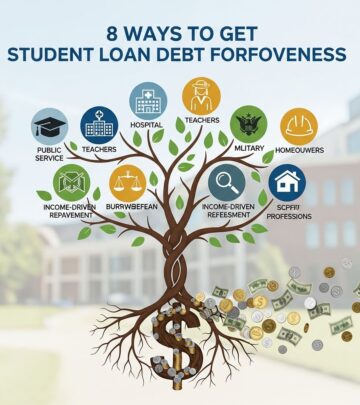
Federal student loan forgiveness programs offer pathways to eliminate debt for millions of borrowers who meet specific criteria, such as employment in public service or extended payments under income-driven plans. These initiatives, administered primarily by the U.S. Department of Education, target educators, healthcare workers, government employees, and others serving the public good, potentially wiping out balances after 10 to 25 years of qualifying payments or service.
Core Principles of Loan Forgiveness Eligibility
Most programs require federal Direct Loans or those consolidated into Direct Consolidation Loans, excluding private loans. Borrowers must maintain full-time employment with qualifying employers or adhere to repayment plans like Income-Driven Repayment (IDR). Recent adjustments, including one-time IDR credits, have accelerated forgiveness for many by counting past deferments and forbearances toward required payments.
- Federal Direct Loans qualify directly for programs like PSLF.
- FFEL or Perkins Loans need consolidation to become eligible.
- Income thresholds apply in IDR plans, capping payments at 10-20% of discretionary income.
Public Service Loan Forgiveness: The Gold Standard
Public Service Loan Forgiveness (PSLF) erases remaining Direct Loan balances after 120 qualifying monthly payments (about 10 years) while working full-time for government entities, nonprofits under 501(c)(3), or certain public service nonprofits. Qualifying employers include schools, hospitals, military, and law enforcement agencies.
To apply, submit the PSLF Employment Certification Form annually or after job changes via StudentAid.gov. The Temporary Expanded PSLF (TEPSLF) provides a second chance for those previously denied by forgiving balances after additional payments under non-qualifying plans.
| Requirement | Details |
|---|---|
| Payments | 120 on-time, full payments under qualifying IDR plan |
| Employment | 30+ hours/week at eligible employer |
| Loan Type | Direct Loans only |
| Forgiveness Amount | 100% of remaining balance, tax-free through 2025 |
Income-Driven Repayment Plans Leading to Forgiveness
IDR plans adjust payments based on income and family size, forgiving leftovers after 20-25 years. The SAVE Plan, formerly REPAYE, offers the lowest payments (5% of discretionary income for undergrad loans) and forgiveness as early as 10 years for small balances.
- SAVE Plan: 10-25 years based on original principal; includes interest subsidies.
- PAYE: 20 years for new borrowers post-2014.
- IBR: 20 years (new borrowers) or 25 years; payments at 10-15% of income.
- ICR: 25 years; higher payment percentage (20%).
A one-time adjustment credits months in repayment, deferment (pre-2013), or forbearance toward forgiveness, potentially discharging loans immediately for long-term borrowers.
Educators’ Pathways to Debt Relief
Teachers in low-income schools or high-need fields like math, science, or special education can secure up to $17,500 forgiven after five consecutive years. The Teacher Loan Forgiveness Program covers Direct Subsidized/Unsubsidized Loans, while Perkins Loan Cancellation offers similar relief up to 100% over five years.
Eligibility demands full-time teaching in Title I schools; apply via your loan servicer with certification from school administration.
Healthcare and Legal Professionals’ Incentives
National Health Service Corps (NHSC) forgives up to $75,000 for two years of full-time service in underserved areas for physicians, nurses, and PAs. Part-time service yields $37,500.
The John R. Justice Program supports prosecutors and public defenders with variable forgiveness (state-funded) after three years of service to indigent clients.
Government Workers’ Repayment Benefits
Federal agencies can repay up to $10,000 annually (max $60,000) for employees via the Federal Employee Student Loan Repayment Program, covering Direct, FFEL, and Perkins Loans. Private sector employers occasionally offer similar perks.
Special Circumstances: Borrower Defense and Total Discharge
Borrower Defense forgives loans if schools engaged in fraud or misrepresentation. Total and Permanent Disability Discharge eliminates debt for qualifying medical conditions, with recent streamlined processes.
Step-by-Step Application Process
- Check Loan Type: Log into StudentAid.gov to confirm Direct Loans.
- Consolidate if Needed: Use Direct Consolidation for FFEL/Perkins.
- Select Repayment Plan: Enroll in IDR via StudentAid.gov/IDR.
- Certify Employment: For PSLF, submit PSLF Help Tool forms.
- Track Progress: Use the PSLF Tracker app or servicer portal.
- Apply for Forgiveness: Submit final application post-qualifying period.
Processing times vary; PSLF approvals surged post-2021 waivers, but denials persist due to improper plans or employers.
2026 Updates and Potential Changes
As of 2026, IDR forgiveness remains tax-free federally through 2025 extensions, with SAVE enhancements reducing payments. Proposed plans like RAP suggest 30-year forgiveness on gross income, amid ongoing legal challenges.
Common Pitfalls to Avoid
- Payments during forbearance or non-IDR plans don’t count toward PSLF.
- Private refinancing forfeits federal options.
- Failure to recertify IDR annually pauses progress.
- Non-qualifying nonprofits (e.g., non-501(c)(3)) exclude PSLF.
Financial Planning Around Forgiveness
While pursuing forgiveness, build emergency funds and retirement savings, as low IDR payments don’t cover accruing interest fully. Budgeting tools from CFPB aid in tracking.
Frequently Asked Questions (FAQs)
Who qualifies for PSLF in 2026?
Government or eligible nonprofit workers with Direct Loans after 120 IDR payments.
Is student loan forgiveness taxable?
IDR and PSLF forgiveness is federally tax-free through at least 2025; state taxes vary.
Can I get forgiveness for private loans?
No federal programs cover private loans; employer repayment is an option.
How long does PSLF approval take?
90 days typically, but waivers have sped up processing.
What if my employer changes?
Recertify employment; cumulative service counts.
State and Employer-Sponsored Relief
Beyond federal programs, 30+ states offer teacher, nurse, and lawyer forgiveness. Check state education departments for locals like New York’s Nursing Loan Forgiveness ($8,000-$17,000 annually).
Corporations like Google and Boeing provide up to $10,000+ in repayment assistance.
References
- 143 Student Loan Forgiveness Programs (2026): Complete List — EducationData.org. 2026. https://educationdata.org/student-loan-forgiveness-programs
- Student loan forgiveness — Consumer Financial Protection Bureau. 2024-02-06. https://www.consumerfinance.gov/paying-for-college/student-loan-forgiveness/
- Available Student Loan Forgiveness Programs — Bankrate. 2025. https://www.bankrate.com/loans/student-loans/qualify-for-student-loan-forgiveness-programs/
- 14 Student Loan Forgiveness Programs for 2025: Do You Qualify? — NerdWallet. 2025. https://www.nerdwallet.com/student-loans/learn/student-loan-forgiveness
- Federal Student Aid Loan Forgiveness — StudentAid.gov. 2026. https://studentaid.gov/manage-loans/forgiveness-cancellation
- Student Loan Forgiveness (and Other Ways the Government Can …) — StudentAid.gov. 2023. https://studentaid.gov/articles/student-loan-forgiveness/
- Student Loans, Forgiveness | U.S. Department of Education — U.S. Department of Education. 2024. http://www.ed.gov/higher-education/manage-your-loans/student-loans-forgiveness-us-department-of-education
Similar Articles








Read full bio of Sneha Tete