Self-Directed IRAs: Step-By-Step Guide For 2025
Discover how self-directed IRAs expand your retirement options with alternative investments while preserving tax benefits.

Self-directed individual retirement accounts (SDIRAs) empower investors to take charge of their retirement savings by accessing a broader spectrum of assets beyond traditional stocks and bonds. These accounts maintain the core tax advantages of standard IRAs while allowing investments in real estate, precious metals, private equity, and cryptocurrencies.
Core Principles of Self-Directed Retirement Accounts
At their foundation, SDIRAs function like conventional IRAs but with expanded flexibility. They come in traditional and Roth variants: traditional SDIRAs accept pre-tax contributions that grow tax-deferred, while Roth versions use after-tax dollars for potential tax-free withdrawals in retirement. Contribution limits and required minimum distributions (RMDs) align with IRS rules for all IRAs, ensuring compliance while unlocking unique opportunities.
The custodian’s role is pivotal. Unlike brokerage firms limiting choices to public markets, SDIRA custodians act as neutral administrators, holding assets and handling paperwork without dictating investment decisions. This setup demands investor diligence, as custodians do not offer advice.
Permissible Investments in SDIRAs
SDIRAs shine through their diverse asset classes, enabling tailored strategies based on expertise or market insights. Key categories include:
- Real Estate: Purchase rental properties, land, or commercial spaces directly within the account for income generation and appreciation.
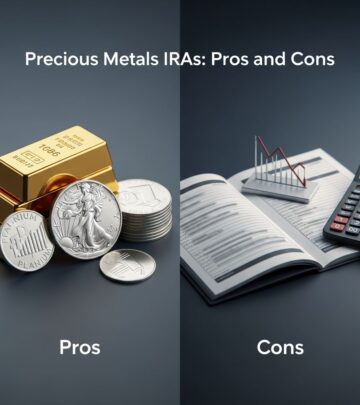
- Precious Metals: Hold physical gold, silver, or platinum, often as a hedge against inflation, subject to IRS purity standards.
- Private Equity and Businesses: Invest in startups, private companies, or notes, leveraging personal networks for high-growth potential.
- Cryptocurrencies and Digital Assets: Allocate to Bitcoin or other coins through compliant structures, tapping into emerging markets.
- Tax Liens and Notes: Acquire liens or promissory notes for steady yields with lower volatility.
These options foster diversification, reducing reliance on stock market fluctuations.
Key Advantages Driving SDIRA Popularity
Experienced investors gravitate to SDIRAs for several compelling reasons. First, they enable profound diversification by incorporating ‘hard assets’ like property, which often perform independently of equities.
Second, tax efficiency remains intact. Growth compounds without annual taxes, amplifying long-term wealth. Traditional SDIRAs defer taxes until withdrawal, potentially at lower rates in retirement, while Roth SDIRAs offer tax-free qualified distributions.
Third, full control appeals to entrepreneurs and specialists. Investors direct every transaction, aligning portfolios with unique knowledge—such as real estate pros flipping properties tax-advantaged.
Potential for superior returns rounds out the benefits, as alternative assets may outperform conventional ones in favorable cycles.
| Benefit | Description | Comparison to Traditional IRA |
|---|---|---|
| Diversification | Access to real assets and alternatives | Limited to stocks, bonds, ETFs |
| Tax Treatment | Deferred or tax-free growth | Identical |
| Investor Control | Direct decision-making | Custodian-guided options |
| Return Potential | Higher in niche markets | Market-average |
Navigating Prohibitions and Compliance Rules
SDIRAs impose strict IRS prohibitions to prevent self-dealing. Prohibited transactions include personal use of assets, lending to disqualified persons (self, family, advisors), or excessive leverage. Violations trigger taxes and penalties, potentially disqualifying the entire account.
Disqualified persons encompass spouses, ancestors, descendants, and their spouses, plus entities they control. Investments must benefit the IRA exclusively, maintaining arm’s-length transactions.
UBTI (unrelated business taxable income) may apply to leveraged real estate or operating businesses, requiring Form 990-T filings. Custodians ensure paperwork compliance, but investors bear responsibility for adherence.
Step-by-Step Guide to Establishing an SDIRA
Launching an SDIRA involves deliberate steps for seamless integration with existing savings.
- Select a Specialized Custodian: Choose based on fees, asset support, service quality, and reputation. Look for those offering checkbook control via LLCs for agility.
- Open the Account: Complete application, designating traditional or Roth, and fund via cash or transfer.
- Fund the Account: Use direct transfers (60-day window) or rollovers from 401(k)s/prior IRAs. Avoid indirect rollovers to prevent withholding taxes.
- Establish Checkbook LLC (Optional): Form an IRA-owned LLC for rapid transactions without custodian delays.
- Execute Investments: Direct custodian on purchases; maintain meticulous records.
- Monitor and Report: Track performance, file taxes as needed, and prepare for RMDs post-73.
Fees vary: setup ($50-300), annual ($200-500), transaction ($75+ per deal), plus asset storage costs.
Assessing Risks and Mitigation Tactics
SDIRAs amplify rewards but introduce complexities unsuitable for novices. Illiquidity plagues real estate and private deals, complicating access during emergencies. Valuation challenges arise for non-public assets, impacting RMD calculations.
Fraud risks loom, with FINRA warning of promoters pushing speculative schemes via SDIRAs. Due diligence is essential: verify deals independently, consult professionals, and diversify holdings.
Leverage magnifies losses, and prohibited transactions risk severe penalties. Mitigation includes education, expert advisors, and conservative allocation—perhaps 10-20% of retirement in alternatives.
Strategic Applications for Different Investor Profiles
Real estate enthusiasts can acquire income properties, channeling rents back into the account tax-free. Precious metals advocates hedge inflation via IRS-approved bullion. Crypto pioneers allocate modestly to digital assets for growth.
Entrepreneurs fund ventures or peer loans, harnessing networks. Blending with traditional assets balances risk.
Frequently Asked Questions
What distinguishes an SDIRA from a standard IRA?
SDIRAs permit alternative assets like property and metals, while standard IRAs restrict to stocks, bonds, and funds.
Are SDIRAs suitable for beginners?
No; they demand expertise due to management burdens and risks. Seasoned investors fare best.
How do taxes work in SDIRAs?
Traditional: tax-deferred growth; Roth: tax-free qualified withdrawals. UBTI may apply to certain activities.
Can I combine SDIRA with my 401(k)?
Yes, via rollovers, but adhere to one-per-year transfer limits.
What are typical fees?
Annual maintenance $200+, transactions $75+, setup $50-300, varying by custodian and assets.
SDIRAs offer transformative potential for proactive savers willing to navigate intricacies. They bridge tax efficiency with investment freedom, but success hinges on knowledge and caution.
References
- Self-Directed IRA (SDIRA): How It Works and Where to Open One — NerdWallet. 2025. https://www.nerdwallet.com/retirement/learn/self-directed-ira
- 5 Benefits of Using a Self-Directed IRA (SDIRA) — SouthStar Bank. 2025. https://southstarbank.com/5-benefits-of-using-a-self-directed-ira/
- Self-Directed IRA Benefits — IRA Financial. 2025. https://www.irafinancial.com/blog/self-directed-ira-benefits/
- What Is a Self-Directed IRA? — STRATA Trust Company. 2025. https://www.stratatrust.com/sdiras/
- Self Directed IRA in 2025: Benefits, Fees & FAQs — The Entrust Group. 2025. https://www.theentrustgroup.com/self-directed-iras
- Benefits of Investing with a Self-Directed IRA — Equity Trust Company. 2025. https://www.trustetc.com/blog/5-self-directed-ira-benefits/
- Investor Alert: Self-Directed IRAs and the Risk of Fraud — FINRA.org. 2025. https://www.finra.org/investors/insights/self-directed-IRAs-risk-of-fraud
Similar Articles








Read full bio of medha deb