Unlocking Roth 401(k): Tax-Free Retirement Savings
Discover how Roth 401(k) plans offer tax-free growth and withdrawals, blending employer perks with long-term financial flexibility for secure retirement.

A Roth 401(k) represents a powerful employer-sponsored retirement vehicle that allows workers to fund their future with after-tax dollars, enabling tax-free qualified distributions later in life. This plan merges the high contribution limits of a traditional 401(k) with the Roth IRA’s tax advantages, making it an attractive option for diversifying tax strategies.
Core Mechanics of Roth 401(k) Accounts
Participants contribute post-tax income directly from paychecks into investment options like stocks, bonds, or mutual funds. Earnings accumulate without annual taxes, and qualified withdrawals—after age 59½ and a five-year holding period—are entirely tax-free, including gains.
Employers often provide matching funds, typically up to a percentage of salary, treated as pre-tax and taxable upon withdrawal. This ‘free money’ boosts savings significantly. Plans are portable: rollovers to new employer plans, IRAs, or leaving funds with prior employers are standard features.
Contribution Guidelines and Limits
For 2025, individuals can contribute up to $23,500 annually, excluding matches. Those 50+ qualify for catch-up contributions of $7,500, pushing totals higher. Limits rise periodically; by 2026, expect increases to accommodate inflation and policy changes.
| Year | Standard Limit | Catch-Up (50+) |
|---|---|---|
| 2025 | $23,500 | $7,500 |
| 2026 (projected) | Increasing | Increasing |
Automatic payroll deductions simplify saving, reducing temptation to spend. Some plans offer loans or hardship withdrawals, subject to employer rules.
Tax Dynamics: Paying Now for Future Freedom
Unlike pre-tax traditional 401(k)s, Roth contributions don’t lower current taxable income but eliminate taxes on growth and qualified pulls. This shines if expecting higher future brackets or rates, locking in today’s rates.
- Tax-free compounding: Investments grow uninterrupted by capital gains or dividend taxes.
- No RMDs for account holders: Post-2024, Roth 401(k)s exempt original owners from required minimum distributions at age 73, unlike traditional plans. Rollovers to Roth IRAs extend this.
- Hedge against tax hikes: Ideal for younger workers or those in low brackets now.
Roth 401(k) Versus Traditional 401(k): A Side-by-Side Analysis
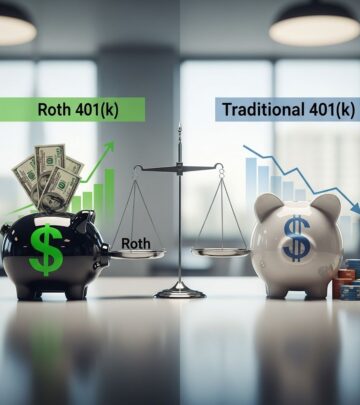
The pivotal distinction lies in timing of tax payments. Traditional plans defer taxes; Roth front-loads them for back-end relief.
| Feature | Roth 401(k) | Traditional 401(k) |
|---|---|---|
| Contributions | After-tax | Pre-tax |
| Growth | Tax-free | Tax-deferred |
| Qualified Withdrawals | Tax-free | Taxed as income |
| RMDs | None (post-2024) | Required at 73 |
| Best For | Future high taxes | Current high taxes |
Many opt for both via ‘mega backdoor’ strategies if plans allow after-tax contributions converted to Roth.
Strategic Advantages for Long-Term Wealth Building
Beyond taxes, Roth 401(k)s enhance flexibility. Employer matches amplify returns risk-free. Estate planning benefits arise from tax-free inheritance potential via Roth IRA rollovers, minimizing beneficiary taxes.
Young professionals benefit most: low current taxes mean minimal upfront cost for decades of tax-free growth. Diversifying between Roth and traditional mitigates unknown future rates.
Potential Drawbacks and Considerations
No immediate deduction hurts if in a high bracket today. Early withdrawals before 59½ incur taxes and 10% penalties on earnings (contributions withdraw tax-free anytime). Employer matches remain pre-tax, creating a hybrid tax event.
- Upfront cash flow strain without deduction.
- Five-year rule for earnings tax-free status per conversion.
- Plan availability varies by employer.
Weigh income, age, and tax outlook. High earners might prioritize traditional first, then Roth.
Integration with Broader Retirement Ecosystem
Roth 401(k)s complement IRAs, HSAs, and taxable accounts. Roll to Roth IRA post-job for RMD avoidance and investment choice. SECURE 2.0 Act enhancements, like RMD elimination, solidify appeal.
High savers leverage combined limits: max traditional 401(k), then Roth designations within it.
Practical Steps to Launch Your Roth 401(k)
- Confirm employer offers Roth option.
- Assess tax bracket: low now? Prioritize Roth.
- Max contributions, especially with match.
- Monitor investments; target diversified funds.
- Rebalance annually; consider Roth conversions from traditional.
Consult advisors for personalized fit, factoring state taxes and Social Security.
Frequently Asked Questions (FAQs)
Can I contribute to both Roth and traditional 401(k)?
Yes, combined limit applies (e.g., $23,500 total in 2025). Split strategically.
Are employer matches Roth or traditional?
Always pre-tax traditional, taxed on withdrawal.
What if I leave my job?
Roll to new plan, Roth IRA, or leave in place if over $5,000.
Does Roth 401(k) affect Medicare premiums?
No, untaxed withdrawals don’t count as income for IRMAA.
Is Roth 401(k) better than Roth IRA?
Higher limits and matches make it superior for many, despite less investment flexibility.
Real-World Scenarios: Who Thrives with Roth 401(k)
Scenario 1: 30-year-old at $60k salary (12% bracket). Contributing $5k/year Roth yields ~$500k tax-free by 65 (7% return), versus taxed traditional.
Scenario 2: 50+ earner maxing catch-up. No RMDs preserve growth for legacy.
Scenario 3: Career changer expecting bracket jump. Roth hedges future taxes.
These illustrate ~30-40% effective tax savings potential versus traditional in rising-rate environments.
References
- What Is A Roth 401(k)? — Bankrate. 2025. https://www.bankrate.com/retirement/roth-401k/
- Understanding the Roth 401(k) Option: The Pros and Cons — Innovative CPA Group. 2024. https://www.innovativecpagroup.com/resources/newsarticles/understanding-the-roth-401k-option-the-pros-and-cons/
- Roth 401(k) Explained: Benefits & Drawbacks — Western & Southern. 2025. https://www.westernsouthern.com/retirement/roth-401k
- What is a Roth 401(k)? — Prudential Financial. 2024. https://www.prudential.com/financial-education/what-is-roth-401k
- Roth comparison chart — Internal Revenue Service. 2025. https://www.irs.gov/retirement-plans/roth-comparison-chart
Similar Articles








Read full bio of medha deb