REO Properties: 7 Steps To Buy Bank-Owned Homes
Discover the potential of bank-owned homes: strategies, risks, and financing for savvy buyers seeking value in the market.

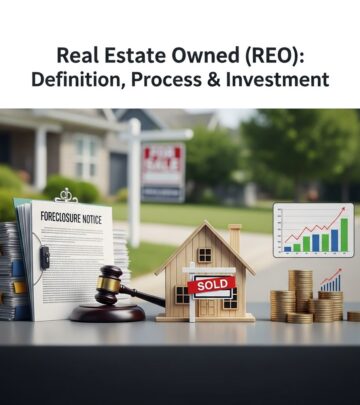
Real Estate Owned (REO) properties represent a unique segment of the housing market where financial institutions take possession of homes after foreclosure processes fail to attract buyers at auction. These bank-owned assets offer potential bargains but come with specific challenges that require careful navigation.
Defining REO Properties in Today’s Market
At its core, an REO property is real estate that a lender—often a bank, mortgage company, or government agency—owns outright following an unsuccessful foreclosure auction. When borrowers default on loans, lenders initiate foreclosure to reclaim the collateral. If no bidder meets the lender’s reserve price at the public auction, the property reverts to the lender’s balance sheet as an REO asset.
This status distinguishes REO homes from pre-foreclosure short sales or auction properties. Lenders become responsible for the property, including basic upkeep, lien clearance, and marketing for resale. In the U.S., these transactions are common, with government-backed entities like Fannie Mae and Freddie Mac managing programs such as HomePath and HomeSteps to facilitate sales.
- Clean title advantage: Lenders typically resolve major liens and taxes before listing, reducing buyer risks compared to auction buys.
- As-is condition: Expect no seller concessions for repairs; properties may show neglect from prior occupancy.
- Motivated sellers: Banks prioritize quick dispositions to minimize holding costs, often pricing below market value.
The Journey: How Properties Become REO
The path to REO status unfolds through several stages, starting with borrower delinquency. Lenders first pursue loss mitigation options like loan modifications or forbearance. If unsuccessful, foreclosure proceedings commence, varying by state—judicial (court-supervised) or non-judicial (trustee-led).
During the foreclosure auction, the property is offered publicly. Bidding starts at the outstanding loan balance plus fees. Failure to sell means the lender assumes ownership, evicts any occupants, secures the site, and prepares for retail sale. This process can take months, during which the property may deteriorate further without maintenance.
| Stage | Description | Typical Timeline |
|---|---|---|
| Default | Borrower misses payments; lender contacts for solutions. | 90+ days |
| Foreclosure Filing | Lender initiates legal action. | 3-12 months |
| Auction | Public sale; no qualified bids. | Post-filing |
| REO Listing | Bank cleans title, lists for sale. | 1-3 months |
Florida exemplifies state-specific rules under Chapter 702 of the Statutes, mandating disclosures and maintenance until sale.
Attractions of Purchasing REO Homes
Buyers drawn to REO properties often seek value-driven opportunities. Prices are frequently 20-30% below comparable market homes due to banks’ urgency to liquidate non-performing assets. Investors flip them for profit after renovations, while first-time buyers access entry-level pricing.
Additional perks include:
- Streamlined transactions without emotional sellers.
- Potential incentives like closing cost credits from government programs.
- Financing flexibility through lender partnerships or FHA 203(k) renovation loans.
Post-2020 market shifts, REO inventory has fluctuated with economic recovery, but opportunities persist in softening markets.
Navigating the Risks and Pitfalls
Despite discounts, REO purchases demand caution. Properties are sold “as-is,” potentially hiding structural issues, mold, or outdated systems. Buyers forgo traditional seller disclosures, heightening inspection importance.
Other hurdles:
- Occupancy issues: Holdover tenants or squatters may require eviction.
- Limited negotiations: Banks stick to list prices with minimal flexibility.
- Competition: Investors with cash offers dominate bidding wars.
- Title surprises: Though rare, junior liens might linger.
Conduct thorough due diligence: professional inspections, title searches, and appraisals are non-negotiable.
Step-by-Step Process to Acquire an REO Property
Securing an REO demands preparation and persistence. Follow this roadmap:
- Secure pre-approval: Banks favor financed buyers with strong credit; aim for 620+ FICO.
- Search listings: Use MLS, bank websites (e.g., HUD Home Store), or REO specialist agents.
- Partner with experts: Engage REO-certified realtors familiar with addendums and bank protocols.
- Submit offers: Expect electronic platforms; include proof of funds.
- Inspect rigorously: Budget for multiple walkthroughs; no repairs expected.
- Finalize financing: Close quickly, often 30-45 days.
- Post-purchase planning: Arrange renovations or rentals.
Cash buyers close faster, but mortgage options abound for qualified applicants.
Financing Strategies for REO Purchases
Traditional mortgages apply, but REO’s condition suits specialized products. FHA 203(k) loans bundle purchase and rehab costs, ideal for fixers. Conventional loans require properties meeting appraisal standards post-repairs.
Government inventories offer:
- Fannie Mae HomePath: Up to 3% credits for updates.
- Freddie Mac HomeSteps: Incentives for owner-occupants.
- HUD Homes: FHA-insured bargains.
Compare options:
| Loan Type | Min Down Payment | Best For |
|---|---|---|
| FHA 203(k) | 3.5% | Renovation projects |
| Conventional | 3-5% | Move-in ready REOs |
| Cash | 0% | Competitive edge |
Who Thrives in the REO Arena?
Experienced investors excel, leveraging networks for off-market deals and flipping expertise. First-timers succeed with mentorship, focusing on stable neighborhoods. Avoid if risk-averse; the high-reward potential balances substantial upfront effort.
Market data shows REO sales peaking in distressed cycles, offering portfolio diversification.
Frequently Asked Questions (FAQs)
What makes REO properties cheaper?
Banks price aggressively to recover losses quickly, often below appraised value.
Can I finance an REO with a standard mortgage?
Yes, but condition may necessitate renovation loans like FHA 203(k).
Are REO homes insured?
Lenders provide basic policies; buyers should secure their own post-closing.
How long does an REO sale take?
Typically 30-60 days from offer acceptance, faster for cash.
Do I need an REO specialist agent?
Highly recommended for navigating bank-specific contracts and timelines.
REO properties blend opportunity with oversight needs. With due diligence, they unlock equity-building paths for proactive buyers.
References
- Real Estate Owned (REO) – Legal Glossary Definition 101 — Barnes Walker. Accessed 2026. https://barneswalker.com/legal-glossary/r/real-estate-owned-reo/
- What does REO mean in real estate? — Rocket Mortgage. Accessed 2026. https://www.rocketmortgage.com/learn/what-is-reo
- What Are REO Properties? — Dial, Grimm & Rupert. Accessed 2026. https://dgr.law/what-are-reo-properties
- Real estate owned — Wikipedia (references primary sources). Accessed 2026. https://en.wikipedia.org/wiki/Real_estate_owned
- REO Homes: A Step-by-Step Guide to Buying Bank-Owned Properties — NewRez. Accessed 2026. https://www.newrez.com/blog/buying-selling/reo-homes-a-step-by-step-guide-to-buying-bank-owned-properties/
- The REO Guide: 10 Steps to Buying a Bank-Owned Home — PennyMac. Accessed 2026. https://www.pennymac.com/blog/reo-guide-10-steps-to-buying-bank-owned-home
Similar Articles








Read full bio of Sneha Tete