REO Properties: Investor And Buyer Guide For 2025
Discover the ins and outs of Real Estate Owned properties, from how they arise to smart buying strategies for savvy investors.

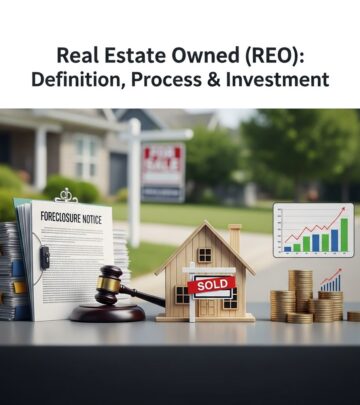
Real Estate Owned (REO) properties represent a unique segment of the housing market where financial institutions take direct control of foreclosed homes. These assets emerge when borrowers default on mortgages, leading to repossession by lenders after unsuccessful auctions. Understanding REO properties opens doors for buyers seeking value in distressed sales.
The Journey to Becoming an REO Asset
The path to REO status begins with mortgage delinquency. When homeowners miss payments, lenders initiate foreclosure to reclaim the collateral. This legal process varies by state but typically culminates in a public auction where the property is offered to the highest bidder. If no bids meet the lender’s reserve—often the outstanding loan balance plus fees—the property reverts to the bank’s inventory as REO.
Banks view REO holdings as non-performing assets that tie up capital and incur ongoing costs like taxes, insurance, and maintenance. Their priority shifts to swift liquidation, often pricing properties competitively to attract buyers. This contrasts with standard listings, where emotional sellers might hold out for top dollar.
Key Traits That Define REO Listings
- As-Is Condition: Lenders rarely invest in repairs, selling homes with visible damage, outdated features, or deferred upkeep to minimize expenses.
- Cleared Title: Major liens are typically resolved pre-sale, reducing buyer risks compared to auction properties.
- Discounted Pricing: Motivated sellers lead to below-market values, appealing to budget-conscious purchasers.
- Institutional Ownership: Banks or servicers manage sales via specialized agents or online platforms.
These characteristics make REOs distinct from pre-foreclosures (short sales) or traditional resales, positioning them as investor favorites.
Pros and Cons of Pursuing REO Purchases
REO properties offer compelling upsides but demand caution. Here’s a balanced view:
| Advantages | Disadvantages |
|---|---|
| Potentially 20-30% below market value, yielding strong equity from day one. | Sold as-is, often needing significant renovations which inflate total costs. |
| Streamlined process with fewer contingencies once under contract. | Limited inspection windows or seller concessions for repairs. |
| Less competition than hot retail markets; institutional sellers prioritize volume. | Possible hidden issues like plumbing failures or structural problems. |
| Financing options from the owning bank, sometimes with flexible terms. | Stigma of foreclosure history may deter future resale buyers. |
Investors often thrive here, flipping fixed-up REOs for profit, while owner-occupants must budget for post-purchase work.
Finding and Evaluating REO Opportunities
Locating REOs requires targeted searches. Major banks like Chase maintain dedicated portals for their inventories, listing thousands nationwide. Multiple Listing Services (MLS) flag REO status, and sites like Auction.com or Hubzu host bank auctions transitioning to REO. Specialized agents, known as REO certified, excel in this niche.
Due diligence is paramount:
- Professional Inspection: Hire experts to uncover issues beyond surface wear.
- Title Search: Verify clean ownership despite lender assurances.
- Appraisal Review: Confirm the discount justifies rehab expenses.
- Neighborhood Analysis: Assess long-term value potential amid surrounding comps.
Tools like comparative market analysis (CMA) help gauge true worth, ensuring offers align with after-repair value (ARV).
Navigating the REO Buying Process Step-by-Step
Acquiring an REO mirrors conventional purchases but accelerates in key phases. Start with pre-approval to signal seriousness—banks favor financed buyers. Submit offers via listing agents, often electronic, with earnest money deposits.
Expect addendums waiving seller repairs and short response times (48-72 hours). Accepted bids trigger title commitment reviews. Closing timelines compress to 30 days, with electronic notarization streamlining docs. Cash buyers close even faster, appealing to institutions unloading portfolios.
Post-closing, budget for immediate fixes: roof leaks, HVAC failures, or cosmetic refreshes to stabilize the asset.
Financing Strategies for REO Deals
Traditional mortgages apply, but REO specialists shine. FHA 203(k) loans bundle purchase and rehab funds, ideal for fixer-uppers. VA and USDA options suit eligible veterans or rural buyers. Investor cash or hard money bridges gaps for flips, with conventional loans post-renovation.
Some banks offer in-house financing with lower down payments (5-10%) for primary residences, contrasting stricter investor terms. Compare rates and lock early to hedge market shifts.
Investment Potential in the REO Market
REOs fuel flippers and landlords. Post-2008 crash, they dominated distressed sales; today’s market sees sporadic supply amid rising rates. High-yield areas like Florida post-hurricane zones or Midwest metros yield ARVs 50%+ above acquisition.
Rental conversions thrive where cap rates exceed 8%, factoring tenant demand. Long-term holders benefit from principal paydown via rents covering notes plus reserves. Diversify via REO funds or LLCs to mitigate single-asset risks, akin to co-ownership models.
Common Pitfalls and How to Sidestep Them
- Underestimating Repairs: Pad budgets 20-50% over estimates; walk vacant properties thoroughly.
- Bidding Wars: Rare but cap offers at 70-80% ARV minus fixes.
- Legal Oversights: Engage attorneys for state-specific foreclosure nuances.
- Market Timing: Buy in upcycles; hold through dips if occupancy strong.
Veteran buyers network with asset managers for off-market gems, boosting edges.
REO vs. Other Distressed Property Types
| Property Type | Source | Condition | Risk Level | Price Edge |
|---|---|---|---|---|
| REO | Bank post-auction | As-is, lender-maintained | Medium (title cleared) | High |
| Foreclosure Auction | Public bid | Unknown occupancy | High (liens possible) | Highest |
| Short Sale | Owner negotiation | Varies, occupied | Medium (delays) | Moderate |
| Standard Resale | Private seller | Staged, repaired | Low | None |
REOs strike a balance: value without auction chaos.
Frequently Asked Questions (FAQs)
What exactly is an REO property?
An REO is real estate owned by a lender after foreclosure auction failure, held for resale to recoup losses.
Are REO homes always cheap?
Typically yes, priced to sell quickly, but location and condition dictate discounts—urban gems less so.
Can first-time buyers finance REOs?
Absolutely; FHA/VA loans accommodate, though as-is clauses require rehab planning.
Do banks evict REO occupants?
Yes, via formal processes post-foreclosure, ensuring vacant delivery usually.
Is REO buying competitive?
Less than retail; investors dominate, but retail buyers succeed with strong pre-approvals.
Future Trends Shaping REO Dynamics
With interest rates fluctuating, delinquency upticks could swell inventories. Tech streamlines listings via AI valuations, while green retrofits boost appeal. Regulatory shifts post-2026 may mandate faster resolutions, favoring agile buyers.
References
- 7 Types of Ownership in Real Estate – Which is Best for You? — Pacaso. 2023. https://www.pacaso.com/blog/real-estate-ownership-types
- What Are the 4 Types of Real Estate Ownership? — Calalaw. 2024-05-15. https://www.calalaw.com/blog/types-real-estate-ownership/
- Short Sale Vs Foreclosure Vs REO Properties- What’s the Difference? — Dixit Law. 2023. https://dixitlaw.com/short-sale-foreclosure-reo/
- Guide To Real Estate Owned (REO) Properties and How To Buy Them — eXp Realty. 2024. https://www.exprealty.com/guides/guide-to-real-estate-owned-reo-properties-and-how-to-buy-them
- Real Estate Owned (REO) – Legal Glossary Definition 101 — Barnes Walker. 2024-01-10. https://barneswalker.com/legal-glossary/r/real-estate-owned-reo/
- Real estate owned — Wikipedia. 2025. https://en.wikipedia.org/wiki/Real_estate_owned
- A guide to REO properties: How to buy & finance them — Chase. 2024-08-20. https://www.chase.com/personal/mortgage/education/financing-a-home/guide-to-reo-properties
Similar Articles








Read full bio of Sneha Tete