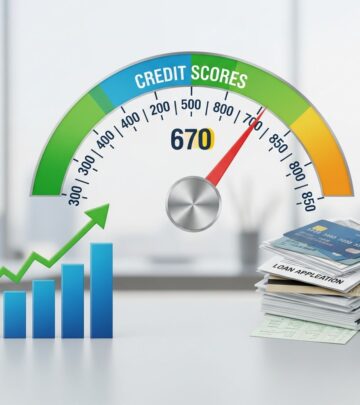
Unlocking the Power of a 730 Credit Score
Discover what a 730 credit score means for your financial future, from loan approvals to better rates, and proven strategies to leverage or boost it.

A 730 credit score places you firmly in the
good to very good
category, signaling reliability to lenders and opening doors to competitive financial products. This score reflects a solid track record of managing credit responsibly, typically aligning with FICO ranges of 670-739 or VantageScore’s 661-780 brackets.Understanding Credit Score Fundamentals
Credit scores, ranging from 300 to 850, serve as numerical summaries of your credit health. FICO and VantageScore models categorize them into tiers: poor (below 580-600), fair (580-669), good (670-739/661-780), very good (740-799), and excellent (800+). At 730, you exceed the U.S. average, which hovers around 673 for VantageScore, positioning you as a ‘prime’ borrower favored by most institutions.
Key factors influencing your score include payment history (35% of FICO), amounts owed (30%), credit history length (15%), new credit (10%), and mix (10%). A 730 indicates consistent on-time payments and balanced utilization, often under 30% of available credit.
Where 730 Fits in Lender Evaluations
Lenders view a 730 score as low-risk, enabling quick approvals for mortgages, auto loans, and credit cards with prime terms. Unlike subprime scores below 670, which trigger higher scrutiny or denials, 730 qualifies you for rates near those of excellent scorers.
| Score Range | FICO Label | VantageScore Label | Lender Perception |
|---|---|---|---|
| 300-579/499 | Poor | Very Poor/Poor | High risk, limited options |
| 580-669/500-660 | Fair | Fair | Subprime, higher rates |
| 670-739/661-780 | Good | Good | Prime, competitive terms |
| 740-799 | Very Good | N/A | Preferred, better rates |
| 800-850 | Exceptional/Excellent | Excellent | Top-tier, best deals |
This table illustrates how 730 stands out, often securing interest rates 1-2% lower than fair scores on major loans.
Real-World Benefits of a 730 Score
- Lower Interest Rates: On a $20,000 auto loan, a 730 score might yield 5.5% APR versus 8% for 650, saving over $1,000 in interest.
- Higher Credit Limits: Cards offer limits 20-50% above subprime approvals, aiding utilization control.
- Loan Approvals: Mortgages and personal loans approve faster without co-signers.
- Insurance Savings: Some insurers discount premiums based on credit tiers like 730.
- Rental Advantages: Landlords prefer this range, reducing deposit requirements.
Recent data shows prime borrowers like those with 730 scores face fewer limit reductions, even amid usage drops, as issuers prioritize active accounts.
Potential Drawbacks and Lender Nuances
While strong, 730 isn’t elite; pushing to 740+ unlocks premium rewards cards or jumbo loans. Banks may adjust limits if usage falls, slightly raising utilization and dipping scores temporarily (1-2 months). Monitor via free tools to track changes.
Strategies to Maintain Your 730 Score
Preserve this level by automating payments to avoid lapses, which comprise 35% of your score. Keep utilization below 30%—e.g., $3,000 balance on $10,000 limit.
- Pay balances monthly before statements close.
- Retain old accounts for history length.
- Limit new applications to 1-2 yearly.
Diversify with a mix of revolving (cards) and installment (loans) credit without overextending.
Boosting from 730 to Excellent Territory
Aim for 740+ by disputing report errors via annualcreditreport.com, reducing debt aggressively, and adding positive history like secured cards if needed. Experian tools show change reasons and personalized plans, with users averaging 30+ point gains.
- Review Reports: Check Equifax, Experian, TransUnion weekly for free.
- Lower Utilization: Request limit increases on low-usage cards, but avoid if recent inquiries exist.
- Build History: Use cards lightly and pay off fully.
- Time Inquiries: Space hard pulls 6+ months apart.
Age demographics matter: 50-59-year-olds average higher superprime rates (49% above 800), rewarding long-term discipline.
Credit Score Myths Debunked for 730 Holders
- Myth: Closing old cards helps. Fact: It shortens history and spikes utilization.
- Myth: Maxing limits once is fine. Fact: High utilization lingers on reports.
- Myth: Scores are identical across bureaus. Fact: VantageScore 3.0 via Chase differs from FICO; lenders pull specifics.
730 Score in Today’s Economic Climate
As of 2026, with credit card debt over $1.2 trillion and 30% utilization norms, a 730 score insulates against rate hikes, unlike subprime holders facing ‘silent pain’. Trends favor strategic borrowers maintaining prime status amid rising costs.
Frequently Asked Questions
What does a 730 credit score qualify me for?
Prime credit cards, auto loans at 4-6% APR, and conventional mortgages with 3-5% down payments.
Is 730 considered good or very good?
Good per FICO (670-739), aligning with prime lender views; edges toward very good (740+).
How long to improve from 730 to 750?
3-6 months with perfect payments and utilization under 10%; faster if disputing errors.
Does a credit limit cut hurt my 730 score?
Temporarily yes, via higher utilization, but minimal if balances stay low.
Can I check my score for free?
Yes, via Chase Credit Journey (VantageScore 3.0) or Credit Karma, without impacts.
Long-Term Financial Planning with a 730 Score
Leverage your score for wealth-building: refinance high-interest debt, secure 0% intro cards, or build emergency funds via high-yield savings. Track via apps showing score drivers for sustained growth. Consistent habits propel toward superprime (800+), minimizing lifetime interest costs.
For 50+ borrowers, maintaining 730+ counters age-related dips, ensuring retirement security.
References
- Credit Score Ranges & What They Mean — Chase Bank. 2026 (accessed). https://www.chase.com/personal/credit-cards/education/credit-score/credit-score-ranges-and-what-they-mean
- Chase cut my credit-card limit due to lower usage — Morningstar/MarketWatch. 2026-02-05. https://www.morningstar.com/news/marketwatch/20260205182/chase-cut-my-credit-card-limit-due-to-lower-usage-will-this-affect-my-credit-score-and-lead-other-banks-to-do-the-same
- Check Your Credit Score for Free with Credit Journey — Chase Bank. 2026 (accessed). https://www.chase.com/personal/financial-tools/monitor/free-credit-score
- What Is a Credit Score, and Why Is It Important? — Chase Bank. 2026 (accessed). https://www.chase.com/personal/investments/learning-and-insights/article/what-is-a-credit-score-and-why-is-it-important
- Emerging Credit Trends — Chase Bank. 2026 (accessed). https://www.chase.com/personal/credit-cards/education/credit-score/emerging-credit-trends
Similar Articles








Read full bio of medha deb