Unlocking Index Funds
Discover how index funds offer simple, low-cost investing for long-term wealth building and market diversification.

Index funds represent a cornerstone of modern investing, offering a straightforward path to participate in market growth without the complexities of stock picking. These funds mirror the performance of established market benchmarks, providing investors with broad exposure to hundreds or thousands of securities in a single purchase. By design, they prioritize cost efficiency and simplicity, making them accessible for those new to finance as well as seasoned portfolios.
The Fundamentals of Index Funds
At their core, index funds are collective investment vehicles that replicate the composition and returns of a specific market index. Unlike funds managed by professionals who actively select assets to outperform the market, index funds adopt a passive strategy. They hold the same securities in proportions matching the index, adjusting only when the benchmark itself changes. This approach minimizes turnover and associated costs.
For instance, an index fund tracking the S&P 500 would invest in all 500 large-cap U.S. companies weighted by market capitalization. Investors gain fractional ownership across diverse sectors, from technology giants to healthcare leaders, reducing the impact of any single company’s underperformance.
Why Choose Passive Over Active Management?
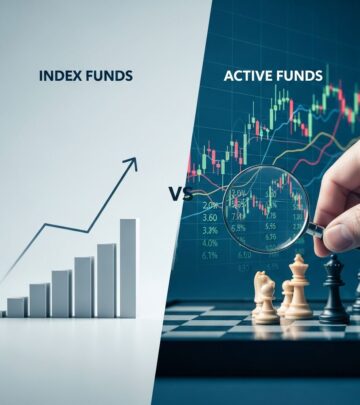
Active management involves fund managers making frequent buy and sell decisions to beat market averages. However, studies show most active funds fail to outperform their benchmarks over time, especially after fees. Index funds sidestep this by eliminating research and trading expenses, passing savings to investors through lower expense ratios, often under 0.1% annually.
This cost advantage compounds over decades. A difference of just 1% in fees can significantly erode returns. Passive funds also exhibit lower volatility in certain market conditions due to their broad diversification.
Popular Indices and Their Index Funds
Indices serve as barometers for market health. The S&P 500, comprising top U.S. firms, is the most tracked, representing about 80% of the U.S. equity market. Other notables include the Dow Jones Industrial Average (30 blue-chip stocks), Nasdaq-100 (tech-heavy), and total market indices covering small and mid-cap companies.
Bond indices like the Bloomberg U.S. Aggregate Bond Index offer fixed-income exposure. International options, such as MSCI World or emerging markets indices, provide global diversification. Each has corresponding funds designed to mirror their movements closely.
Types of Index Funds: Mutual Funds vs. ETFs
| Feature | Index Mutual Funds | Index ETFs |
|---|---|---|
| Trading | End-of-day pricing | Intra-day like stocks |
| Minimum Investment | Often $1,000+ | Price of one share |
| Tax Efficiency | Moderate | High (in-kind redemptions) |
| Expense Ratios | Very low | Typically lowest |
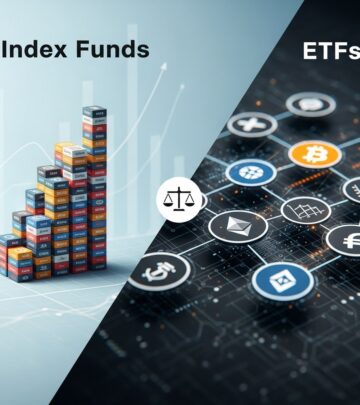
Mutual funds pool investor money and trade once daily at net asset value (NAV). ETFs, exchange-traded funds, trade throughout the market day, offering flexibility and often lower entry barriers. Both track indices effectively, but ETFs excel in liquidity and tax advantages.
Key Benefits Driving Popularity
- Diversification: Spread risk across numerous assets, mitigating individual stock failures.
- Low Costs: Minimal fees preserve more returns for compounding.
- Simplicity: No need for constant monitoring or expertise.
- Historical Performance: Matching market returns has beaten most active strategies long-term.
- Accessibility: Available via retirement accounts like 401(k)s and IRAs.
These attributes make index funds foundational for strategies like dollar-cost averaging, where regular investments smooth out market timing risks.
Potential Drawbacks to Consider
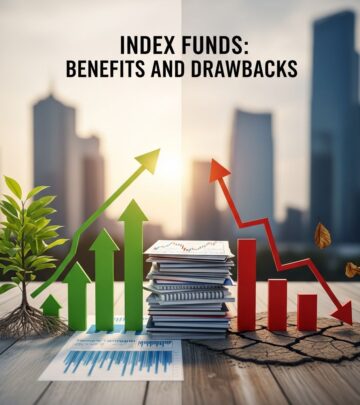
While robust, index funds aren’t flawless. They fully capture market downturns, lacking the potential to outperform in bull markets via selective picks. Narrow indices may concentrate risks, such as sector overweights in tech-heavy benchmarks. Additionally, tracking errors—slight deviations from the index—can occur due to fees or sampling methods.
Liquidity in less popular funds might pose challenges during volatile periods. Investors should align choices with risk tolerance and goals, perhaps blending with active funds or individual holdings for customization.
Steps to Begin Investing
- Assess Goals and Risk: Determine time horizon, retirement needs, or short-term objectives.
- Select an Index: Match to preferences—broad U.S., international, bonds, or sector-specific.
- Compare Funds: Evaluate expense ratios, tracking accuracy, assets under management via sites like Morningstar.
- Open a Brokerage Account: Choose platforms like Vanguard, Fidelity, or Schwab with no-commission trades.
- Invest Regularly: Set up automatic contributions for consistent growth.
- Monitor and Rebalance: Annually review allocations to maintain diversification.
Starting small builds habits. Many platforms offer fractional shares, enabling investments from $5.
Building a Portfolio with Index Funds
A simple three-fund portfolio might include: total U.S. stock market, total international stocks, and total bond market funds. This covers domestic equities (60%), global equities (20%), and bonds (20%) for balanced risk. Adjust based on age—younger investors favor stocks, nearing retirement shift to bonds.
For tax optimization, hold tax-inefficient funds (bonds) in retirement accounts, ETFs in taxable ones. Rebalancing annually prevents drift from target allocations.
Index Funds in Retirement Planning
Target-date funds, blending index components, automatically adjust glide paths toward conservatism. Standalone indices suit DIY investors. Consistent contributions via 401(k) matches amplify growth. Historical S&P 500 returns average ~10% annually, though past performance isn’t guaranteed.
Common Myths Debunked
- Myth: Only for Beginners. Pros use them as core holdings.
- Myth: No Room for Growth. They capture full market upside.
- Myth: All Identical. Vary by provider, costs, tracking methods.
Frequently Asked Questions
What is the best index fund for beginners?
Total market funds like Vanguard Total Stock Market Index provide instant broad exposure with ultra-low fees.
Are index funds safe?
No investment is risk-free, but diversification lowers volatility compared to single stocks.
How much should I invest in index funds?
Start with what you can afford regularly; aim for 15% of income toward retirement.
Can index funds lose money?
Yes, during market declines, but long-term holding recovers with economic growth.
Do index funds pay dividends?
Many do, distributing them quarterly or reinvesting automatically.
Future Outlook for Index Funds
With assets surpassing $10 trillion globally, index investing grows amid fee pressures on active managers. Innovations like smart-beta indices incorporate factors like value or momentum while retaining passivity. ESG-focused indices rise, blending sustainability with performance. Regulatory support and robo-advisors further democratize access.
In summary, index funds democratize wealth-building, leveraging market efficiency for reliable, hands-off growth. By understanding their mechanics and integrating strategically, investors position for enduring success.
References
- Low-Cost Index Funds: A Beginner’s Guide — Bankrate. 2023-10-15. https://www.bankrate.com/investing/low-cost-index-funds-guide/
- What is an index fund? — Vanguard Investor Resources. 2024-02-20. https://investor.vanguard.com/investor-resources-education/understanding-investment-types/what-is-an-index-fund
- How to Invest in Index Funds: A 3-Step Beginner’s Guide — Stash Learn. 2024-01-10. https://www.stash.com/learn/how-to-invest-in-index-funds/
- The Best Index Funds and How to Start Investing — NerdWallet. 2024-03-05. https://www.nerdwallet.com/investing/learn/how-to-invest-in-index-funds
Similar Articles








Read full bio of Sneha Tete