Unlocking HSAs: Triple-Tax Savings for Health
Discover how Health Savings Accounts offer unmatched tax benefits, investment growth, and lifelong security for your medical needs.
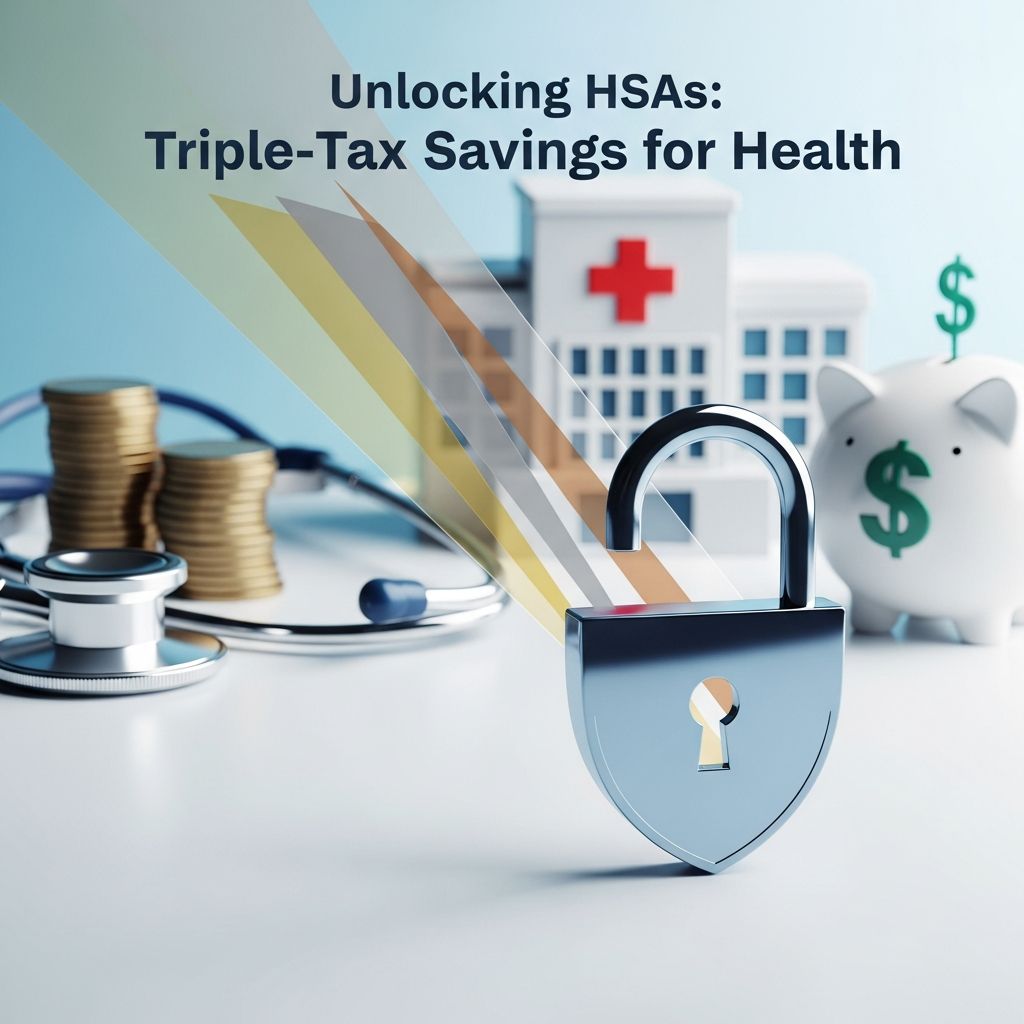
Health Savings Accounts (HSAs) represent a powerful financial strategy for managing healthcare expenses while building long-term wealth. Designed exclusively for individuals enrolled in high-deductible health plans (HDHPs), HSAs allow pre-tax contributions, tax-free growth, and tax-free withdrawals for qualified medical costs, creating a rare triple tax advantage. This setup not only cushions against out-of-pocket expenses but also serves as a robust retirement savings vehicle.
Core Principles of Health Savings Accounts
At their foundation, HSAs function as personal savings vehicles tied to specific insurance structures. Participants must maintain an HDHP, which features higher annual deductibles and lower premiums compared to traditional plans. Once enrolled, account holders can deposit funds to cover deductibles, copays, and other eligible costs. Unlike other savings accounts, HSAs offer portability—funds remain yours regardless of job changes, plan switches, or retirement.
The appeal lies in the uninterrupted accumulation: unused balances roll over indefinitely without a ‘use it or lose it’ rule, distinguishing HSAs from flexible spending accounts (FSAs). This feature encourages proactive saving, turning healthcare budgeting into an investment opportunity.
Eligibility Essentials: Who Qualifies?
Not everyone can open an HSA. Primary requirements include enrollment in an HDHP that meets IRS minimum deductible thresholds and maximum out-of-pocket limits. For 2026, these are typically around $1,600 for individuals and $3,200 for families in deductibles, with out-of-pocket caps not exceeding $8,050 and $16,100 respectively—figures adjusted annually for inflation.
- No other disqualifying coverage, such as general health FSAs, Medicare, or certain TRICARE plans.
- Age under 65, as Medicare enrollment closes HSA contributions.
- No dependency status that prevents personal contributions.
Employers often facilitate setup through payroll deductions, maximizing tax efficiency, while self-employed individuals or those without employer plans can open HSAs independently via banks or custodians.
The Triple Tax Advantage Explained
HSAs deliver unparalleled tax efficiency. Contributions reduce taxable income upfront—either via payroll (pre-tax, dodging FICA taxes) or as above-the-line deductions. Earnings from interest or investments grow tax-deferred. Withdrawals for qualified expenses escape taxation entirely.
| Tax Benefit | Description | Comparison to Standard Savings |
|---|---|---|
| Contributions | Pre-tax or deductible, up to IRS limits | Taxed immediately |
| Growth | Tax-free interest/investments | Taxed as earned |
| Withdrawals | Tax-free for medical uses | Fully taxed |
This structure can save thousands annually. For instance, a $7,750 family contribution at a 24% marginal rate plus 7.65% FICA yields over $2,500 in immediate savings.
2026 Contribution Limits and Strategies
Annual limits are set by the IRS and rise with inflation. In 2026, expect individuals to contribute up to $4,300 and families $8,550, with an extra $1,000 catch-up for those 55+. Employers may add matching funds, but total contributions cannot exceed caps.
Smart strategies include:
- Maximize early: Contribute the full amount ASAP for maximum growth time.
- Payroll priority: Avoid FICA taxes on employer-routed funds.
- Catch-up focus: Those nearing 65 should prioritize the $1,000 boost.
Funds deposit gradually or lump-sum, available immediately for reimbursements, enhancing liquidity.
Qualified Expenses: What Counts?
IRS Section 213(d) defines broad eligible uses, covering far more than doctor visits. Over-the-counter meds, dental work, vision care, and even some insurance premiums qualify.
- Prescriptions, copays, deductibles.
- Dental cleanings, orthodontics, glasses.
- Acupuncture, chiropractic, fertility treatments.
- Long-term care premiums (within limits), COBRA continuation coverage.
Non-qualified withdrawals before 65 incur income tax plus 20% penalty; post-65, only income tax applies, mirroring traditional IRA flexibility. Retain receipts for IRS-proof reimbursements anytime.
Investment Opportunities Within HSAs
Many custodians offer investment options once balances hit thresholds (e.g., $1,000-$2,000 cash). Mutual funds, ETFs, or stocks enable growth akin to 401(k)s, with tax-free gains.
Aggressive investors might allocate 70% equities for long horizons, shifting conservative near retirement. Historical data shows diversified portfolios compounding significantly over decades, potentially covering Medicare gaps.
HSA vs. FSA: Key Distinctions
While both use pre-tax dollars, FSAs forfeit unspent funds yearly (limited carryover exceptions), lack investment options, and pair with any plan. HSAs demand HDHPs but offer ownership and perpetuity.
| Feature | HSA | FSA |
|---|---|---|
| Plan Requirement | HDHP only | Any plan |
| Rollovers | Unlimited | Limited/none |
| Ownership | Portable, lifelong | Employer-tied |
| Investments | Yes, tax-free growth | No |
| Contributions | Employee + employer | Employee only |
Limited-purpose FSAs can complement HSAs for dental/vision.
Navigating HDHPs: The Perfect Pairing
HDHPs feature high deductibles but first-dollar coverage for preventives, lower premiums, and network incentives. Post-deductible, they mirror traditional plans minus some out-of-pocket max protections via HSA. Ideal for healthy individuals or families planning routine care savings.
Opening and Managing Your HSA
Select FDIC-insured banks, credit unions, or investment firms as trustees. Online portals track balances, submit claims, and invest. Debit cards, checks, or reimbursements simplify spending. Employer plans streamline taxes; independents deduct on Form 8889.
Retirement and Long-Term Planning
Post-65, HSAs fund non-medical needs penalty-free (taxed otherwise), bridging Medicare’s gaps like premiums, deductibles, and supplements. Many treat HSAs as ‘super IRAs’ for healthcare-heavy retirements.
Potential Pitfalls and Best Practices
Avoid common errors:
- Overlooking HDHP compatibility during open enrollment.
- Non-qualified early withdrawals triggering penalties.
- Ignoring investment fees eroding growth.
- Forgetting Medicare stops contributions.
Best practices: Track expenses meticulously, invest conservatively at first, review annually.
Frequently Asked Questions
Can I use HSA funds for family members?
Yes, for your spouse, dependents, or even non-qualifying post-65 expenses (taxed).
What if I change jobs?
HSAs are fully portable; roll over seamlessly.
Are investments safe in an HSA?
Depends on choices; opt for diversified, low-fee options like index funds.
Can self-employed open HSAs?
Absolutely, if HDHP-eligible.
Do HSAs earn interest?
Yes, tax-free, plus investment returns.
References
- Health Savings Accounts — U.S. Office of Personnel Management (OPM). 2025-2026. https://www.opm.gov/healthcare-insurance/healthcare/health-savings-accounts/
- HSA – Health Savings Accounts — Associated Bank. 2025. https://www.associatedbank.com/personal/health-savings-and-benefits/hsa
- What is an HSA and how does it work? — Fidelity Investments. 2025. https://www.fidelity.com/learning-center/smart-money/what-is-an-hsa
- Health Savings Accounts — HSA Bank. 2025. https://hsabank.com/HSABank/Products/HSA
- What are Health Savings Account-eligible plans? — HealthCare.gov. 2025. https://www.healthcare.gov/high-deductible-health-plan/
- Health Savings Accounts — FDIC.gov. 2025. https://www.fdic.gov/financial-institution-employees-guide-deposit-insurance/health-savings-accounts
Similar Articles








Read full bio of Sneha Tete