HELOC Uses: Smart Ways To Tap Home Equity In 2025
Discover versatile ways to leverage your home equity through a HELOC for renovations, education, debt relief, and more while managing risks effectively.

A Home Equity Line of Credit, or HELOC, serves as a flexible financial tool that allows homeowners to tap into the equity they’ve accumulated in their property. Equity represents the portion of your home’s current market value that you truly own, calculated as the difference between the home’s worth and any remaining mortgage balance. For instance, if your residence is appraised at $400,000 with a $200,000 mortgage, you hold $200,000 in equity. This revolving credit line operates similarly to a credit card but is secured by your home, offering lower interest rates due to the collateral.
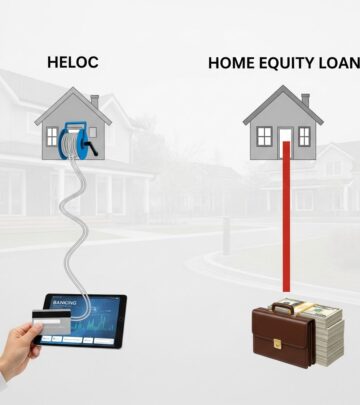
Unlike a traditional home equity loan that disburses a lump sum, a HELOC provides access to funds during a draw period, usually 10 years, where you borrow only what you need and pay interest solely on the drawn amount. Following this, a repayment phase, often 20 years, requires principal and interest payments. This structure suits ongoing or unpredictable expenses.
Key Advantages of Utilizing a HELOC
HELOCs stand out for their adaptability and cost-effectiveness. Interest rates are typically lower than those on unsecured options like credit cards or personal loans, making them attractive for substantial borrowing needs. Current rates, while variable and tied to market indexes, remain competitive, especially post-2024 adjustments.
- Interest Efficiency: Pay interest only on utilized funds, reducing overall costs compared to lump-sum loans where you finance the full amount upfront.
- Revolving Access: Reuse available credit as balances are repaid, providing ongoing liquidity.
- Potential Tax Benefits: Interest may be deductible if funds support qualified home improvements; consult a tax professional for current rules.
- Credit Enhancement: Timely payments can improve your credit score over time by diversifying credit types, though initial hard inquiries may cause temporary dips.
Essential Risks and Drawbacks to Consider
While powerful, HELOCs carry significant risks since your home secures the debt. Failure to repay could lead to foreclosure, underscoring the need for disciplined use. Variable rates mean payments can rise with market shifts, potentially straining budgets. Borrowing also erodes your equity buffer, which protects against market downturns.
| Pros | Cons |
|---|---|
| Lower rates than alternatives | Variable interest rates |
| Flexible draw and repayment | Risk of foreclosure |
| Interest-only options initially | Reduces home equity |
| Tax-deductible in some cases | Temptation for overspending |
Transforming Your Living Space with HELOC Funds
One of the most popular applications for a HELOC is enhancing your home’s value through renovations. Projects like kitchen remodels, bathroom updates, or adding a deck not only improve daily living but can boost resale value. For example, energy-efficient upgrades such as new windows or solar panels may qualify for tax credits alongside potential interest deductions.
Homeowners often draw funds incrementally for multi-phase projects, like a year-long addition, avoiding the pitfalls of fixed loans. Data from financial experts highlights that strategic investments yielding high returns on investment (ROI), such as minor kitchen refreshes (around 75-80% ROI), make HELOCs ideal. Always prioritize improvements that align with local market demands to maximize equity growth.
Bridging Educational Expenses
Funding higher education ranks high among HELOC uses, particularly for parents covering tuition, books, or dorm costs. Unlike federal student loans with borrowing caps, a HELOC offers higher limits based on home equity, often at lower rates.
Consider a scenario: With tuition spanning multiple years, borrow $10,000 yearly rather than $40,000 upfront, paying interest progressively. This approach suits variable expenses like semester fees. However, weigh long-term implications; education debt via home equity shifts burden to your property, but avoids student loan interest accrual on unused funds.
Strategic Debt Consolidation Strategies
High-interest debts from credit cards or personal loans can be consolidated via HELOC, slashing rates from double-digits to often single-digits. This maneuver frees monthly cash flow; for instance, transferring $20,000 at 18% card APR to a 8% HELOC halves interest costs.
The revolving nature allows paying off balances gradually without reapplying. Experts recommend this for disciplined borrowers, as it converts unsecured debt to secured, heightening responsibility. Track progress to rebuild available credit swiftly.
Handling Major Life Expenses and Emergencies
HELOCs excel for substantial, unforeseen costs like medical bills, vehicle replacements, or family emergencies. Their flexibility accommodates irregular draws, such as phased medical treatments.
Unlike rigid personal loans, only service debt on borrowed sums. For a $15,000 car repair spread over months, minimal initial payments ease pressure. This utility extends to relocation costs or eldercare setups, providing a safety net backed by home value.
Investment Opportunities and Business Ventures
Entrepreneurs sometimes leverage HELOCs for business startups or investments, like real estate flips or equipment purchases. Lower rates compared to commercial loans make this viable, but risks amplify since personal assets fund ventures.
Success stories involve calculated moves, such as renovating a rental property with HELOC funds to generate rental income covering repayments. Diversification into stocks or other assets is riskier; financial advisors caution against overextending home equity for speculative plays.
Planning for Major Purchases Ahead
Anticipating big buys like swimming pools, home offices, or landscaping? A HELOC funds these without depleting savings. For a $50,000 pool installation, draw in stages: design, construction, finishing—optimizing interest.
These enhancements personalize your space and may appreciate value. Compare ROI: outdoor features often recoup 50-70% upon sale, justifying the borrow.
Navigating the HELOC Application Process
Qualifying involves proving equity (typically 15-20% minimum), stable income, and creditworthiness (scores above 680 ideal). Lenders appraise your home and assess debt-to-income ratios under 43%.
Shop rates, fees (origination 0-1%, annual possible), and terms. Fixed-rate locks during draws mitigate variability. Pre-approval streamlines, but expect closing costs akin to 2-5% of line amount.
Best Practices for Responsible HELOC Management
To harness benefits sans pitfalls:
- Budget rigorously; treat as mortgage addition.
- Monitor rates; consider hybrids with fixed portions.
- Repay aggressively during draw to preserve equity.
- Avoid lifestyle inflation; prioritize needs.
- Reassess annually against goals.
Building an emergency fund first complements HELOC use, buffering rate hikes.
Frequently Asked Questions (FAQs)
What qualifies as home equity?
Equity is your home’s appraised value minus outstanding mortgage and liens.
Are HELOC rates fixed or variable?
Primarily variable, pegged to prime rate plus margin; fixed options exist.
Can I use HELOC for anything?
Yes, though lenders restrict illegal uses; common for home-related or personal needs.
What if home values drop?
You risk negative equity, complicating refinancing or sales.
Is HELOC interest tax-deductible?
Potentially for home improvements; verify with IRS rules via advisor.
References
- Pros And Cons Of Home Equity Line Of Credit (HELOC) — Bankrate. 2024. https://www.bankrate.com/home-equity/pros-cons-of-home-equity-lines/
- How Does A Home Equity Line Of Credit Work — U.S. Bank. 2025. https://www.usbank.com/home-loans/home-equity/how-home-equity-lines-of-credit-work.html
- Home Equity Line of Credit — Consumer and Business Affairs, LA County (.gov). 2023. https://dcba.lacounty.gov/portfolio/home-equity-line-of-credit/
- What is a Home Equity Line of Credit and How Does it Work? — Bank of America. 2025. https://www.bankofamerica.com/mortgage/learn/what-is-a-home-equity-line-of-credit/
- What is a Home Equity Line of Credit? (HELOC) — Citizens Bank. 2024. https://www.citizensbank.com/learning/what-is-a-home-equity-line-of-credit.aspx
- Home Equity Loans and Home Equity Lines of Credit — Federal Trade Commission (.gov). 2023. https://consumer.ftc.gov/node/78380
- Home Equity Loan vs. Home Equity Line of Credit (HELOC) — Equifax. 2024. https://www.equifax.com/personal/education/loans/articles/-/learn/home-equity-loans-vs-home-equity-lines-of-credit/
Similar Articles








Read full bio of medha deb