Unlocking Home Equity: Second Mortgages Explained
Discover how second mortgages provide flexible access to your home's equity while preserving your primary loan terms for major financial needs.

A second mortgage enables homeowners to tap into their property’s built-up value without altering their existing primary loan. This financial tool uses the home as collateral for additional borrowing, placing it in a subordinate position to the first mortgage.
Defining Home Equity and Its Role in Second Mortgages
Home equity represents the difference between your property’s current market value and the outstanding balance on your first mortgage. For instance, if your home is appraised at $500,000 with $300,000 left on the primary loan, you hold $200,000 in equity. Second mortgages allow access to a portion of this equity, typically up to 85% of the home’s value minus existing debts.
This equity buildup occurs through mortgage principal payments, property appreciation, or home improvements. Lenders assess equity to determine borrowing limits, ensuring borrowers retain sufficient cushion—often 15-20%—to mitigate risk.
Primary Types of Second Mortgages
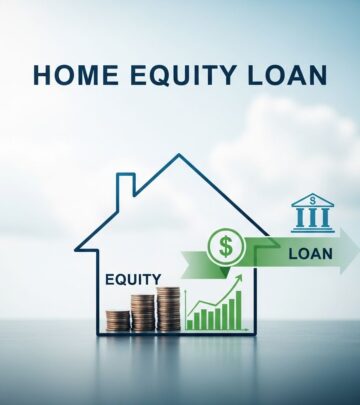
Second mortgages come in two predominant forms: home equity loans and home equity lines of credit (HELOCs). Each serves distinct needs based on repayment flexibility and rate structures.
Home Equity Loans: Fixed and Predictable Borrowing
A home equity loan provides a lump-sum payout with fixed interest rates and set repayment terms, usually 5 to 30 years. Monthly payments remain constant, aiding budgeting. Rates are higher than primary mortgages but lower than unsecured options like credit cards.
- Lump-sum disbursement: Receive full amount upfront for specific projects.
- Fixed rates: Shield against market fluctuations.
- Typical terms: 10-20 years, with payments including principal and interest.
HELOCs: Flexible Revolving Credit
HELOCs function like a credit card, offering a revolving line during a draw period (5-10 years) where you borrow as needed up to a limit. Repayment follows, often with variable rates tied to market indices.
- Draw period: Interest-only payments possible initially.
- Variable rates: Start lower but can rise, impacting costs.
- Repayment phase: Principal plus interest over 10-20 years.
| Feature | Home Equity Loan | HELOC |
|---|---|---|
| Disbursement | Lump sum | Revolving line |
| Interest Rate | Fixed | Variable |
| Best For | Known expenses | Ongoing or uncertain needs |
| Risk Level | Lower variability | Rate fluctuation exposure |
Qualifying for a Second Mortgage: Key Requirements
Lenders evaluate creditworthiness, income stability, debt-to-income (DTI) ratio, and equity levels. Minimum credit scores often range from 620-680, with DTI under 43-50%. Documentation includes tax returns, pay stubs, and property appraisals.
- Equity threshold: At least 15-20% after new loan.
- Credit score: Higher scores yield better rates.
- Income verification: Proof of ability to handle two payments.
- Appraisal: Determines current home value.
Borrowing capacity: For a $400,000 home with $250,000 first mortgage, max second mortgage might be ($400,000 x 0.85) – $250,000 = $90,000.
Costs and Fees Associated with Second Mortgages
Expect closing costs of 2-5% of the loan amount, covering appraisals ($300-500), origination fees (0.5-1%), title searches, and recording fees. These are lower than full refinances.
- Appraisal: $300-$500
- Origination: 0-1% of loan
- Other: Credit reports, flood certification
No-cost options exist but often feature higher rates. Shop multiple lenders for competitive terms.
Strategic Uses for Second Mortgage Funds
Homeowners leverage second mortgages for high-impact purposes where returns potentially exceed borrowing costs.
- Home renovations: Boost property value (e.g., kitchen upgrades yield 50-70% ROI).
- Debt consolidation: Replace high-interest credit card debt (avg. 20%+ APR) with lower rates (6-9%).
- Education funding: Finance tuition at rates below private student loans.
- Investment: Seed business or other assets, though risky if returns falter.
Avoid non-essential spending, as the home is collateral.
Advantages of Opting for a Second Mortgage
Key benefits include preserving low-rate first mortgages, tax-deductible interest (if used for home improvements, per IRS rules), and lower rates than alternatives.
- Retain favorable primary rate.
- Lower closing costs vs. refinance.
- Flexible fund use.
- Potential tax benefits (consult advisor).
Potential Drawbacks and Risks
Foreclosure risk escalates with two liens; missing payments endangers the home. Variable HELOC rates can surge, straining budgets. Overborrowing erodes equity.
- Default risk: Second lien paid after first in foreclosure.
- Rate volatility: HELOCs sensitive to Fed changes.
- Closing costs: Upfront expenses.
- Equity depletion: Leaves less for future needs.
Second Mortgages vs. Other Equity Access Methods
| Option | Pros | Cons |
|---|---|---|
| Second Mortgage | Keeps first loan intact; lower rates | Two payments; foreclosure risk |
| Cash-Out Refinance | Single payment; potentially lower rate | Resets term; higher closing costs |
| Personal Loan | No collateral; faster approval | Higher rates; smaller amounts |
| Home Equity Sharing | No monthly payments | Share future appreciation |
Piggyback loans, taken simultaneously with the first mortgage, reduce down payments (e.g., 80/10/10: 80% first, 10% second, 10% down).
Real-World Example: Second Mortgage in Action
Consider a $500,000 home with a $300,000 first mortgage at 3.5% (30 years, ~$1,347/month). Adding a $100,000 home equity loan at 8% (15 years) yields ~$955/month. Total: ~$2,302/month. Funds renovate, potentially increasing value by $150,000.
Frequently Asked Questions
Can I get a second mortgage with bad credit?
Possible but challenging; scores below 620 face higher rates or denials. Improve credit first.
How much can I borrow with a second mortgage?
Up to 85% combined loan-to-value (CLTV), minus first mortgage balance.
Are second mortgage interest rates tax-deductible?
Potentially, if funds improve the home (IRS limits apply; seek professional advice).
What’s the difference between a HELOC and home equity loan?
HELOC offers flexible draws with variable rates; equity loan is lump-sum with fixed rates.
Does a second mortgage affect my first mortgage?
No, it remains separate, but total debt impacts qualification.
Steps to Secure a Second Mortgage
- Calculate equity and borrowing power.
- Check credit score and improve if needed.
- Compare lender rates and fees.
- Gather documents: income proof, tax returns.
- Apply and undergo appraisal.
- Review closing disclosure and sign.
Processing takes 2-6 weeks.
Second mortgages empower equity access strategically. Weigh risks against benefits, ensuring alignment with financial goals and repayment capacity.
References
- Second Mortgage, Explained: How It Works, Types, Pros, Cons — SoFi. 2024. https://www.sofi.com/learn/content/what-is-a-second-mortgage/
- What Is a Second Mortgage? How Homeowners Use Equity — Newfi. 2024. https://newfi.com/what-is-a-second-mortgage/
- Second Mortgages Explained: The 80/20, Piggyback, and More — The Truth About Mortgage. 2024. https://www.thetruthaboutmortgage.com/second-mortgages/
- What Is A Second Mortgage And How Does It Work? — Bankrate. 2025-01-15. https://www.bankrate.com/home-equity/what-is-a-second-mortgage/
- Second Mortgages: What Are They and How Do They Work? — PennyMac. 2024. https://www.pennymac.com/blog/second-mortgages-what-are-they-how-they-work
- Understanding the Power of Second Mortgages in Property Value — National Association of Realtors. 2024. https://www.nar.realtor/mortgage-financing/second-mortgage
Similar Articles








Read full bio of Sneha Tete