Unlocking Home Equity Loans
Discover how home equity loans provide affordable borrowing options while navigating the risks of using your property as collateral for financial needs.

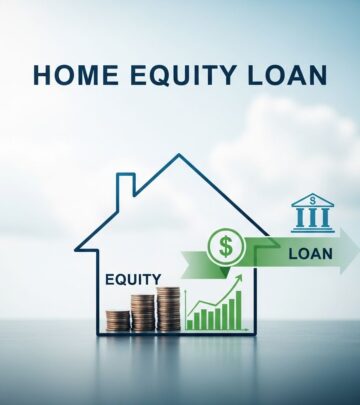
Home equity loans allow homeowners to convert the built-up value in their property into accessible cash through a secured borrowing arrangement. These loans function as secondary mortgages, providing a lump sum based on the difference between a home’s market value and its outstanding primary mortgage balance.
Building Value in Your Property
Equity represents the portion of your home that you truly own, calculated by subtracting what you still owe on your first mortgage from the property’s current appraised worth. For instance, if your residence is valued at $500,000 and you have $200,000 remaining on the mortgage, your equity totals $300,000. Lenders typically permit borrowing up to 80-85% of this amount, safeguarding a buffer against market fluctuations.
This equity accumulates over time through consistent mortgage payments that reduce principal and potential rises in property values due to market trends or personal improvements. Homeowners who have resided in their homes for several years often find substantial equity available, making these loans a viable option for major financial requirements.
Core Mechanics of Securing Funds
Unlike revolving credit options, a home equity loan delivers the full approved amount upfront in one disbursement. Repayment occurs via fixed monthly installments over terms ranging from 5 to 30 years, incorporating both principal and interest. The interest rate remains constant throughout the loan duration, offering payment stability regardless of broader economic shifts.
Approval hinges on factors such as creditworthiness, debt-to-income ratio, and sufficient equity levels—often requiring at least 15-20% ownership stake. Closing mirrors a mortgage process, involving fees that can total 2-5% of the loan amount, though some lenders waive or roll these into the balance.
Financial Advantages of This Borrowing Path
- Cost-Effective Rates: Secured by property, these loans carry interest rates significantly below unsecured alternatives like credit cards (often 7-10% vs. 20%+), due to reduced lender risk.
- Stable Budgeting: Fixed rates and terms enable precise monthly payment forecasting, aiding long-term financial planning.
- Substantial Sums: Access to tens or hundreds of thousands supports large-scale endeavors without multiple smaller loans.
- Tax Relief Potential: Interest may qualify for deductions if funds finance eligible home enhancements, per IRS guidelines—consult a professional for specifics.
These benefits position home equity loans as strategic tools for optimizing cash flow while preserving affordability.
Navigating the Potential Pitfalls
| Advantage | Counterpoint |
|---|---|
| Lower interest compared to personal loans | Closing costs add upfront expenses |
| Fixed payments for predictability | Second monthly obligation alongside primary mortgage |
| Large borrowing capacity | Risk of foreclosure on default |
| Tax-deductible interest option | Stricter qualification criteria |
Foremost among risks is the collateral nature: defaulting endangers home ownership, as lenders can initiate foreclosure proceedings. Market downturns might erode equity, potentially leaving borrowers owing more than the home’s worth—a scenario known as being underwater. Additional layers include credit score impacts from new inquiries and the discipline required to manage dual housing debts.
Strategic Applications for Maximum Benefit
Optimal uses align with investments enhancing net worth or resolving high-cost debts. Common scenarios include:
- Property upgrades like kitchen remodels or energy-efficient additions that boost resale value.
- Consolidating variable-rate debts into a single, lower-rate payment.
- Funding education expenses where returns on investment exceed loan costs.
- Addressing urgent repairs to maintain home integrity.
Avoid depleting equity on depreciating assets such as vehicles, lavish events, or routine living costs, as this transforms non-renewable wealth into ongoing liabilities.
Comparing to Alternative Credit Lines
Home equity lines of credit (HELOCs) differ by offering draw-as-needed access with variable rates, suiting fluctuating needs but introducing rate fluctuation risks. Loans provide certainty for defined projects, while HELOCs flex for ongoing draws—select based on usage predictability.
Personal loans lack collateral requirements but command higher rates and smaller limits. Credit cards offer immediacy yet at exorbitant costs unsuitable for substantial sums.
Qualification Roadmap
- Assess Equity: Obtain a professional appraisal or use online estimators.
- Review Credit: Aim for scores above 680 for optimal terms.
- Calculate Affordability: Ensure debt-to-income under 43% post-loan.
- Shop Lenders: Compare rates, fees, and terms from banks, credit unions, and online platforms.
- Prepare Documentation: Income proofs, tax returns, and property details.
Pre-approval streamlines the process, revealing personalized offers without commitment.
Real-World Illustrations
Consider a homeowner with $250,000 equity seeking $100,000 for a roof replacement and debt payoff. At 8% over 15 years, monthly payments approximate $955, far below equivalent credit card minimums. Post-improvement, enhanced home value offsets the borrowing.
Conversely, using funds for a luxury trip could strain finances if income dips, amplifying default risks.
Shielding Against Common Oversights
- Verify insurance covers the property adequately.
- Model scenarios with rate calculators for stress testing.
- Explore grants or low-interest alternatives for renovations.
- Monitor local housing markets for equity sustainability.
Professional advice from financial planners ensures alignment with holistic goals.
Frequently Asked Questions
Can I refinance a home equity loan later?
Yes, options like cash-out refinancing consolidate into the primary mortgage, potentially at better rates if credit improves.
What if my home value drops?
Lenders rarely demand immediate repayment, but selling becomes challenging if underwater; rebuilding equity takes time.
Are there prepayment penalties?
Many modern loans waive these, but review terms carefully.
How does this affect my credit utilization?
The new debt raises overall leverage, temporarily dinging scores, though on-time payments rebuild it.
Is it wise during high-interest periods?
Fixed rates lock in costs, protecting against future hikes, unlike variable options.
Steps to Application Success
Initiate by gathering financial snapshots, then solicit quotes from multiple providers. Negotiate fees and scrutinize disclosures. Upon funding, allocate proceeds judiciously and automate payments to safeguard credit health.
Ultimately, home equity loans empower strategic wealth management when approached with caution and purpose, balancing opportunity against the gravity of home-backed debt.
References
- Home equity loans: pros and cons – Rocket Mortgage — Rocket Mortgage. 2023. https://www.rocketmortgage.com/learn/pros-and-cons-of-home-equity-loan
- Home Equity Loan Pros And Cons: A Homeowner Guide – Bankrate — Bankrate. 2024-01-15. https://www.bankrate.com/home-equity/pros-cons-home-equity-loan/
- Pros and Cons of Leveraging Your Home Equity for Financing — myFICO. 2023-05-10. https://www.myfico.com/credit-education/blog/home-equity-loan-pros-cons
- What You Can Use a Home Equity Loan for (and What to Avoid!) — Navy Federal Credit Union. 2024. https://www.navyfederal.org/makingcents/home-ownership/home-equity-uses.html
- HELOC vs. Home Equity Loan: Pros & Cons — Florence Bank. 2023-11-20. https://www.florencebank.com/heloc-vs-home-equity-loan-pros-cons
- Home Equity Loans and Home Equity Lines of Credit — Federal Trade Commission. 2024-02-01. https://consumer.ftc.gov/articles/home-equity-loans-and-home-equity-lines-credit
- Pros and Cons of Home Equity Loans – Experian — Experian. 2024. https://www.experian.com/blogs/ask-experian/pros-and-cons-home-equity-loan/
Similar Articles








Read full bio of medha deb