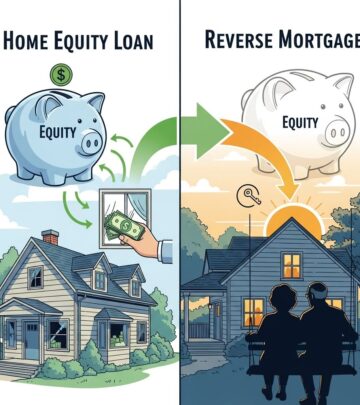
Unlocking Home Equity For Seniors: 3 Smart Ways To Tap It
Discover safe ways seniors can access home equity to fund retirement needs without risking financial stability.

Seniors hold a massive pool of wealth in their homes, totaling $13.95 trillion for those aged 62 and older as of late 2024, providing a potential lifeline for retirement expenses. However, accessing this equity requires careful consideration of options like home equity loans, lines of credit (HELOCs), and reverse mortgages to avoid pitfalls such as foreclosure or unpredictable payments.
Why Seniors Need Home Equity Access
Many older adults face the ‘house-rich, cash-poor’ dilemma, owning homes outright or with significant equity but lacking liquid funds for daily needs, healthcare, or modifications. With fixed incomes from Social Security or pensions, tapping home equity offers lower interest rates than credit cards or unsecured loans since the home serves as collateral.
This equity can fund essential costs:
- Medical bills, which rise sharply in retirement.
- Home repairs or accessibility upgrades like ramps and stairlifts.
- Debt consolidation to replace high-interest obligations.
- Supplemental retirement income during market downturns.
Yet, income instability and age-related lending biases make qualification challenging, with older borrowers often facing higher rates or denials despite strong credit.
Core Home Equity Borrowing Options
Seniors have three primary avenues: traditional home equity loans, HELOCs, and reverse mortgages. Each suits different financial profiles.
| Option | Key Features | Best For | Average Rate (2025) |
|---|---|---|---|
| Home Equity Loan | Fixed rate, lump sum, predictable payments | Budget-conscious seniors | 8.44% |
| HELOC | Variable rate, revolving credit, draw period | Flexible, short-term needs | 8.26% |
| Reverse Mortgage (HECM) | No monthly payments, FHA-insured, age 62+ | Cash-poor with high equity | Varies, lower upfront options needed |
Home Equity Loans: Predictability First
A home equity loan provides a one-time lump sum repaid in fixed monthly installments over 5-15 years, ideal for seniors prioritizing stability. Fixed rates shield against Federal Reserve fluctuations, which remain uncertain in 2025 amid potential inflation rebounds.
Budgeting simplifies as day-one payments stay constant, easing stress on limited retirement budgets. Lenders offer competitive rates due to collateral, and refinancing allows rate drops without variable risk.
Pros:
- Fixed payments aid long-term planning.
- Lower rates than unsecured debt.
- Longer terms reduce monthly burden.
Cons:
- Lump sum limits flexibility.
- Closing costs (2-5% of loan).
- Foreclosure risk if payments missed.
HELOCs: Flexibility with Caution
HELOCs function like a credit card secured by home equity, featuring a 10-year draw period followed by repayment. Variable rates, currently slightly lower, appeal for ongoing needs like phased home improvements.
Seniors might use them for accessibility mods, repairs, or debt payoff, but variable rates pose budgeting risks as payments fluctuate. High credit requirements exclude many cash-poor retirees.
Pros:
- Draw only what you need.
- Interest-only during draw phase.
- Reusable credit line.
Cons:
- Rates can rise, straining budgets.
- Balloon payments post-draw.
- Foreclosure threat on default.
Reverse Mortgages: No-Payment Relief
Home Equity Conversion Mortgages (HECMs), FHA-insured for ages 62+, let seniors convert equity into cash without monthly repayments—interest accrues until home sale, move, or death. Proceeds via lump sum, line of credit, or tenure payments suit house-rich seniors.
Despite low uptake (under 6% of senior equity taps), HECMs offer stability but face criticism for high upfront fees barring cash-poor users. Heirs repay up to 95% of appraised value, potentially eroding inheritance.
Ongoing Obligations:
- Property taxes, insurance, maintenance.
- Residency requirement (risk if hospitalized >12 months).
Policy tweaks like streamlined conversions from forward mortgages or low-cost variants could boost accessibility.
Risks and Safeguards for Older Borrowers
Borrowing against home equity risks foreclosure, especially with fixed incomes and health uncertainties. Seniors pay higher rates due to perceived mortality risk, despite superior credit.
Other pitfalls:
- Negative Equity: Home value drops below loan balance.
- Inheritance Dilution: Less for heirs, widening wealth gaps.
- Access Barriers: Low income blocks approval.
Mitigate by:
- Calculating debt-to-income ratios conservatively.
- Choosing fixed options over variable.
- Consulting HUD-approved counselors for reverse mortgages.
- Exploring grants for senior home mods.
When to Choose Each Option
Select based on needs and risk tolerance:
- Known Lump Sum (e.g., medical): Home equity loan for fixed costs.
- Ongoing/Flexible: HELOC if rates stable and credit strong.
- No Repayment Capacity: HECM, but weigh heir impact.
Avoid if equity <20% or income unstable; consider downsizing or part-time work first.
Real-World Applications in Retirement
Equity funds healthcare, where two similar-wealth seniors diverge: one accesses via borrowing for better outcomes. Home upgrades prevent moves, preserving independence.
Statistics underscore urgency: Rising mortgaged senior homeowners need viable paths amid weak safety nets.
Frequently Asked Questions
Can seniors get denied home equity loans?
Yes, due to income or age biases, despite high equity.
Are HELOC rates safe now?
Variable rates risk hikes; fixed loans safer for predictability.
Do reverse mortgages affect Social Security?
No, proceeds are loans, not income.
How much equity is needed?
Typically 15-20% for loans/HELOCs; HECMs require counseling.
What’s the foreclosure risk?
High if taxes/insurance lapse or defaults occur—maintain upkeep.
Steps to Access Equity Safely
- Assess total equity via appraisal.
- Review credit/income with lenders.
- Compare rates from multiple sources.
- Consult financial advisors or counselors.
- Plan repayments or HECM exit strategies.
With $13.95 trillion in play, strategic use enhances retirement security.
References
- Is a home equity loan or HELOC safer for seniors in 2025? — CBS News. 2025. https://www.cbsnews.com/news/is-home-equity-loan-or-heloc-safer-for-seniors-in-2025/
- Leveraging Your Home Equity in Retirement — Charles Schwab. N/A. https://www.schwab.com/learn/story/leveraging-your-home-retirement
- Should Retirees Use Their Homes To Pay Bills? — Bankrate. N/A. https://www.bankrate.com/home-equity/using-home-equity-in-retirement/
- Improving Options for Seniors Who Are “House-Rich, Cash-Poor” — Housing Matters (Urban Institute). N/A. https://housingmatters.urban.org/articles/improving-options-seniors-who-are-house-rich-cash-poor
- What Is a Home Equity Line of Credit (HELOC)? A Guide for Older Adults — National Council on Aging. N/A. https://www.ncoa.org/article/what-is-a-home-equity-line-of-credit-heloc-a-guide-for-older-adults/
- Should Retirees Tap Home Equity to Pay Medical Bills? — Money.com. N/A. https://money.com/tap-home-equity-for-medical-bills-pros-cons/
- Senior Home Equity Stands at $13.95 Trillion — National Reverse Mortgage Lenders Association. 2024-12-31. https://www.nrmlaonline.org/about/press-releases/senior-home-equity-stands-at-13-95-trillion
Similar Articles








Read full bio of medha deb