Unlocking Home Equity: Cash-Out Refinance Guide
Discover how cash-out refinancing can transform your home equity into usable cash for renovations, debt relief, or major life goals.

Cash-out refinancing empowers homeowners to convert built-up property value into immediate funds by securing a larger mortgage than their current balance. This approach replaces the existing loan while providing a lump-sum payout drawn from equity, offering flexibility for various financial needs.
Understanding the Fundamentals of Cash-Out Refinancing
At its core, a cash-out refinance involves substituting your present mortgage with a new one that exceeds the outstanding principal. The excess amount, after covering the old loan and fees, is disbursed directly to you. This method taps into home equity—the gap between your property’s market value and what you owe—without requiring a sale.
Home equity accumulates through mortgage payments that reduce principal and property appreciation over time. For instance, if your home appraises at $400,000 and you owe $200,000, you hold $200,000 in equity. Lenders typically allow borrowing up to 80% of the home’s value, preserving a 20% buffer to mitigate risk.
| Scenario | Home Value | Current Mortgage | Equity | Max New Loan (80% LTV) | Potential Cash-Out |
|---|---|---|---|---|---|
| Example 1 | $400,000 | $200,000 | $200,000 | $320,000 | $120,000 |
| Example 2 | $300,000 | $200,000 | $100,000 | $240,000 | $40,000 |
This table illustrates how equity translates to accessible cash, minus closing costs. Borrowers aren’t obligated to withdraw the maximum; conservative amounts preserve more equity for future needs.
Key Eligibility Criteria for Approval
Securing a cash-out refinance demands meeting stringent lender standards, akin to initial mortgage qualifications. Primary requirements include:
- Credit Score: Minimum 620 for conventional loans, with scores above 740 unlocking superior rates.
- Debt-to-Income Ratio (DTI): Capped at 43-50%, factoring the new payment against income.
- Equity Position: At least 20% retained post-refinance to sidestep private mortgage insurance (PMI).
- Seasoning Period: Six to twelve months of homeownership, varying by loan type.
- Income and Employment: Verifiable stable income and two years’ employment history.
Properties must be primary residences, second homes, or qualifying investments, with a clean recent payment history—no delinquencies in the past year. An appraisal confirms current value, influencing loan-to-value (LTV) ratios.
Step-by-Step Process to Secure Your Refinance
Navigating a cash-out refinance mirrors buying a home but focuses on equity extraction. Follow these phases:
- Assess Equity Availability: Estimate via online tools or appraisal: (Home Value × 0.80) – Current Balance = Max Cash-Out.
- Shop Lenders: Compare rates from banks, credit unions, and brokers for conventional, FHA, or VA options.
- Submit Application: Supply pay stubs, tax returns, bank statements, and mortgage details. Disclose fund usage if required.
- Undergo Underwriting: Expect credit pull, income verification, and home appraisal (cost: $300-$500).
- Review Loan Estimate: Scrutinize terms, rates, and fees before committing.
- Close and Fund: Sign documents, pay closing costs (2-6% of loan), receive cash via check or wire.
The timeline spans 30-45 days, with funds available post-closing after old mortgage payoff.
Potential Costs and Financial Implications
While beneficial, cash-out refinances incur expenses that erode proceeds:
- Appraisal: $300-$700
- Origination Fees: 0.5-1% of loan
- Title and Escrow: $500-$1,500
- Discount Points: Optional for rate reduction
- Prepaid Items: Taxes, insurance
Total closing costs average 2-6% of the loan amount, often rolled into the new mortgage. The refinanced loan resets amortization, front-loading interest payments anew. If rates rise from your original mortgage, monthly payments may increase despite equity access.
Break-even analysis is crucial: Divide closing costs by monthly savings (if any) to gauge recoup time. Plan to stay 5+ years to justify costs.
Strategic Uses for Your Cash Proceeds
Cash-out funds serve diverse purposes, amplifying financial health when used wisely:
- Home Upgrades: Renovations boosting value, like kitchen remodels, often yield high ROI.
- Debt Consolidation: Pay off high-interest credit cards (avg. 20% APR) with lower mortgage rates (around 6-7%).
- Educational Expenses: Fund tuition without high student loan rates.
- Emergency Reserves: Cover unexpected medical or repair bills.
Avoid speculative ventures like investments or vacations, as your home secures the loan—increasing default risk.
Comparing Alternatives to Cash-Out Refinance
Cash-out isn’t the sole equity-access path. Evaluate these options:
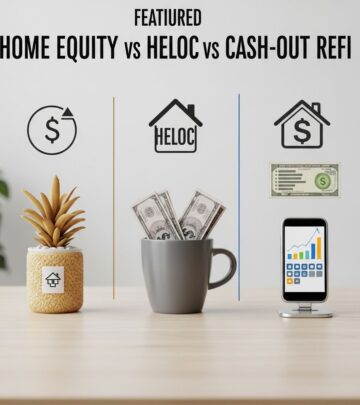
| Option | Fund Access | Repayment | Equity Impact | Best For |
|---|---|---|---|---|
| Cash-Out Refi | Lump sum | Fixed monthly | Reduces equity | One-time needs |
| HELOC | Revolving line | Interest-only draw; principal later | Variable reduction | Ongoing projects |
| Home Equity Loan | Lump sum | Fixed second mortgage | Fixed reduction | Stable payments |
HELOCs offer flexibility with variable rates; home equity loans provide fixed terms as second liens. VA borrowers may prefer streamlined cash-out options.
Risks and Precautions for Homeowners
This strategy heightens mortgage debt, leveraging your home as collateral. Foreclosure risk escalates if payments strain finances. Equity depletion limits future borrowing or sale proceeds. Rising rates could inflate costs—current averages hover at 6.5-7% for 30-year terms.
Mitigate by:
- Improving credit pre-application.
- Budgeting for higher payments.
- Consulting advisors for tax implications (interest deductibility varies).
Special Considerations for Government-Backed Loans
FHA, VA, and USDA loans offer tailored cash-out paths. VA cash-out allows up to 100% financing for eligible veterans, minus fees. FHA caps at 80% LTV with streamlined refinancing. Confirm seasoning and occupancy rules per program.
Frequently Asked Questions
Can I use cash-out funds for anything?
Yes, no restrictions apply, but prudent uses like improvements or consolidation maximize value.
How much equity do I need?
Typically 20-25% post-refinance for conventional loans.
Does it reset my loan term?
Yes, often extending to 30 years, restarting principal paydown.
Is now a good time with high rates?
Ideal if current rate exceeds new offer or for non-rate purposes; compare break-even.
What if my home value drops?
You risk negative equity; lenders assess via appraisal.
Consult professionals to align with your goals. Cash-out refinancing unlocks potential but demands disciplined planning.
References
- Cash-Out Refinancing: What It Is, How It Works — Bankrate. 2024-01-15. https://www.bankrate.com/mortgages/cash-out-refinancing/
- What is a Cash-Out Refi & How Does It Work? — Academy Bank. 2023-11-20. https://www.academybank.com/article/what-is-a-cash-out-refi-and-how-does-it-work
- Cash-Out Refinance: What You Need to Know — Navy Federal Credit Union. 2024-02-10. https://www.navyfederal.org/makingcents/home-ownership/cash-out-refinance.html
- Cash Out Refinance vs Home Equity Line of Credit — Bank of America. 2023-12-05. https://www.bankofamerica.com/mortgage/learn/cash-out-refinance/
- Cash-out Refinance — Freddie Mac. 2024-03-01. https://sf.freddiemac.com/working-with-us/origination-underwriting/mortgage-products/cash-out-refinance
- Cash-Out Refinance Loan — U.S. Department of Veterans Affairs. 2024-06-12. https://www.va.gov/housing-assistance/home-loans/loan-types/cash-out-loan/
Similar Articles








Read full bio of medha deb