Unlocking FICO Score 8: The Lender’s Choice
Discover how FICO Score 8 shapes your credit decisions, its unique calculation method, and strategies to boost your score effectively.

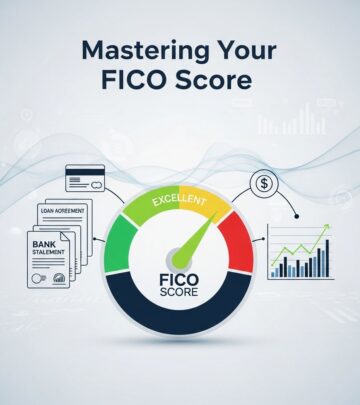
FICO Score 8 stands as the predominant credit scoring model employed by a majority of lenders to evaluate borrowing risk. Introduced in 2009, this base score predicts the probability of repaying debts across various credit types, ranging from 300 to 850.
Why FICO Score 8 Dominates Lending Decisions
Financial institutions favor FICO Score 8 for its reliability in assessing general creditworthiness without tailoring to specific industries. Unlike specialized versions, it provides a broad prediction of default risk on obligations like credit cards or personal loans. Lenders use it to set credit limits, interest rates, and approval terms, making it crucial for consumers seeking favorable financing.
Its widespread adoption persists despite newer iterations like FICO Score 9 and 10, as many prefer its proven track record. This model balances sensitivity to behaviors like high utilization while offering leniency for occasional lapses.
Breaking Down the Five Core Components of FICO Score 8
The algorithm draws from credit report data, weighting five categories to generate your score. Here’s a detailed look:
- Payment History (35%): The largest factor, it tracks on-time payments across accounts. FICO Score 8 is more forgiving of isolated late payments than older models but penalizes chronic delays heavily.
- Amounts Owed (30%): This measures total debt and credit utilization ratio—the portion of available credit you’re using. Keeping utilization under 30% is advisable to avoid score drops.
- Length of Credit History (15%): Evaluates the age of your oldest account, average account age, and time since recent activity. Longer histories generally boost scores.
- Credit Mix (10%): Considers variety in accounts, such as revolving credit (cards) and installment loans (mortgages). A diverse mix can help, but it’s not essential.
- New Credit (10%): Monitors recent inquiries and opened accounts. Multiple applications in a short span can signal risk, temporarily lowering scores.
| Factor | Weight | Key Influences |
|---|---|---|
| Payment History | 35% | On-time payments, delinquencies |
| Amounts Owed | 30% | Utilization, total balances |
| Length of History | 15% | Account ages |
| Credit Mix | 10% | Types of credit |
| New Credit | 10% | Inquiries, new accounts |
This structure ensures a comprehensive view of financial responsibility.
FICO Score 8 vs. Other Scoring Models: Key Distinctions
While similar to predecessors, FICO Score 8 introduces refinements. It handles one-off late payments with greater forgiveness but retains paid collections in calculations unless under $100, unlike FICO 9 which ignores paid ones entirely.
Compared to VantageScore 3.0, FICO 8 places heavier emphasis on payment history (35% vs. 40%) and utilization (30% vs. 20%), omitting separate balances or available credit factors.
| Factor | FICO Score 8 | VantageScore 3.0 |
|---|---|---|
| Payment History | 35% | 40% |
| Amounts Owed/Utilization | 30% | 20% |
| Length of History | 15% | 21% |
| Credit Mix | 10% | Included in depth |
| New Credit | 10% | 5% |
Industry-specific scores like FICO Auto Score 8 (250-900 range) cater to auto loans, while base scores like 8 apply broadly.
Understanding Score Ranges and Their Implications
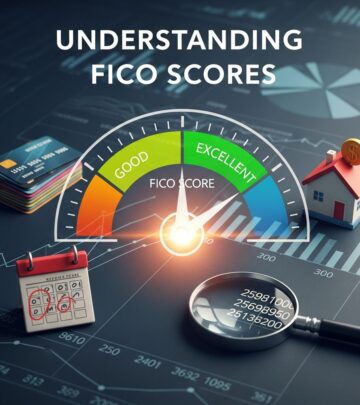
Scores categorize as:
- Exceptional (800-850): Best rates and terms.
- Very Good (740-799): Strong approvals.
- Good (670-739): Competitive offers.
- Fair (580-669): Higher rates possible.
- Poor (300-579): Limited access, high costs.
A score above 700 typically unlocks optimal lending conditions.
Practical Strategies to Elevate Your FICO Score 8
Improving involves targeted actions:
- Prioritize Payments: Set autopay to ensure timeliness, as this factor dominates.
- Lower Utilization: Pay down balances; request limit increases without new inquiries.
- Build History: Keep old accounts open; become authorized user on established cards cautiously.
- Diversify Wisely: Add installment loans if needed, avoiding overextension.
- Limit Applications: Space out new credit requests by 6+ months.
Monitor via free services from banks or myFICO for discrepancies.
The Role of Collections and Medical Debt in FICO 8
FICO Score 8 differentiates small collections (<$100) by ignoring them post-payment, but larger paid ones linger. Newer models like FICO 10 overlook paid collections and soften medical debt impacts, marking evolution in scoring.
Industry-Specific Alternatives to Base FICO Scores
For mortgages, lenders pull bureau-specific versions: FICO 2 (Experian), 5 (Equifax), 4 (TransUnion). Credit cards may use Bankcard Score 8. These adjust ranges and weights for relevance.
Frequently Asked Questions (FAQs)
What is the difference between FICO Score 8 and FICO Score 9?
FICO 9 ignores paid collections and lessens the weight of unpaid medical debt over $500, while Score 8 retains paid collections unless minimal.
How long does a late payment affect my FICO Score 8?
Isolated lates have reduced impact in Score 8, but effects can last up to 7 years, diminishing over time.
Can I check my FICO Score 8 for free?
Many banks and credit card issuers offer free FICO 8 access; myFICO provides comprehensive monitoring.
Does closing old accounts hurt my FICO Score 8?
Yes, it can shorten history and raise utilization, potentially lowering scores.
Is FICO Score 8 the only score lenders use?
No, some opt for newer FICO versions or VantageScore, but it’s the most common base score.
Maintaining Long-Term Credit Health with FICO Insights
Regular reviews, responsible usage, and patience yield sustained improvements. FICO Score 8 rewards consistency, positioning you for financial success amid evolving models.
References
- What Does FICO Score 8 Mean? — Capital One. 2023. https://www.capitalone.com/learn-grow/money-management/fico-score-8/
- What is FICO® Score 8 and what is it used for? — Intuit Credit Karma. 2023. https://www.creditkarma.com/credit/i/what-fico-score-8
- What Is FICO Score 8? — American Express. 2023. https://www.americanexpress.com/en-us/credit-cards/credit-intel/fico-score-8/
- FICO Score Types: Why Multiple Versions Matter for You — myFICO. 2023. https://www.myfico.com/credit-education/credit-scores/fico-score-versions
- How are FICO Scores Calculated? — myFICO. 2023. https://www.myfico.com/credit-education/whats-in-your-credit-score
Similar Articles








Read full bio of medha deb