Unlocking Excellent Credit: Ranges and Rewards
Discover what defines excellent credit scores, their benefits for loans and cards, and proven strategies to achieve top-tier financial standing.

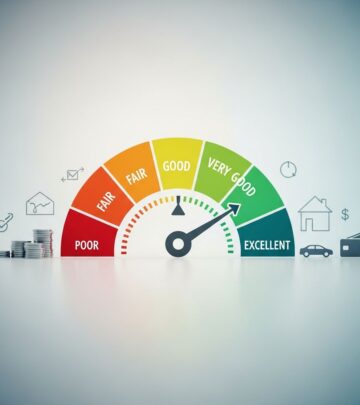
Excellent credit scores represent the pinnacle of financial reliability, typically falling in the 800-850 range on most scales. These elite ratings open doors to premium loan approvals, the lowest interest rates, and exclusive credit products, signaling to lenders minimal risk.
Defining Excellent Credit Across Scoring Models
Credit scores serve as numerical summaries of your creditworthiness, ranging from 300 to 850 on standard models. While interpretations vary slightly, excellent credit consistently denotes the highest tiers where borrowers enjoy superior terms.
The FICO Score, used by 90% of top lenders, labels scores of 800 to 850 as exceptional. This top category reflects flawless credit management and predicts the least default risk. VantageScore, an alternative model developed by the major credit bureaus, defines superprime or excellent as 781 to 850, aligning closely with FICO’s elite range.
| Scoring Model | Excellent Range | Key Characteristics |
|---|---|---|
| FICO | 800-850 | Exceptional; best rates and approvals |
| VantageScore | 781-850 | Superprime; premium financial access |
| General Consensus | 800+ | Top 20% of consumers; elite benefits |
Government resources like MyCreditUnion.gov affirm that scores of 800 and higher qualify as excellent, granting broader access to favorable financial products. About 20-25% of U.S. consumers achieve these heights, with the national average FICO hovering around 715 as of recent data.
Why Excellent Credit Delivers Tangible Advantages
Securing an excellent score translates directly to financial gains. Lenders view these borrowers as low-risk, offering interest rates potentially 2-4% lower on mortgages, auto loans, and credit cards compared to average scorers.
- Lower Borrowing Costs: On a $300,000 mortgage, a drop from 7% to 5.5% interest saves over $100,000 in lifetime payments.
- Priority Approvals: Automatic qualification for premium rewards cards and 0% APR promotions.
- Better Terms: Higher credit limits, waived fees, and flexible repayment options.
- Non-Credit Perks: Landlords and insurers often favor excellent scores for rentals and premiums.
For homebuyers, excellent credit exceeds minimums like 620 for conventional loans or 580 for FHA, unlocking VA or jumbo mortgages with optimal rates.
Core Factors Driving Your Path to Excellence
FICO and VantageScore weigh five primary elements, with payment history dominating at 35%. Mastering these unlocks elite status.
- Payment History (35%): Zero late payments over 24+ months is non-negotiable for 800+ scores.
- Credit Utilization (30%): Keep balances under 10% of limits; ideal is under 1% for top tiers.
- Credit Age (15%): 10+ years of history boosts reliability signals.
- Credit Mix (10%): Balance revolving (cards) and installment (loans) accounts.
- New Credit (10%): Limit inquiries to 1-2 per year.
Experian notes that soft inquiries, like self-checks, don’t harm scores, unlike hard pulls from applications.
Step-by-Step Blueprint to Achieve Excellent Credit
Building from good (670-739) to excellent requires discipline over 12-24 months. Start with a free weekly credit report from AnnualCreditReport.com, the official source.
Phase 1: Establish Strong Foundations
- Automate all bill payments to eliminate lapses.
- Pay balances in full monthly to zero utilization.
- Retain oldest accounts, even if unused.
Phase 2: Optimize Utilization and Mix
Request credit limit increases without hard pulls via trusted issuers. Diversify responsibly: add an installment loan if your mix is card-heavy.
Phase 3: Monitor and Protect
Use services tracking all three bureaus (Equifax, Experian, TransUnion). Dispute inaccuracies promptly; errors drop 20-50 points on average.
| Action | Expected Score Impact | Timeline |
|---|---|---|
| Fix payment history | +50-100 points | 1-3 months |
| Reduce utilization to <10% | +30-60 points | Immediate |
| Build age/history | +20-40 points | 6-12 months |
| Limit new credit | Avoid -10-30 drops | Ongoing |
Real-World Applications: Mortgages, Autos, and Cards
Excellent credit shines in big-ticket financing. Mortgage lenders prioritize FICO 8 or 9 scores above 740 for prime rates; 800+ often secures the best.
Auto loans follow suit: scores over 800 yield rates under 4%, versus 8%+ for sub-700. Credit cards reserve elite rewards (3-5% cashback, luxury travel perks) for 800+ applicants.
Common Pitfalls That Derail Excellent Aspirations
- Overapplying: Multiple inquiries signal desperation, costing 10+ points each.
- High Utilization Spikes: Even one maxed card tanks scores temporarily.
- Closing Old Accounts: Shortens history, hurting 15% of your score.
- Ignoring Collections: Pay or negotiate old debts; they linger 7 years but fade over time.
Average scores by age: under 30s at 680, rising to 760+ for 60+ groups, per Experian 2023 data—patience pays.
Frequently Asked Questions
What is the exact cutoff for an excellent FICO score?
FICO deems 800-850 exceptional, offering the best lending terms.
How long does it take to reach 800 from 700?
Typically 6-18 months with perfect habits; faster if correcting errors.
Does checking my own score hurt it?
No—soft inquiries have zero impact.
Can I have excellent credit with no credit cards?
Possible via loans alone, but cards help utilization and mix.
What’s the U.S. average credit score?
Around 715 for FICO as of 2023-2025 data.
Maintaining Your Excellent Score for Life
Elite credit demands vigilance: review reports quarterly, diversify without excess, and treat credit as a marathon. Tools from banks like Capital One or Ally offer score trackers and pre-approvals without dings.
In a landscape where average scores suffice for basics, excellent credit elevates you to financial first-class—lower costs, more options, enduring security.
References
- What Is an Excellent Credit Score? — Capital One. 2026-01-20. https://www.capitalone.com/learn-grow/money-management/what-is-an-excellent-credit-score/
- Credit Scores — MyCreditUnion.gov (NCUA). Accessed 2026. https://mycreditunion.gov/manage-your-money/credit/credit-scores
- What Is a Good Credit Score? — Experian. Accessed 2026. https://www.experian.com/blogs/ask-experian/credit-education/score-basics/what-is-a-good-credit-score/
- What is a Good Credit Score? Ranges & What to Know — Ally Bank. Accessed 2026. https://www.ally.com/stories/credit/what-is-a-good-credit-score/
- What Is a Good Credit Score? — Intuit Credit Karma. Accessed 2026. https://www.creditkarma.com/what-is-a-good-credit-score
Similar Articles








Read full bio of medha deb