Unlocking ETFs: The Modern Investor’s Guide
Discover how exchange-traded funds combine diversification, low costs, and trading flexibility to revolutionize portfolio building for all investors.

Exchange-traded funds (ETFs) represent a powerful evolution in investment vehicles, blending the diversification of mutual funds with the tradability of individual stocks. Registered with the U.S. Securities and Exchange Commission (SEC) as open-end investment companies or unit investment trusts, ETFs pool investor capital to acquire portfolios of stocks, bonds, or other assets.
Core Mechanics of ETFs
At their foundation, ETFs function by aggregating funds from multiple investors into a single portfolio managed by SEC-registered advisers. Each share grants proportional ownership in this portfolio, entitling holders to its generated income, such as dividends or interest. Unlike traditional mutual funds, which transact only at end-of-day net asset values (NAV), ETFs trade continuously on national exchanges at market-determined prices throughout the trading day.
This intraday trading mirrors stock market dynamics, allowing purchases and sales at fluctuating prices influenced by supply, demand, and broader market forces. Bid-ask spreads—the gap between buying and selling prices—apply, adding a layer of market microstructure to transactions. A distinctive feature is the creation and redemption process: Authorized participants (APs), typically large broker-dealers, exchange large blocks called creation units directly with the ETF issuer in exchange for underlying securities or cash, ensuring the ETF’s market price stays aligned with its NAV.
Distinctions from Mutual Funds and Other Vehicles
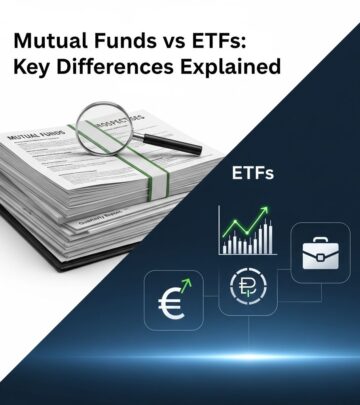
While ETFs share mutual funds’ goal of diversified, professionally managed portfolios, key differences enhance their appeal. Mutual funds calculate NAV once daily, limiting flexibility, whereas ETFs offer real-time pricing and liquidity. ETFs often exhibit greater tax efficiency due to their in-kind redemption mechanism, which minimizes capital gains distributions by allowing APs to swap securities rather than cash.
| Feature | ETFs | Mutual Funds |
|---|---|---|
| Trading | Intraday on exchanges | End-of-day at NAV |
| Pricing | Market-driven | Net asset value |
| Tax Efficiency | Higher (in-kind redemptions) | Lower (cash redemptions) |
| Costs | Typically lower expense ratios | Often higher for active management |
ETFs fall under the broader umbrella of exchange-traded products (ETPs), which also includes exchange-traded notes (ETNs)—unsecured debt obligations from financial institutions that promise benchmark-linked returns without holding assets—and commodity pools. Most ETPs, however, are ETFs structured under the Investment Company Act of 1940, mandating diversification and investor protections.
Types of ETFs for Diverse Strategies
ETFs span a wide spectrum, catering to passive indexing, active management, and specialized exposures. Index ETFs replicate benchmarks like the S&P 500 or Nasdaq Composite, providing broad market access with minimal tracking error.
- Equity ETFs: Focus on stocks across sectors, regions, or market caps, enabling targeted growth exposure.
- Fixed-Income ETFs: Hold bonds such as U.S. Treasuries, municipals, corporates, or high-yield issues, balancing portfolios with income generation.
- Actively Managed ETFs: Rely on professional teams to outperform benchmarks, often with daily portfolio transparency, though at potentially higher fees.
- Geared ETFs: Deliver leveraged (e.g., 2x or 3x) or inverse returns relative to an index, suited for short-term tactical trades rather than buy-and-hold.
- Single-Stock or Thematic ETFs: Concentrate on individual companies or trends like technology or ESG factors, amplifying specific convictions.
Commodity and currency ETFs provide exposure to gold, oil, or foreign exchange without physical ownership, often via futures contracts.
Key Advantages Driving ETF Popularity
ETFs’ rise stems from structural benefits that democratize sophisticated investing. Diversification stands paramount: A single ETF can encompass hundreds or thousands of securities, mitigating single-asset risk far beyond what most individuals could assemble independently.
Cost efficiency is another hallmark. Average expense ratios trail those of actively managed mutual funds, as passive index-tracking avoids high research overheads. Trading flexibility supports strategies like dollar-cost averaging or tactical shifts during market hours.
Transparency enhances trust: Most ETFs disclose full holdings daily, unlike mutual funds’ periodic reports. Tax advantages further bolster long-term holding, with lower capital gains realizations.
Navigating Risks and Considerations
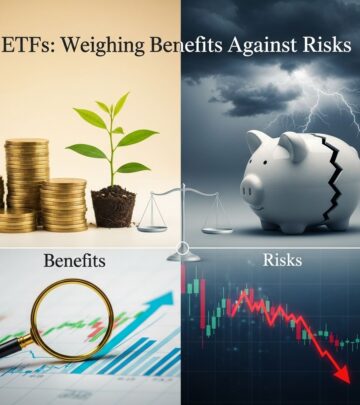
Despite strengths, ETFs carry inherent risks. Market price premiums or discounts to NAV can occur, though the creation-redemption arbitrage typically keeps deviations minimal. Liquidity varies; niche ETFs may face wider spreads or trading halts.
Geared products amplify volatility and decay over extended periods due to daily resets, rendering them unsuitable for long-term strategies. Investors must scrutinize underlying exposures, fees, and regulatory status—non-1940 Act products like certain commodity ETPs offer less protection.
Regulatory oversight under the Securities Act of 1933 and Exchange Act of 1934 ensures disclosure, but varying structures demand due diligence.
Building Portfolios with ETFs
ETFs excel in core-satellite approaches: Use low-cost index ETFs as a stable core (e.g., total market or bond ladders), augmented by satellite thematic or active ETFs for alpha potential. Asset allocation models benefit from their granularity—blend U.S. equities, international stocks, and fixed income seamlessly.
For retirees, dividend-focused or bond ETFs generate income; growth seekers favor tech or small-cap variants. Rebalancing is straightforward via exchange trades, minimizing transaction costs.
Practical Steps to Start Investing in ETFs
- Assess Goals: Define risk tolerance, time horizon, and objectives (growth, income, preservation).
- Research Funds: Evaluate index tracking, expense ratios, liquidity (average daily volume), and holdings via prospectuses.
- Select Brokerage: Choose platforms with commission-free ETF trades and robust screening tools.
- Implement Strategy: Employ limit orders to manage spreads; consider tax-advantaged accounts like IRAs.
- Monitor and Adjust: Review quarterly, rebalance annually, staying attuned to market shifts.
Frequently Asked Questions (FAQs)
What is the difference between an ETF and a stock?
ETFs represent baskets of assets, offering instant diversification, while stocks confer ownership in single companies with concentrated risk.
Are ETFs suitable for beginners?
Yes, their low entry barriers, diversification, and educational resources make them ideal for novices building foundational portfolios.
How do ETF fees work?
Annual expense ratios cover management and operations, deducted from assets; trading commissions apply via brokers, often waived for select ETFs.
Can ETFs lose money?
Like all investments, yes—market downturns affect ETF values, though diversification tempers volatility compared to individual securities.
What’s the role of authorized participants?
APs arbitrage price discrepancies by creating/redecing shares, maintaining ETF liquidity and NAV alignment.
References
- Exchange-Traded Fund (ETF) — U.S. Securities and Exchange Commission (SEC). 2023. https://www.investor.gov/introduction-investing/investing-basics/glossary/exchange-traded-fund-etf
- Exchange-Traded Funds and Products — Financial Industry Regulatory Authority (FINRA). 2024-01-15. https://www.finra.org/investors/investing/investment-products/exchange-traded-funds-and-products
- What is an ETF (Exchange-Traded Fund)? — Charles Schwab. 2025. https://www.schwab.com/etfs/understand-etfs
- What is an Exchange Traded Fund (ETF)? — TD Bank. 2024. https://www.td.com/ca/en/investing/direct-investing/learn-to-invest/etfs-explained
- Exchange-traded Funds (ETFs) — Vanguard. 2025. https://investor.vanguard.com/investment-products/etfs
Similar Articles








Read full bio of medha deb