Unlocking ETFs: Invest Smarter
Discover how exchange-traded funds combine diversification, low costs, and trading flexibility to build a stronger investment portfolio.

Exchange-traded funds, or ETFs, have revolutionized how individuals approach investing by offering a blend of accessibility, diversity, and cost-effectiveness. These versatile instruments allow investors to gain broad market exposure without the need to pick individual stocks or bonds.
The Fundamentals of Exchange-Traded Funds
At their core, ETFs are investment vehicles that pool capital from numerous investors to purchase a diversified collection of assets, such as stocks, bonds, or commodities. Unlike traditional mutual funds, ETF shares trade on stock exchanges throughout the trading day at market-determined prices, much like individual company stocks.
The structure of an ETF begins with its registration as an open-end investment company or unit investment trust with regulatory bodies like the U.S. Securities and Exchange Commission (SEC). This ensures transparency and investor protection. The fund’s portfolio, managed by a registered investment adviser, holds the underlying securities, and each ETF share represents proportional ownership in that portfolio, including any generated income.
A key mechanism distinguishing ETFs is the creation and redemption process. Authorized participants—typically large financial institutions—exchange baskets of securities or cash for ETF shares in large blocks called creation units. This in-kind process helps keep the ETF’s market price closely aligned with its net asset value (NAV), calculated as the total value of securities minus liabilities divided by outstanding shares.
How ETFs Differ from Traditional Mutual Funds
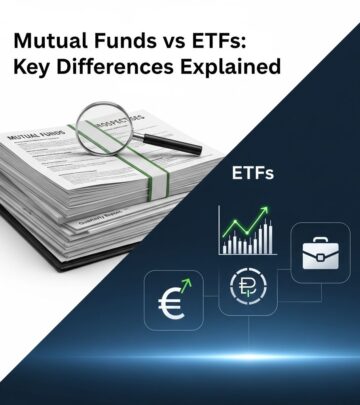
While ETFs and mutual funds both offer pooled investing, their operational differences significantly impact investor experience. Mutual funds are priced once daily at NAV and transacted after market close, limiting flexibility. ETFs, by contrast, enable intraday trading, allowing buys and sells at real-time prices.
| Feature | ETFs | Mutual Funds |
|---|---|---|
| Trading | Intraday on exchanges | End-of-day at NAV |
| Minimum Investment | Cost of one share | Often higher minimums |
| Tax Efficiency | Higher due to in-kind redemptions | Potential capital gains distributions |
| Expense Ratios | Generally lower | Typically higher |
This table highlights why ETFs often appeal to cost-conscious investors. The intraday liquidity reduces timing risks, and lower minimums democratize access.
Core Advantages Driving ETF Popularity
ETFs excel in several areas that make them a cornerstone of modern portfolios. Diversification stands out: a single ETF can hold hundreds or thousands of securities, mitigating the risk tied to any one asset. For instance, an S&P 500 ETF provides instant exposure to 500 major U.S. companies.
Cost efficiency is another hallmark. Management expense ratios (MERs) for ETFs are often a fraction of mutual funds’, sometimes below 0.10%, thanks to passive indexing strategies that minimize trading costs.
Trading like a stock brings flexibility: investors can use limit orders, stop-losses, or options strategies. Real-time pricing transparency further empowers decision-making.
Tax efficiency arises from the creation/redemption mechanism. When shares are redeemed, authorized participants receive securities rather than cash, deferring capital gains taxes for remaining shareholders. This contrasts with mutual funds, which may distribute taxable gains annually.
- Many ETFs support dividend reinvestment plans (DRIPs), compounding returns automatically at no extra cost.
- Transparency: Daily portfolio disclosures build trust and aid analysis.
Exploring the Diverse Universe of ETFs
ETFs span countless themes and strategies, catering to varied risk profiles and goals.
Index-Tracking ETFs
The most common type, these passively replicate benchmarks like the S&P 500 or Nasdaq Composite. Low turnover keeps costs down and tracks market returns closely.
Actively Managed ETFs
Professional managers aim to outperform indices. While fees are higher, they offer potential alpha in niche markets.
Sector and Thematic ETFs
Target industries like technology, energy, or emerging trends such as clean energy or AI. Useful for tactical allocation.
Bond and Fixed-Income ETFs
Provide exposure to Treasuries, corporates, municipals, or high-yield bonds, balancing equity risk with income.
Commodity and International ETFs
Access gold, oil, or foreign markets without physical ownership, adding global diversification.
Navigating Risks in ETF Investing
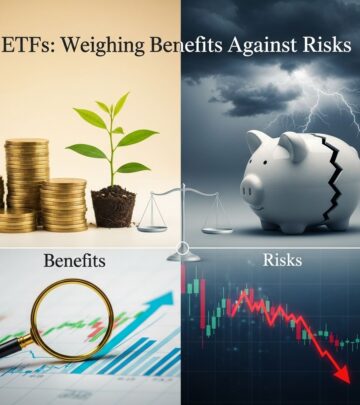
Despite advantages, ETFs carry inherent risks. Market volatility affects share prices, amplified in leveraged or inverse ETFs designed for short-term trading.
Liquidity risk exists in less-traded ETFs, potentially widening bid-ask spreads. Tracking error—when performance deviates from the benchmark—can occur due to fees or sampling methods.
International ETFs face currency fluctuations, geopolitical tensions, and differing regulations. Always review the prospectus for holdings, fees, and risks.
Strategies for Building Wealth with ETFs
Incorporate ETFs via core-satellite approaches: use broad index ETFs as the core for stability, satellites for targeted growth. Dollar-cost averaging—investing fixed amounts regularly—smooths entry points.
For retirement, target-date ETFs adjust allocations automatically. Tax-advantaged accounts like IRAs maximize efficiency.
- Beginners: Start with total market or S&P 500 ETFs.
- Growth seekers: Blend U.S., international, and sector funds.
- Income focus: Dividend or bond ETFs.
Getting Started: Practical Steps
Choose a brokerage with low commissions and ETF screeners. Research via NAV, expense ratios, tracking error, and assets under management (AUM)—larger funds often have tighter spreads.
Monitor but avoid overtrading; ETFs suit buy-and-hold. Rebalance annually to maintain targets.
Frequently Asked Questions (FAQs)
What is the difference between ETF price and NAV?
The market price fluctuates with supply/demand, while NAV reflects underlying value. Arbitrage by authorized participants keeps them aligned.
Are ETFs suitable for day trading?
While tradable intraday, most are designed for long-term holding. High-frequency trading suits experienced users.
How do ETF fees compare to mutual funds?
ETFs average 0.44% expense ratios vs. 0.64% for mutual funds, per recent data, with passives even lower.
Can ETFs lose money?
Yes, like all investments, tied to underlying assets. Diversification reduces but doesn’t eliminate risk.
What’s the role of authorized participants?
They create/redeem shares, ensuring liquidity and price efficiency unavailable to retail investors.
Conclusion: ETFs as Your Portfolio Powerhouse
ETFs democratize sophisticated investing, blending mutual fund benefits with stock-like agility. By leveraging their strengths—diversification, low costs, tax perks—investors can pursue goals efficiently. Research thoroughly, align with objectives, and watch your portfolio thrive.
References
- Exchange-Traded Fund (ETF) — U.S. Securities and Exchange Commission (Investor.gov). 2023. https://www.investor.gov/introduction-investing/investing-basics/glossary/exchange-traded-fund-etf
- What is an Exchange Traded Fund (ETF)? — TD Bank. 2024-03-15. https://www.td.com/ca/en/investing/direct-investing/learn-to-invest/etfs-explained
- Guide to Understanding ETFs — Merrill Edge. 2024. https://www.merrilledge.com/investor-education/understanding-etfs
- What is an ETF? — Charles Schwab. 2024-02-20. https://www.schwab.com/etfs/understand-etfs
- ETF Basics and Structure: FAQs — Investment Company Institute. 2023-12-01. https://www.ici.org/faqs/faqs_etfs
- What is an ETF? — Fidelity Investments. 2024. https://www.fidelity.com/learning-center/smart-money/what-are-etfs
- Investing in ETFs Index Funds explained — BlackRock. 2024-01-10. https://www.blackrock.com/americas-offshore/en/education/etf/explaining-etfs
Similar Articles








Read full bio of Sneha Tete