ETFs: 5 Essential Types And How They Work In 2025
Discover how exchange-traded funds work, their benefits, types, and strategies to build a diversified portfolio efficiently.

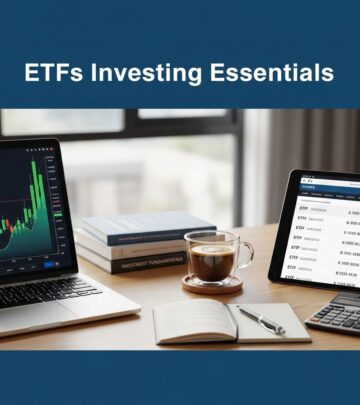
Exchange-traded funds (ETFs) represent a cornerstone of modern investing, combining the diversification of mutual funds with the flexibility of stock trading. These pooled investment vehicles track indexes, sectors, or assets, offering accessible entry points for investors of all levels.
The Core Mechanics of ETFs
At their heart, ETFs gather capital from numerous investors to purchase a diversified basket of securities, such as stocks, bonds, or commodities. This portfolio is managed by registered investment advisers, and each share grants proportional ownership in the fund’s holdings and generated income. Unlike traditional mutual funds, ETF shares trade on stock exchanges throughout the day at market-determined prices, providing real-time liquidity.
The creation and redemption process sets ETFs apart. Authorized participants (APs), often large institutions, exchange baskets of securities or cash for ETF shares in large blocks called creation units, typically 25,000 to 250,000 shares. This in-kind mechanism helps keep the ETF’s market price aligned with its net asset value (NAV), minimizing premiums or discounts. Retail investors trade these shares via brokerage accounts, just like individual stocks.
Key Advantages That Make ETFs Stand Out
ETFs deliver several compelling benefits, making them a preferred choice for cost-conscious investors.
- Low Entry Barriers: Shares often trade for modest amounts, allowing diversification without large minimum investments—sometimes as low as $1.
- Intraday Trading: Buy or sell anytime markets are open, unlike mutual funds priced once daily at NAV.
- Cost Efficiency: Passive strategies tracking indexes result in lower expense ratios compared to actively managed funds, with reduced trading costs.
- Tax Optimization: In-kind redemptions limit capital gains distributions, enhancing after-tax returns versus mutual funds.
These features enable precise portfolio adjustments, such as responding to market shifts during trading hours.
How ETF Returns Are Generated
Investors earn returns through multiple channels. Dividend payments from portfolio income, like stock dividends or bond interest, flow to shareholders after expenses. Capital gains distributions occur when securities are sold at a profit, though ETFs minimize these via in-kind processes. Additionally, rising portfolio values boost NAV, potentially lifting share prices.
Reinvesting distributions requires manual action and may incur brokerage fees, unlike automatic options in some mutual funds. Always consult your broker for specifics.
Diverse Types of ETFs for Every Strategy
ETFs span a wide spectrum, catering to varied risk tolerances and goals. Here’s a breakdown:
| Type | Description | Key Features |
|---|---|---|
| Stock ETFs | Hold equities representing ownership in companies | High growth potential; volatile short-term performance tied to company success |
| Bond ETFs | Invest in debt securities like government or corporate bonds | Income-focused; vary by risk, duration, and yield |
| Target-Date ETFs | Mix assets shifting conservative as a goal date nears | Convenient for retirement; watch for layered fees |
| Money Market ETFs | Short-term, liquid debt and cash equivalents | Low risk; stability over growth |
| Index ETFs | Passive trackers of benchmarks like S&P 500 | Low turnover, fees; mirror index returns |
Specialized variants include sector, commodity, or even single-stock ETFs for targeted exposure.
ETFs Versus Mutual Funds: A Clear Comparison
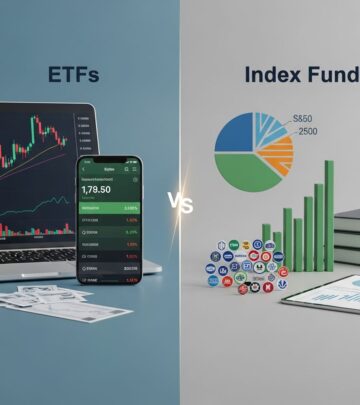
While both pool assets, key differences highlight ETF superiority in flexibility and efficiency.
- Trading: ETFs intraday at market price; mutual funds end-of-day at NAV.
- Minimums: ETFs often $1+; mutual funds $1,000+.
- Fees: ETFs lower due to passive management.
- Taxes: ETFs’ structure reduces distributions.
ETFs suit active traders, while mutual funds appeal for automatic investing.
Navigating Risks in ETF Investing
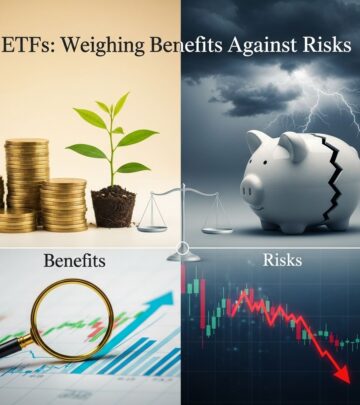
Despite advantages, ETFs carry risks. Market price may deviate from NAV due to supply-demand dynamics. Liquidity varies—less-traded ETFs risk wider bid-ask spreads. Tracking errors occur if the fund imperfectly mirrors its index. Leverage or inverse ETFs amplify volatility, unsuitable for novices. Diversify across types and monitor holdings alignment with goals.
Practical Steps to Start Investing in ETFs
Begin with a brokerage account supporting ETF trades. Research via prospectuses for objectives, fees, and holdings. Assess your risk profile—conservative? Opt for bond or money market ETFs. Use tools like screeners to filter by expense ratio, assets under management, and performance.
Implement dollar-cost averaging: Invest fixed amounts regularly to mitigate timing risks. Balance with a core-satellite approach—broad index ETFs as core, thematic ones as satellites.
Advanced Strategies for ETF Portfolios
Seasoned investors layer ETFs for optimization. Pair equity index ETFs with bond funds for balance. Sector rotation uses economic indicators to shift allocations. Tax-loss harvesting sells losers to offset gains, leveraging ETF liquidity.
Consider smart beta ETFs applying factors like value or momentum for potential outperformance over plain indexes.
Frequently Asked Questions (FAQs)
What is the minimum investment for an ETF?
Many brokers allow purchases for as little as one share, often under $100, far below mutual fund minimums.
Are ETFs safer than individual stocks?
Yes, due to inherent diversification, though not risk-free—market downturns affect all holdings.
Do ETFs pay dividends?
Most do, distributing portfolio income quarterly or annually, which can be reinvested.
How do I choose the right ETF?
Evaluate expense ratio, liquidity, tracking accuracy, and alignment with your investment horizon.
Can ETFs be used in retirement accounts?
Absolutely, in IRAs or 401(k)s, combining tax deferral with ETF efficiency.
Building Long-Term Wealth with ETFs
ETFs democratize investing by slashing barriers to diversification and efficiency. Their structure fosters discipline, low costs, and adaptability. Regularly review allocations, rebalance annually, and stay informed on market shifts. With over 3,000 ETFs available, opportunities abound for tailored strategies.
Incorporate ETFs into a holistic plan: emergency fund first, then debt reduction, followed by ETF-based growth. Patience and consistency yield compounding magic.
References
- Exchange-Traded Funds (ETFs) – Investor.gov — U.S. Securities and Exchange Commission (SEC). 2023. https://www.investor.gov/introduction-investing/investing-basics/investment-products/mutual-funds-and-exchange-traded-2
- ETF Basics and Structure: FAQs – Investment Company Institute — Investment Company Institute. 2024-10-01. https://www.ici.org/faqs/faqs_etfs
- What are exchange traded funds (ETFs)? – Vanguard — Vanguard. 2025. https://investor.vanguard.com/investor-resources-education/etfs/what-is-an-etf
- What is an ETF (Exchange-Traded Fund)? – Charles Schwab — Charles Schwab. 2025. https://www.schwab.com/etfs/understand-etfs
- Guide to Understanding ETFs: What Are Exchange-Traded Funds? – Merrill Edge — Merrill Edge. 2024. https://www.merrilledge.com/investor-education/understanding-etfs
Similar Articles








Read full bio of medha deb