Credit Monitoring Tools: 4 Dashboard Features To Boost Score
Discover optimal times to leverage Credit Journey for monitoring scores, spotting errors, and boosting your financial health effectively.

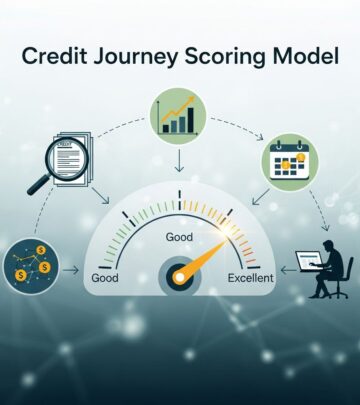
Free credit monitoring platforms like Credit Journey provide invaluable insights into your financial profile, helping users track scores, review reports, and receive tailored recommendations at key moments.
Understanding Modern Credit Monitoring Platforms
Credit monitoring services aggregate data from major bureaus to deliver real-time snapshots of your credit health. These tools, often offered by financial institutions, calculate scores ranging from 300 to 850, where higher numbers indicate lower risk to lenders. Unlike basic reports, platforms like these update frequently, factoring in payment history (35%), amounts owed (30%), credit history length (15%), new credit (10%), and credit mix (10%) as per FICO models.
Users benefit from dashboards showing score changes, utilization ratios, and alerts for suspicious activity. For instance, maintaining utilization under 30% signals responsible borrowing. These services empower proactive management without fees, making them essential for anyone navigating loans or cards.
Ideal Scenarios for Activating Credit Tools
Strategic use maximizes impact. Consider activating during major life events or routine checks to stay ahead.
- Pre-Loan Applications: Review scores before mortgages or auto loans to gauge approval odds. Scores above 670 are generally good.
- Post-Financial Changes: After paying debts or closing accounts, monitor for score shifts.
- Fraud Suspicions: Dark web scans and identity theft alerts provide early warnings.
- Routine Health Checks: Quarterly logins track trends like payment punctuality.
Timing aligns with bureau updates, typically monthly, ensuring accurate data.
Navigating Your Credit Dashboard Features
These platforms offer intuitive interfaces with score simulators predicting impacts of actions like balance reductions.
| Feature | Purpose | Benefit |
|---|---|---|
| Score Tracker | Displays FICO updates | Identifies improvement areas |
| Utilization Meter | Shows debt-to-limit ratio | Guides optimal spending |
| Alert System | Notifies inquiries or changes | Prevents fraud escalation |
| Report Analyzer | Highlights errors | Simplifies disputes |
Personalized tips, such as increasing limits for better utilization, appear dynamically.
Boosting Scores Through Targeted Actions
Payment history dominates at 35%, so automate bills to avoid lates. Reduce balances to lower utilization, aiming below 30% even if paid monthly, as statements reflect usage.
Length of history (15%) grows naturally; avoid closing old accounts. Diversify mix (10%) responsibly with varied credits. Limit new applications (10%) to prevent dings.
- Dispute inaccuracies via platform tools for quick bureau corrections.
- Use simulators to test scenarios like adding authorized users.
- Track debt-to-income ratios under 36% for lender appeal.
Comparing Score Ranges and Implications
Scores categorize risk levels:
| Range | Category | Lender View |
|---|---|---|
| 800-850 | Exceptional | Best rates |
| 740-799 | Very Good | Strong approvals |
| 670-739 | Good | Favorable terms |
| 580-669 | Fair | Higher rates |
| 300-579 | Poor | Denials likely |
Lenders set thresholds, but 670+ unlocks advantages. VantageScore starts at 661 for good.
Secure Access and Privacy Best Practices
Platforms employ encryption and multi-factor authentication. Users control data sharing and can freeze reports instantly. Regularly review authorizations to revoke unused access.
Avoid phishing by verifying URLs and never sharing login details. Enable all alerts for comprehensive protection.
Life Stage Applications for Credit Insights
Young Adults Building Foundations
Start early with secured cards to establish history. Monitor additions like student loans.
Mid-Career Debt Managers
Track consolidations or refinances impacting utilization.
Pre-Retirement Planners
Ensure clean reports for final mortgages; simulate retiree scenarios.
Homebuyers and Renters
Pull reports 3-6 months prior to optimize.
Advanced Strategies for Score Optimization
Beyond basics, request limit increases cautiously to boost utilization without hard inquiries. Become authorized users on trusted accounts for positive history sharing.
Time large purchases post-statement to report low balances. Use service rent reporting if available for mix diversity.
For rebuilding, secured loans demonstrate reliability. Patience yields; scores evolve with habits.
Frequently Asked Questions
What exactly is a credit monitoring tool like Credit Journey?
It provides free FICO scores, reports, and alerts from bureaus like Experian.
How often should I check my credit score?
Monthly or before financial moves for trends.
Does checking my score hurt it?
Soft pulls via these tools do not.
Can I improve my score quickly?
Yes, via payments and utilization drops; history takes time.
Why do scores differ across bureaus?
Different data and models used.
Is it safe to use these free services?
Yes, with bank-grade security.
Long-Term Financial Wellness Integration
Incorporate monitoring into budgets alongside savings goals. Pair with DTI calculations: divide monthly debts by gross income, targeting under 36%.
Educate family on shared impacts, like joint applications. As scores rise, negotiate better rates annually.
These tools demystify credit, fostering confidence. Consistent use transforms profiles, opening doors to opportunities.
References
- The Beginner’s Guide to a Good Credit Score (& How to Get One) — Space Coast Credit Union. 2023. https://www.sccu.com/articles/personal-finance/the-beginners-guide-to-a-good-credit-score
- Credit Score Basics — USAA Educational Foundation. 2024. https://usaaef.org/credit-debt/credit/understanding-credit/credit-score-fundamentals/
- How are FICO Scores Calculated? — myFICO. 2025-01-15. https://www.myfico.com/credit-education/whats-in-your-credit-score
- Credit Score Basics: Everything You Need to Know — Experian. 2024-11-20. https://www.experian.com/blogs/ask-experian/credit-education/score-basics/understanding-credit-scores/
- Understanding Your Credit — Federal Trade Commission (FTC). 2023-06-01. https://consumer.ftc.gov/articles/understanding-your-credit
Similar Articles








Read full bio of medha deb