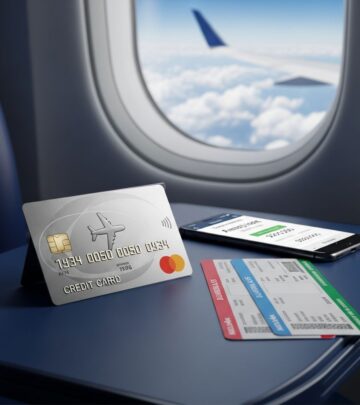
Credit Card Airline Miles: Expert Strategies To Maximize Value
Master the ins and outs of earning and redeeming airline miles from credit cards to fuel your next adventure without breaking the bank.

Credit card airline miles represent a powerful tool for frequent travelers, allowing everyday purchases to translate into complimentary flights, upgrades, and other perks. These rewards, often earned through co-branded cards or flexible travel programs, accumulate based on spending patterns and can be redeemed across airline networks.
The Fundamentals of Airline Rewards Currency
Airline miles, sometimes referred to as frequent flyer points, serve as a redeemable currency within loyalty programs offered by carriers like Delta, United, and American Airlines. Unlike cash, their value fluctuates based on redemption options, typically ranging from 1 to 1.6 cents per mile. Users earn them primarily through flights or credit card activity, with the latter becoming increasingly dominant due to accessible earning rates on daily expenses.
Programs vary: some award miles per dollar spent on specific categories, while others credit based on flight distance or fare class. Elite status multipliers can boost earnings significantly, making high-tier members earn up to double or more on qualifying activities.
Primary Pathways to Accumulate Miles
Earning miles splits into two main channels: aviation-related activities and financial spending. Traditional flying remains a baseline, where passengers receive credits proportional to distance flown or ticket price paid. For instance, economy fares might yield base miles, while premium cabins offer enhanced rates.
Credit cards, however, have revolutionized accumulation. Co-branded options from airlines partner with issuers like Chase or American Express to deposit miles directly into loyalty accounts. General travel cards provide transferable points, offering flexibility across multiple partners.
- Flying-based earnings: Tied to ticket cost or miles flown, boosted by status levels.
- Card spending: Bonus rates on airlines, dining, groceries; welcome bonuses accelerate balances.
Comparing Co-Branded vs. Flexible Travel Cards
Co-branded cards lock rewards into one airline’s ecosystem but often feature superior earning on partner purchases. Flexible cards, conversely, allow point transfers to various airlines, ideal for diversified travel plans.
| Card Type | Key Benefits | Example Earning Rates | Best For |
|---|---|---|---|
| Co-Branded (e.g., United Quest) | Direct airline perks, free bags | 5x on prepaid hotels via portal, 2x on airline buys | Loyal flyers |
| Flexible (e.g., Amex Platinum) | Transfer partners, lounge access | 5x on flights/hotels via portal | Versatile travelers |
Select based on travel habits: loyalists thrive with co-branded, while opportunists prefer transferability.
Strategic Earning Through Everyday Purchases
Maximize miles by targeting bonus categories. Cards commonly offer elevated rates (2x-6x) on groceries, gas, dining, and direct airline spends. For example, one card grants 6 points per dollar with a specific airline, alongside 2x at eateries. Welcome offers, requiring $3,000-$5,000 spend in months, can yield 50,000+ miles upfront.
Combine cards: Use a co-branded for airline buys, a flexible for broad spending. Track via apps to hit thresholds without overspending. Always clear balances to avoid interest eroding rewards value.
Decoding Mile Value and Redemption Math
Mile worth hinges on usage. Calculate by dividing cash flight price by required miles, then multiplying by 100 for cents-per-mile. Domestic economy often hits 1.2-1.5 cents; international premium exceeds 2 cents. Benchmark against valuations: below 1 cent signals poor deals.
Redemption peaks with award flights, but options extend to hotels, upgrades, and merchandise. Partner airlines expand reach, though dynamic pricing inflates costs near departure.
- High-value redemptions: Long-haul business class via partners.
- Avoid: Low-cent gift cards or overpriced short flights.
Navigating Airline Partnerships and Alliances
Most programs join alliances like Star Alliance (United) or Oneworld (American), enabling cross-redemptions. Transfer points from cards to partners at ratios like 1:1, unlocking global routes. Check transfer times—some instant, others days.
Pro tip: Position miles in programs with strong partner charts for outsized value, especially peak/off-peak pricing models.
Elite Status: Amplifying Your Rewards
Status tiers (Silver, Gold, Platinum) multiply base earnings and unlock waivers like free bags. Cards contribute qualifying spend toward status, sometimes matching initial levels. High spenders on premium tickets with elite cards earn fastest.
Common Mistakes and Avoidance Tactics
Novices falter by ignoring expiration (typically 18-36 months inactivity), chasing poor redemptions, or carrying debt. Mitigate with:
- Annual reviews of account activity.
- Math-based bookings only.
- Multiple cards for coverage without fees via targeted offers.
Dynamic pricing shifts focus from flown miles to spend-based credits, per recent program overhauls.
Advanced Techniques for Mile Hoarders
Manufactured spending (e.g., gift card loops) risks shutdowns; stick to organic methods. Pool family accounts where allowed. Time redemptions during sales, dropping needs by 20-50%. Transfer bonuses (20-30%) from banks sporadically boost holdings.
Future Trends in Mile Programs
Expect tighter earning (revenue over distance), but card innovations like higher bonuses persist. Sustainability pushes (carbon offsets via miles) emerge. Stay agile with program newsletters.
Frequently Asked Questions
Do airline miles expire?
Yes, most after 12-36 months of inactivity; fly or spend to extend.
Are credit card miles worth it?
Absolutely, if paid off monthly—yielding 2-5% returns on spend via travel.
How many miles for a free flight?
5,000-40,000 domestic; 50,000+ international, varying by route and date.
Can I transfer miles between programs?
Limited; use flexible card points as intermediaries.
What’s the best starter card?
Depends on airline loyalty; consider Chase Sapphire or Amex Gold for flexibility.
References
- How Do Airline Miles Work? — NerdWallet. 2023-10-15. https://www.nerdwallet.com/travel/learn/how-do-airline-miles-work
- How Do Credit Card Miles Work? — Discover. 2024-05-20. https://www.discover.com/credit-cards/card-smarts/how-do-credit-card-miles-work-for-travel-rewards/
- Airline Miles & Points Explained — YouTube (The Points Guy). 2022-11-10. https://www.youtube.com/watch?v=cPcBW10xiR0
- How Do Frequent Flyer Miles Work? — American Express. 2024-02-28. https://www.americanexpress.com/en-us/credit-cards/credit-intel/how-do-frequent-flyer-miles-work/
- How do credit card airline miles work? — Chase. 2025-01-12. https://www.chase.com/personal/credit-cards/education/rewards-benefits/how-do-credit-card-airline-miles-work
- Getting started with points, miles and credit cards — The Points Guy. 2024-08-05. https://thepointsguy.com/loyalty-programs/beginners/
Similar Articles








Read full bio of medha deb