Compound Interest: A Complete Guide To Wealth Growth
Discover how compound interest multiplies your savings and investments over time, turning small contributions into substantial wealth.

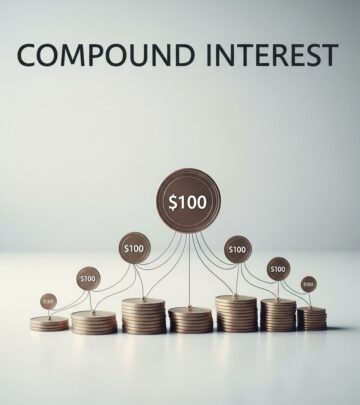
Compound interest represents a fundamental force in personal finance, enabling money to grow exponentially by earning returns on both initial investments and accumulated earnings. This mechanism distinguishes itself from simpler growth models by continuously reinvesting gains, creating a snowball effect that accelerates wealth accumulation over extended periods.
The Essence of Compound Interest
At its core, compound interest calculates returns on the original principal plus any previously earned interest. Unlike basic interest methods that apply rates solely to the starting amount, this approach incorporates prior gains into future computations, fostering rapid expansion. Financial institutions and investors alike harness this principle in savings accounts, bonds, and loans, where frequency of recalculation—daily, monthly, or annually—plays a pivotal role in outcomes.
The mathematical foundation relies on iterative application of rates. For instance, a deposit subjected to regular compounding witnesses its balance inflate progressively, as each cycle builds upon the last. This dynamic underpins long-term strategies in retirement planning and debt repayment, where time emerges as the most critical variable.
Distinguishing Compound from Simple Interest
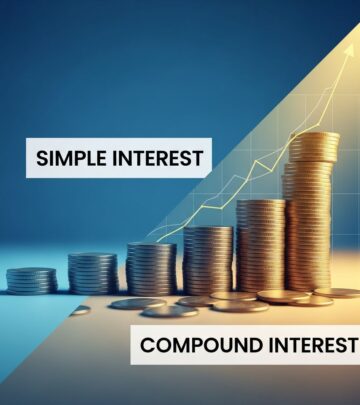
Simple interest operates linearly, multiplying the principal by the rate and duration without incorporating prior earnings. In contrast, compound interest introduces nonlinearity, where gains generate further gains. Consider two scenarios: a $10,000 deposit at 5% over five years. Simple interest yields $2,500 total earnings, reaching $12,500. Compounding monthly, however, elevates the end balance to approximately $12,834, an extra $334 from reinvested returns.
| Aspect | Simple Interest | Compound Interest |
|---|---|---|
| Calculation Base | Principal only | Principal + prior interest |
| Growth Pattern | Linear | Exponential |
| Example ($10K @ 5%, 5 yrs) | $12,500 | $12,834 (monthly) |
| Best For | Short-term loans | Long-term savings |
Mastering the Compound Interest Formula
The standard equation for the future value under compounding is A = P(1 + r/n)^(nt), where A denotes the final amount, P the principal, r the annual rate (decimal), n the compounding periods per year, and t the years. Derived total interest equals A minus P.
For quarterly compounding, n=4; monthly uses n=12. This flexibility accommodates various products like certificates of deposit or mortgages. To illustrate, a $5,000 investment at 5% compounded monthly over 10 years yields about $8,235, with $3,235 in interest.
- Principal (P): Initial investment amount.
- Rate (r): Annual percentage as decimal (e.g., 0.05 for 5%).
- Compounding Frequency (n): Times per year interest applies.
- Time (t): Duration in years.
Practical Examples in Everyday Finance
Imagine depositing $4,000 in a certificate of deposit at 2% compounded semiannually for four years. The balance grows to $4,331.43, demonstrating modest but steady gains. Scaling up, $5,000 at 6% over 25 years balloons to nearly $22,000 without additions, highlighting time’s leverage.
On the debt side, credit card balances compound daily, amplifying obligations. A $1,000 debt at 18% APR compounded monthly doubles in under five years if unpaid, underscoring urgency in repayment.
Compounding Frequency: Its Profound Impact
More frequent compounding elevates effective yields. At 5% annually, yearly compounding on $10,000 over five years hits $12,763; monthly reaches $12,834; daily nears $12,835. The rule of 72 approximates doubling time: 72/rate (years). Thus, 5% doubles roughly every 14.4 years.
| Frequency | End Balance ($10K @5%, 5yrs) | Effective Annual Rate |
|---|---|---|
| Annually | $12,763 | 5.00% |
| Quarterly | $12,835 | 5.12% |
| Monthly | $12,834 | 5.12% |
| Daily | $12,835 | 5.13% |
Leveraging Compound Interest for Wealth Building
Early initiation maximizes benefits. A 20-year-old investing $1,000 at 7% annually reaches $14,974 by age 70; starting at 30 yields $7,612. Regular contributions amplify this: monthly $100 at 7% over 40 years accumulates over $250,000.
- Opt for high-yield savings or index funds with compounding.
- Automate deposits to harness dollar-cost averaging.
- Reinvest dividends and interest automatically.
- Extend horizons; avoid early withdrawals.
The Double-Edged Sword: Debt and Compound Interest
While savers benefit, borrowers face escalating costs. Mortgages compound monthly, with Canadian examples semi-annually despite frequent payments. Credit cards at 20%+ APR can trap users in cycles. Prioritize high-interest debt payoff, using strategies like debt avalanche.
Population growth and bacterial proliferation mimic compounding, offering analogies for financial modeling.
Strategies to Optimize Your Financial Growth
To thrive, select accounts with frequent, high compounding. Compare APY (annual percentage yield), which reflects true returns. For retirement, 401(k)s or IRAs compound tax-deferred, supercharging growth.
Visualize via calculators: tools from official sites simulate scenarios, revealing variances from assumptions.
Frequently Asked Questions
What makes compound interest powerful?
It earns returns on returns, creating exponential growth ideal for long-term savings.
How does compounding frequency affect earnings?
Higher frequency boosts effective rates; daily often maximizes yields.
Is compound interest good for loans?
No, it increases debt faster; pay off high-rate debts promptly.
Can I calculate compound interest manually?
Yes, using A = P(1 + r/n)^(nt); spreadsheets simplify complex cases.
What’s the best way to start compounding?
Open a high-yield savings or invest early in diversified assets.
Advanced Applications in Investments
Beyond basics, stocks and mutual funds compound via reinvested dividends. Rule of 72 guides expectations: 8% returns double every nine years. Bonds pay semi-annually, effective rates exceeding nominal. Real estate appreciates similarly, with rental income compounding if reinvested.
For comprehensive planning, integrate inflation adjustments; real returns matter. At 3% inflation and 5% nominal, net gain is 2%. Diversification mitigates risks while preserving compounding.
References
- Compound interest – Wikipedia — Wikipedia. 2023-10-01. https://en.wikipedia.org/wiki/Compound_interest
- Compound Interest Calculator. – BYJU’S — BYJU’S. 2024-01-15. https://byjus.com/maths/compound-interest/
- What Is Compound Interest & How Is It Calculated? | PNC Insights — PNC Bank. 2025-03-20. https://www.pnc.com/insights/personal-finance/save/what-is-compound-interest.html
- What is compound interest? A guide | Rocket Mortgage — Rocket Mortgage. 2024-11-10. https://www.rocketmortgage.com/learn/compound-interest
- Compound interest – Moneysmart.gov.au — Moneysmart (Australian Government). 2025-06-05. https://moneysmart.gov.au/saving/compound-interest
- Compound Interest: What It Is, How it Works, and Examples — Western & Southern Financial Group. 2024-09-12. https://www.westernsouthern.com/investments/how-does-compound-interest-work
Similar Articles








Read full bio of medha deb