Unlocking Cash Back Credit Cards
Discover how cash back credit cards reward your spending and maximize everyday savings with smart strategies.

Cash back credit cards offer a straightforward way to earn rewards on everyday spending by returning a percentage of your purchases directly as cash equivalents. These cards function by calculating rewards based on eligible transactions, allowing users to redeem value through various flexible methods.
Core Mechanics of Earning Rewards
At their foundation, cash back cards rebate a portion of spending, typically ranging from 1% to 5% depending on the card structure. For instance, a purchase of $100 on a 2% card yields $2 in rewards, accumulating over time with consistent use. Rewards accrue automatically on qualifying buys as long as the account remains in good standing.
Eligible transactions generally include retail purchases, both in-store and online. However, exclusions apply to non-qualifying activities such as cash advances, balance transfers, lottery tickets, gambling, and certain cash-equivalent items like money orders or cryptocurrency. Merchant category codes (MCCs)—four-digit identifiers assigned to transactions—determine reward eligibility, especially for category-specific cards, ensuring accurate reward allocation by issuers.
Types of Cash Back Structures
Cash back programs vary to suit different spending habits, offering simplicity or targeted high returns.
Flat-Rate Programs
These provide a consistent percentage across all eligible purchases, often 1% to 2%, making them ideal for users seeking low-maintenance rewards. Some innovative cards split the rate, like earning 1% on purchase and another 1% upon payment, effectively reaching 2% overall without complexity.
- Pros: No tracking required; predictable earnings.
- Cons: May yield lower returns for concentrated spending in bonus areas.
Tiered or Bonus Category Programs
Tiered cards boost rewards in predefined areas like groceries, gas, or dining, usually 2% to 5%, with a base rate (often 1%) on other spending. Caps may apply, reverting excess to the base rate after limits like $1,500 quarterly.
| Category | Example Reward Rate | Typical Cap |
|---|---|---|
| Groceries | 3%-6% | $6,000/year |
| Gas | 3% | $1,500/quarter |
| Dining | 4% | None |
| Other | 1% | Uncapped |
Rotating Category Options
These mimic tiered cards but shift bonus categories periodically, such as quarterly, often hitting 5% in areas like streaming or wholesale clubs. Activation may be required, demanding vigilance to maximize value.
Reward Accumulation and Account Rules
Rewards build in a dedicated account, viewable via statements or apps, without expiration on most cards if the account stays open and current. Annual fees, if present, factor into net value—avoid if rewards don’t offset costs.
Sign-up bonuses accelerate earnings, like $200 after $500 spent in three months, providing quick boosts for new users.
Redeeming Your Earned Cash Back
Flexibility defines redemption, with options tailored to preferences:
- Statement Credit: Reduces balance directly, often automatic at cycle end.
- Direct Deposit: Transfers to bank accounts for immediate access.
- Checks: Mailed periodically, useful for cash needs.
- Gift Cards: Sometimes at enhanced value (e.g., 10% bonus).
- Other: Charity donations, travel bookings, or purchase offsets.
Minimum thresholds, like $25, commonly apply before redemption.
Strategies to Maximize Returns
To optimize, align cards with spending patterns—pair a flat-rate for general use with tiered for high-spend areas. Track categories via apps and activate rotations timely.
Pay balances fully monthly to avoid interest eroding rewards (APRs often 15%-25%). Multiple cards diversify: use highest-rate per purchase, but manage via one statement for simplicity.
- Review statements monthly for accuracy.
- Leverage portals for bonus multipliers.
- Compare net value: rewards minus fees.
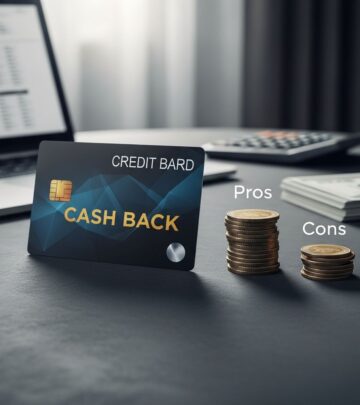
Pros and Cons Overview
| Advantages | Disadvantages |
|---|---|
| Tangible cash value | Potential overspending temptation |
| Flexible redemptions | Category tracking effort |
| No expiration on rewards | Exclusions limit earnings |
| Sign-up incentives | Annual fees on premiums |
Is a Cash Back Card Right for You?
Ideal for disciplined spenders with good credit (670+ FICO typically required). Calculate potential: $2,000 monthly spend at 2% yields $480 yearly—significant if fee-free. Compare via tools weighing your habits.
Frequently Asked Questions
What purchases qualify for cash back?
Most retail, excluding advances, transfers, and cash-like items. Digital wallets may qualify if merchant data transmits properly.
Do rewards expire?
Rarely, usually if account closes in bad standing.
Can I combine multiple cards?
Yes, select per transaction for peak rates.
Are there taxes on rewards?
Generally no, treated as rebates, not income.
How to choose the best card?
Match to spending, fees, and credit needs.
Building Credit Alongside Rewards
Responsible use boosts scores via on-time payments and low utilization (<30%). Cards report positively, aiding financial health.
In summary, cash back cards transform routine spending into savings when used wisely.
References
- How Do Cash Back Credit Cards Work? — NerdWallet. 2023-10-15. https://www.nerdwallet.com/credit-cards/learn/how-do-cash-back-credit-cards-work
- How Do Cash Back Credit Cards Work? — Capital One. 2024-02-20. https://www.capitalone.com/learn-grow/money-management/how-do-cash-back-credit-cards-work/
- How Cash Back Works on Credit Cards — Citizens Bank. 2023-11-05. https://www.citizensbank.com/learning/how-cash-back-credit-cards-work.aspx
- How Do Cash Back Credit Cards Work? — Experian. 2024-01-12. https://www.experian.com/blogs/ask-experian/how-do-cash-back-credit-cards-work/
- Are Cash Back Credit Cards Worth It? — Citi. 2024-03-10. https://www.citi.com/credit-cards/understanding-credit-cards/are-cashback-credit-cards-worth-it
Similar Articles








Read full bio of Sneha Tete