Unlocking Careers: Technical Colleges Explained
Discover how technical colleges offer fast-track, hands-on education for immediate job success and financial savvy.

Technical colleges provide a direct route to professional success through specialized, practical education tailored to in-demand jobs. These institutions prioritize skill-building over broad academics, enabling graduates to launch careers swiftly with minimal debt.
Defining Technical Colleges and Their Core Mission
Technical colleges, often called vocational or trade schools, focus on equipping students with job-specific competencies in fields like information technology, healthcare, manufacturing, and skilled trades. Unlike traditional universities emphasizing theoretical knowledge, these schools integrate real-world applications from day one, ensuring learners gain proficiency in tools and processes used by employers.
The mission centers on workforce readiness. Programs emphasize certifications, associate degrees, or diplomas that align with industry standards, fostering immediate employability. This approach suits individuals seeking targeted training without extended general studies.
Key Benefits Driving Student Success
Attending a technical college yields multiple advantages, from accelerated timelines to financial relief. Here’s a breakdown:
- Accelerated Program Lengths: Most courses span 9 months to 2 years, allowing entry into the job market sooner than the standard 4-year degree.
- Financial Accessibility: Tuition is markedly lower, often including supplies, reducing overall debt burdens.
- Intimate Learning Environments: Smaller classes enable personalized instruction and peer collaboration.
- Practical Skill Emphasis: Hands-on labs replicate workplaces, building confidence and competence.
- Robust Job Placement: High employment rates, often 90%+, stem from industry partnerships and career services.
Streamlined Programs for Rapid Workforce Entry
One standout feature is the brevity of programs. Traditional paths demand years of foundational courses, but technical colleges eliminate redundancies, concentrating on essentials. For instance, welding or medical assisting diplomas conclude in under a year, propelling graduates to earning positions while peers accrue further tuition.
This efficiency appeals to working adults, parents, or career changers. Flexible scheduling, including evenings and online hybrids, accommodates life demands without sacrificing quality. Graduates often secure roles with salaries offsetting education costs quickly.
Economic Advantages and Debt Reduction Strategies
| Aspect | Technical College | 4-Year University |
|---|---|---|
| Average Duration | 1-2 years | 4+ years |
| Tuition Cost | $10K-$30K total | $100K+ total |
| Included Materials | Often yes (tools, books) | Extra fees |
| Avg. Starting Debt | Lower | $30K+ |
Data highlights stark contrasts in affordability. Technical programs bundle essentials into tuition, minimizing surprises. Living at home or working part-time becomes feasible, amplifying savings. Long-term, higher starting pay in technical fields compounds these gains.
Hands-On Learning in State-of-the-Art Facilities
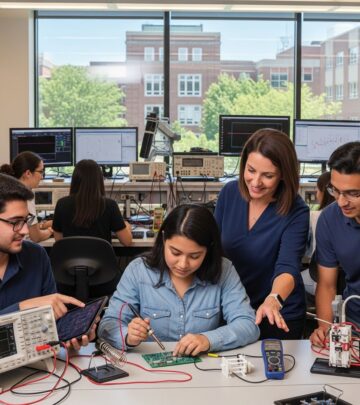
Central to technical education is experiential training. Classrooms double as workshops with industry-grade equipment—think CNC machines for machinists or simulation software for IT pros. Instructors, frequently active professionals, impart current techniques, bridging classroom and career seamlessly.
This method boosts retention and adaptability. Students master troubleshooting, teamwork, and safety protocols in simulated settings, emerging interview-ready with portfolios of projects. Such preparation yields lower unemployment rates for technical grads versus general degree holders.
High Employment Outcomes and Industry Ties
Technical colleges excel in job placement, boasting rates like 97% in-field employment. Dedicated career centers offer resume workshops, mock interviews, and employer connections. Many schools host job fairs where firms recruit directly, valuing the plug-and-play skills of alumni.
Growth sectors—renewable energy, cybersecurity, allied health—demand these talents, ensuring opportunities. Graduates report competitive salaries and advancement paths, underscoring the model’s efficacy.
Building Supportive Communities and Networks
Beyond skills, technical colleges nurture belonging. Compact cohorts foster mentorships, study teams, and lasting bonds. Faculty accessibility enhances this, providing guidance on academics and careers alike.
Alumni networks extend support post-graduation, aiding job leads and promotions. This communal vibe contrasts larger universities’ anonymity, promoting holistic development.
Who Thrives in Technical College Settings?
Ideal candidates include high schoolers eyeing trades, professionals upskilling, or degree-holders pivoting fields. Those prioritizing practicality over prestige find alignment here. Admission often requires minimal prerequisites, emphasizing aptitude tests or interviews.
However, self-motivated learners fare best, as programs demand focus amid intensity. For advancement to management, some pair technical credentials with later bachelor’s pursuits.
Navigating Potential Drawbacks Thoughtfully
No path is flawless. Technical focus may limit transfer credits to universities, though articulation agreements mitigate this. Certain roles require bachelor’s degrees, necessitating strategic planning. Yet, for entry-level proficiency, the pros dominate.
Regional variations exist—research accreditation via bodies like ACCSC ensures quality. Visiting campuses reveals fit.
Popular Programs and Emerging Fields
- Healthcare: Nursing aides, radiology techs—vital amid aging populations.
- IT & Engineering: Networking, automation—fueling digital transformation.
- Trades: HVAC, welding—evergreen infrastructure needs.
- Business Tech: Accounting software, cybersecurity ops.
Renewables and biotech expand horizons, with schools adapting curricula nimbly.
Financial Aid and Accessibility Options
Scholarships, grants, and employer reimbursements abound. Federal aid like Pell Grants applies, plus school-specific funds for merit or need. Work-study integrates earning with learning.
Frequently Asked Questions
What credentials do technical colleges award?
Certificates, diplomas, and associate degrees, often stackable toward higher quals.
Are online programs available?
Yes, many blend virtual theory with in-person labs for flexibility.
How do job prospects compare to universities?
Technical grads enter hot markets faster, with lower unemployment.
Can I transfer to a 4-year school?
Many do via partnerships, retaining credits.
What’s the typical class size?
10-30 students, enabling tailored support.
Steps to Choose and Enroll
- Assess career goals and research programs.
- Verify accreditation and outcomes.
- Tour facilities, meet staff.
- Apply, secure aid.
- Commit to the hands-on journey.
Technical colleges democratize opportunity, turning aspirations into realities efficiently. They embody purposeful education for a dynamic economy.
References
- 10 Advantages of Going to a Technical College — ATA College. 2023. https://atacollege.edu/10-advantages-of-going-to-a-technical-college/
- Five Advantages of Going to a Technical College — CVTC. 2023. https://www.cvtc.edu/news-events/blog/five-advantages-of-going-to-a-technical-college
- Benefits of a Technical College — Morrison Tech. 2023. https://www.morrisontech.edu/benefits-of-a-technical-college/
- Benefits of Attending a Technical College — WTI. 2023. https://www.wti.edu/blog/benefits-attending-technical-college/
- Why Choose Technical Education? — Ranken. 2023. https://ranken.edu/why-choose-technical-education-2/
- Advantages and Disadvantages of Technical School — Goodwin University. 2023. https://www.goodwin.edu/enews/technical-school-advantages-disadvantages/
- Top 10 Reasons Why You Should Attend A Technical College — Spartan College. 2023. https://www.spartan.edu/news/top-10-reasons-why-you-should-attend-a-technical-college/
Similar Articles








Read full bio of medha deb