Unlocking Calls and Puts in Options Trading
Master the essentials of call and put options to enhance your trading strategies and manage risks effectively in dynamic markets.

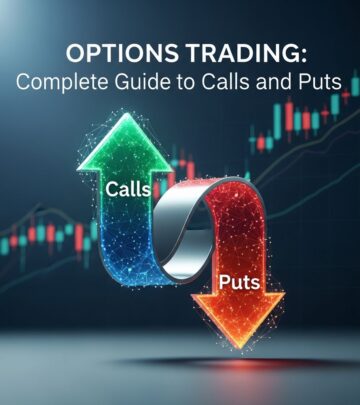
Options trading offers investors flexible tools to speculate on price movements or safeguard portfolios. At its core, call options provide the right to buy an asset at a set price, while put options grant the right to sell. These contracts enable leveraged exposure without owning the underlying asset, but they demand a clear grasp of mechanics and risks.
Foundational Concepts of Options Contracts
Every options contract revolves around specific terms. The strike price is the fixed price at which the underlying asset can be bought or sold if the option is exercised. The premium is the cost paid by the buyer to the seller for this right, influenced by factors like asset volatility, time to expiration, and market conditions. Expiration dates mark the deadline for exercising the option, after which it becomes worthless if not acted upon.
Buyers enjoy limited risk—the premium paid—while sellers face obligations if exercised. Contracts typically cover 100 shares of the underlying stock, amplifying outcomes based on price shifts.
Call Options: Betting on Price Increases
A call option empowers the holder to purchase the underlying asset at the strike price before expiration. Investors buy calls anticipating a rise in the asset’s market price, allowing them to buy low (strike) and sell high (market) for profit.
For instance, if a stock trades at $100 and you buy a call with a $105 strike for a $3 premium, the breakeven is $108. If the stock hits $115, your profit per share is $115 – $105 – $3 = $7, multiplied by 100 shares per contract. Sellers of calls collect the premium upfront but risk unlimited losses if prices surge dramatically, as they must deliver the asset at the strike.
Put Options: Profiting from Declines
Conversely, a put option allows the holder to sell the underlying asset at the strike price. Buyers purchase puts expecting a price drop, enabling sales at the higher strike against a lower market value.
Using the same stock at $100, a $95 strike put costing $2.50 has a breakeven of $92.50. If the stock falls to $85, profit is $95 – $85 – $2.50 = $7.50 per share. Put sellers keep the premium if prices stay above strike but must buy the asset at strike if exercised, capping profit at the premium while risking substantial losses.
Profit and Loss Dynamics
Understanding moneyness is crucial: in-the-money (ITM) means profitable exercise (call: market > strike; put: market < strike); at-the-money (ATM) equals strike; out-of-the-money (OTM) is unprofitable.
| Scenario | Call Buyer | Call Seller | Put Buyer | Put Seller |
|---|---|---|---|---|
| Asset Price Rises | Unlimited Profit | Limited to Premium (Loss Possible) | Limited Loss (Premium) | Profit (Premium) |
| Asset Price Falls | Limited Loss (Premium) | Profit (Premium) | Profit (Decline Below Strike) | Limited to Premium (Loss Possible) |
| No Movement | Loss (Premium) | Profit (Premium) | Loss (Premium) | Profit (Premium) |
This table illustrates directional biases: calls thrive on upside, puts on downside.
Strategic Applications in Trading
Options extend beyond speculation. Key strategies include:
- Covered Calls: Own the stock and sell calls to earn premium income, reducing cost basis but capping upside.
- Protective Puts: Buy puts on held stocks as insurance against drops, akin to portfolio hedging.
- Cash-Secured Puts: Sell puts with cash reserved to buy the stock, targeting discounted entry if assigned.
- Long Calls/Puts: Pure directional bets with defined risk.
These blend income generation, leverage, and protection.
Risks and Risk Management
While buyers cap losses at premiums, time decay (theta) erodes value as expiration nears, especially for OTM options. Sellers face assignment risk and potentially vast losses—unlimited for naked calls.
Volatility (vega) boosts premiums for high-movement assets. Diversification, position sizing, and stop-losses mitigate dangers. Regulations require approvals for options trading due to complexity.
Tax Implications for Options Traders
Premiums from expired options or closed positions are short-term capital gains. Exercised options adjust the underlying asset’s basis: added for covered calls, subtracted for assigned puts. Consult tax professionals for specifics.
Getting Started with Options
Brokers like those offering J.P. Morgan Self-Directed Investing provide access, often with educational resources. Paper trading builds experience without risk. Start small, focusing on liquid underlyings.
Frequently Asked Questions (FAQs)
What is the main difference between calls and puts?
Calls grant the right to buy; puts grant the right to sell at the strike price.
Can I lose more than the premium buying options?
No, buyer risk is limited to the premium paid.
What happens if an option expires worthless?
Buyers lose the premium; sellers retain it as profit.
Are options suitable for beginners?
They require study; start with basics and simulated trades.
How do strike prices affect option value?
Closer ITM strikes cost more due to intrinsic value.
References
- Options: Calls and Puts – Overview, Examples, Trading Long & Short — Corporate Finance Institute. 2023. https://corporatefinanceinstitute.com/resources/derivatives/options-calls-and-puts/
- Call Vs. Put Options: Understanding the Differences — Chase Bank. 2024-02-06. https://www.chase.com/personal/investments/learning-and-insights/article/what-are-puts-and-calls
- Calls Vs Puts: A Beginner’s Guide to Options Trading — Alpaca Markets. 2023. https://alpaca.markets/learn/calls-vs-puts-a-beginners-guide-to-options-trading
- Basic Call and Put Options Strategies — Charles Schwab. 2024. https://www.schwab.com/learn/story/basic-call-and-put-options-strategies
- What are call and put options? — Vanguard. 2024. https://investor.vanguard.com/investor-resources-education/understanding-investment-types/what-are-call-put-options
Similar Articles








Read full bio of medha deb