Early Direct Deposit: 5 Steps To Get Paydays 2 Days Early
Discover how early direct deposit accelerates your paycheck arrival, enhances cash flow, and shields you from fees—explore banks offering up to two days faster access.

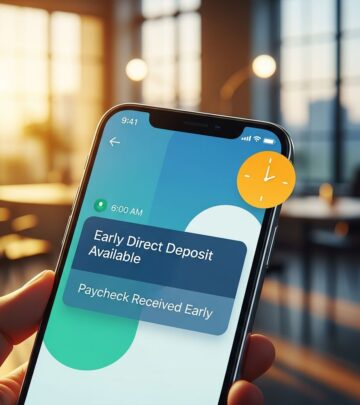
Early direct deposit transforms routine payroll processing by granting account holders quicker entry to earned wages. Financial institutions release funds upon receiving payroll notifications from employers, often up to two business days before the official deposit date. This mechanism bypasses standard settlement delays in the Automated Clearing House (ACH) network, providing immediate usability without awaiting full clearance.
Understanding the Mechanics of Accelerated Deposits
The core process hinges on timing within the ACH framework. Employers submit payment files days ahead of payday, alerting banks to incoming transfers. Traditional deposits post after ACH settlement, typically one to two days post-notification. With early access features, banks provisionally credit accounts upon file receipt, trusting the transaction’s completion based on historical reliability.
This approach carries minimal risk for banks, as failed ACH transfers are exceedingly rare. Institutions may impose criteria like minimum deposit amounts or specific account types to qualify. Payroll, government benefits including Social Security, pensions, unemployment, and tax refunds often qualify, with some banks accelerating benefits further—up to four days for certain disbursements.
Key Advantages for Everyday Financial Management
Quicker fund availability addresses common cash crunches near payday. Users settle bills promptly, dodging late penalties that average $30-$40 per occurrence. It also buffers against overdrafts, where fees can exceed $35 per incident, by ensuring balances align with pending obligations.
- Fee Avoidance: Pay utilities or rent without delay, preserving budget integrity.
- Cash Flow Boost: Bridge gaps between pay cycles, reducing reliance on high-interest credit.
- Interest Acceleration: Deposits into high-yield accounts begin compounding earlier, maximizing returns over time.
- Convenience: Automates access without trips to deposit checks, minimizing loss or theft risks.
Beyond individuals, this perk fosters loyalty, encouraging sustained relationships and cross-product usage like savings or credit lines.
Financial Institutions Offering Accelerated Payroll Services
Numerous banks and credit unions provide this no-cost, automatic benefit on qualifying accounts. Eligibility generally requires direct deposit setup from employers or benefit providers.
| Bank/Credit Union | Early Access | Eligible Deposits | Notes |
|---|---|---|---|
| Chase | Up to 2 days | Payroll, benefits | Qualifying checking accounts |
| Capital One | Up to 2 days | Payroll, government | Automatic for direct deposits |
| Wells Fargo | Up to 2 days | Payroll | Selected accounts |
| Chime | Up to 2 days (tax refunds up to 6 days) | Payroll, refunds, benefits | Fee-free |
| TD Bank | Up to 2 days | Payroll, savings/checking | Early Pay feature |
| Axos Bank | Up to 2 days | Payroll | Instant on payday notification |
Variations exist; for instance, Go2Bank advances government benefits up to four days. Always confirm with your provider, as employer payroll timing influences exact availability.
Step-by-Step Guide to Enabling Faster Deposits
- Verify Account Eligibility: Review your bank’s offerings; most apply to standard checking with no extra enrollment.
- Obtain Routing and Account Details: Share your bank’s ABA routing number (9 digits) and account number with your employer via payroll portal or HR.
- Submit Direct Deposit Form: Provide voided check or bank letter if requested; processing takes 1-2 pay cycles.
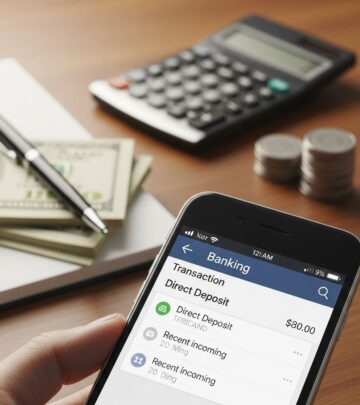
- Monitor First Deposits: Track via app notifications; early access activates automatically post-setup.
- Adjust Allotments: Split deposits across checking, savings, or investments for optimized management.
Once active, no further action is needed—funds post seamlessly ahead of schedule.
Navigating Potential Limitations and Safeguards
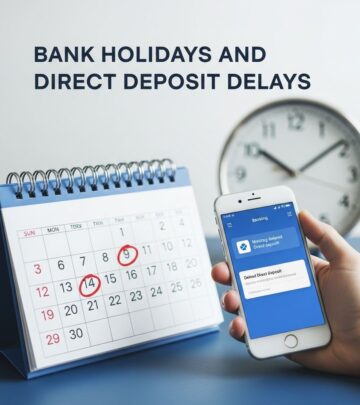
While reliable, early access isn’t guaranteed. Dependence on payer schedules means irregular payrolls may delay benefits. Provisional credits reverse if transactions fail, though this seldom occurs. Overdraft protections may recalibrate with early balances, but prudent spending prevents shortfalls.
Funds remain FDIC-insured up to $250,000 per depositor in member banks, ensuring safety akin to standard deposits. Budgeting remains key; early access extends usability but doesn’t expand total income.
Strategic Applications for Budget Optimization
Incorporate early deposits into broader planning. Align bill due dates with accelerated arrivals, automating transfers to high-yield savings for compounded growth. This tactic yields extra interest annually—vital in low-rate environments.
For families, it synchronizes with school fees or groceries. Freelancers benefit from consistent government payments. Overall, it enhances predictability, curbing stress from timing mismatches.
Frequently Asked Questions
Does early direct deposit cost anything?
No, it’s typically free and automatic on eligible accounts.
Which deposits qualify for early access?
Primarily payroll, Social Security, pensions, unemployment, and tax refunds.
Can I get more than two days early?
Standard is two business days; some extend to four for benefits or six for refunds.
Is there a minimum deposit requirement?
Some banks set thresholds, like consistent recurring deposits.
What if my employer pays late?
Early access aligns with their notification, not official payday.
Does it impact overdraft protection?
It bolsters balances early, reducing overdraft risks if managed well.
Long-Term Financial Empowerment Through Timing
Adopting early deposit strategies elevates control over personal finances. It minimizes frictional costs, amplifies savings potential, and streamlines operations. As digital banking evolves, such innovations underscore the value of informed account selection. Pair with budgeting apps for holistic oversight, turning two days into compounded advantages across pay cycles.
References
- What’s the Deal with Early Direct Deposit? — Quorum Federal Credit Union. 2023. https://www.quorumfcu.org/learn/tools-and-technology/whats-the-deal-with-early-direct-deposit/
- What Is Early Direct Deposit and How Does It Work? — Chase Bank. 2024. https://www.chase.com/personal/banking/education/basics/early-direct-deposit
- 3 Reasons Why You Need Early Direct Deposit — Axos Bank. 2023. https://www.axosbank.com/personal/insights/finance/digital-banking/3-reasons-why-you-need-early-direct-deposit
- How Does Early Direct Deposit Work? — Experian. 2024. https://www.experian.com/blogs/ask-experian/how-does-early-direct-deposit-work/
- Banks That Pay 2 Days Early: How Early Direct Deposit Works — Remitly. 2024. https://www.remitly.com/blog/finance/banks-that-pay-2-days-early/
- Banks With Early Direct Deposit — NerdWallet. 2024. https://www.nerdwallet.com/banking/learn/early-direct-deposit
Similar Articles








Read full bio of medha deb