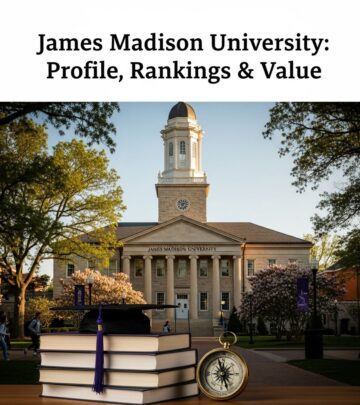
University of Virginia: Academics, Campus Life & Rankings
Explore UVA's academic excellence, historic campus, and student opportunities.
University of Virginia: An Overview
The University of Virginia, commonly known as UVA or Virginia, stands as one of the nation’s most prestigious public research institutions. Founded in 1819 by Thomas Jefferson, UVA is located in Charlottesville, Virginia, and serves as a beacon of academic excellence in the Southeast. The university is composed of 12 schools in Charlottesville, including the College at Wise in Southwest Virginia, and UVA Northern Virginia, representing nine UVA schools in Fairfax and two in Arlington. Today, approximately 26,000 students attend the university, making it a vibrant community of learners and scholars.
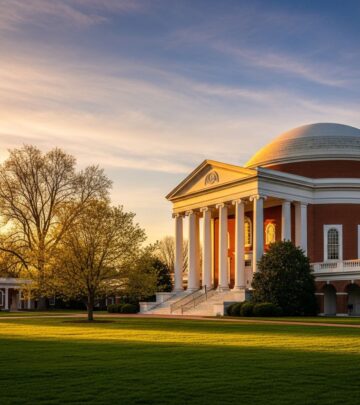
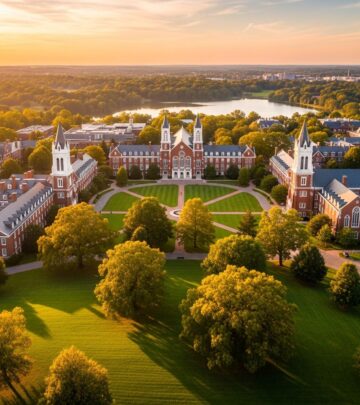
The campus itself is a UNESCO World Heritage Site, recognized as the only university in the United States to receive this prestigious designation. This recognition reflects the outstanding universal value of UVA’s Academical Village, designed by Jefferson himself, which represents a unique and influential model of university planning and architecture.
Campus Facilities and Grounds
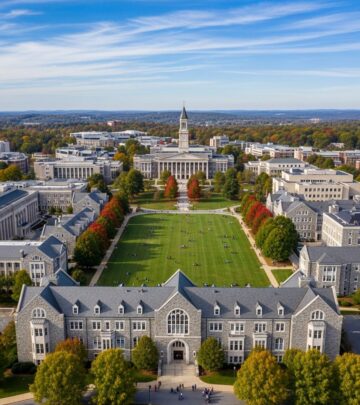
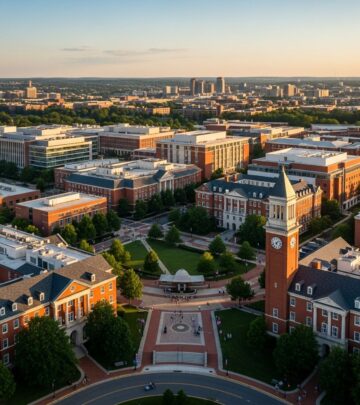
The University of Virginia’s central campus spans 1,135 acres, known affectionately as the Grounds. The university also maintains extensive additional properties, including 562 acres north of campus at North Fork and 2,913 acres southeast of the city at Morven Farm. The institution continues to expand, currently building a campus in Northern Virginia within Fairfax.
The Academical Village
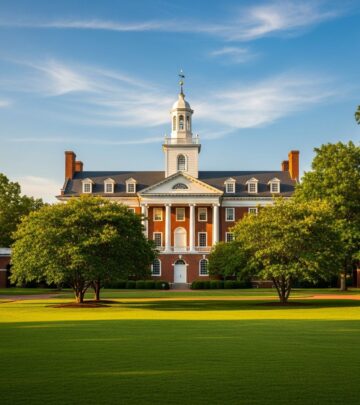
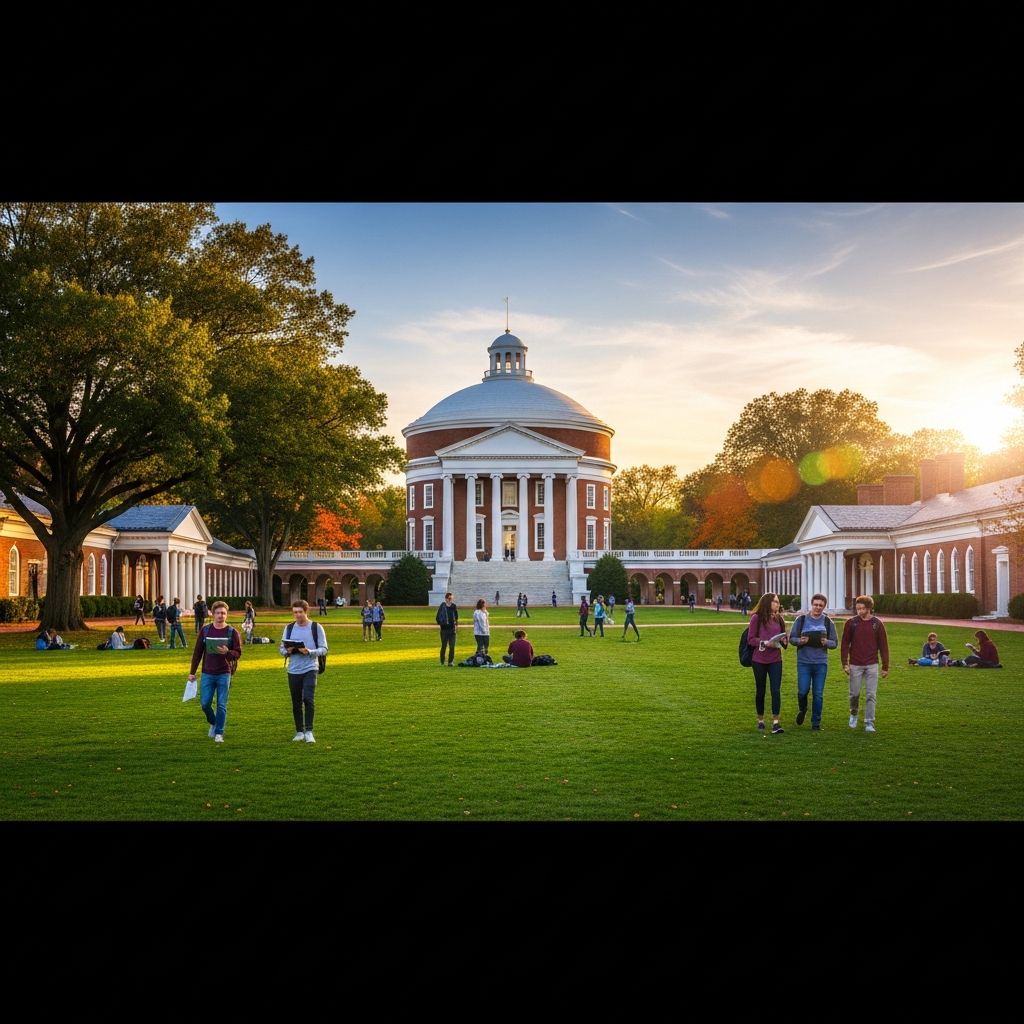
At the heart of UVA lies the Academical Village, Thomas Jefferson’s architectural masterpiece featuring the iconic Rotunda and historic pavilions arranged around the lawn. This design reflected Jefferson’s educational philosophy and has influenced university architecture throughout America. The Lawn remains one of the most recognizable college spaces in the nation, hosting student residences in pavilions where select faculty members continue to live, fostering unique interactions between students and professors.
Research Infrastructure
UVA’s commitment to research excellence is evidenced by its substantial investment in research facilities. The university spent $614 million on research and development in 2019, ranking it 44th nationally and first in Virginia. North Fork, a 562-acre research park built in 1996, houses the UVA Applied Research Institute and collaborative research efforts with leading firms including Battelle, The MITRE Corporation, Signature Science, and CACI.
Furthermore, UVA hosts the headquarters of the National Radio Astronomy Observatory, which operates the Green Bank Telescope in West Virginia and the Very Large Array radio telescope. The North American Atacama Large Millimeter Array Science Center is also located at the Charlottesville NRAO site, positioning UVA at the forefront of astronomical research.
Modern Athletic Facilities
Recent investments have modernized UVA’s athletic infrastructure significantly. The university opened the 93,000-square-foot Molly and Robert Hardie Football Operations Center in June 2024, along with the 60,000-square-foot Harrison Family Olympic Sports Complex featuring the 35,000-square-foot McCue Center renovation, which opened in Fall 2025. These facilities support UVA’s 96 NCAA Division I men’s and women’s sports programs, contributing to the university’s tradition of athletic excellence.
Academic Structure and Programs
The University of Virginia comprises eight undergraduate and three professional schools within its main Charlottesville campus. The professional schools include the School of Law, the Darden School of Business, and the School of Medicine, all ranked among the nation’s finest.
Undergraduate Education
UVA’s undergraduate programs span numerous disciplines, with psychology identified as the highest-ranked major at the institution. The university maintains rigorous academic standards while offering diverse opportunities for scholarly exploration and intellectual growth. Students benefit from a curriculum that emphasizes both foundational knowledge and specialized expertise.
Graduate and Professional Programs
Beyond undergraduate education, UVA’s professional schools provide advanced training in law, business, and medicine. The Darden School of Business ranks among the top business schools nationally, the School of Law maintains exceptional legal education standards, and the School of Medicine serves the Commonwealth of Virginia and beyond through cutting-edge medical training and research.
Research and Scholarly Achievement
UVA designates over half of its operating budget to core mission-related activities including education, research, and public service. This commitment reflects the institution’s dedication to advancing knowledge and addressing societal challenges. The university’s 2025-26 total operating budget reaches $6.4 billion, with the academic division commanding $2.5 billion of this allocation.
As the National Cancer Institute-Designated Comprehensive Cancer Center in Virginia, UVA continues groundbreaking research in oncology and related fields. The university’s research portfolio spans biomedicine, engineering, social sciences, humanities, and natural sciences, creating an intellectually rich environment where discovery flourishes.
Student Life and Campus Community
Student life at UVA centers around Newcomb Hall, the university’s primary student life building, which houses the Student Activities Center (SAC) and Media Activities Center (MAC). These facilities provide leadership consulting, computing resources, and meeting spaces for the diverse array of student organizations that flourish on campus.
Student Governance
Student Council, known as StudCo, serves as the student self-governing body, holding meetings every Tuesday at 6:30 p.m. in the Newcomb South Meeting Room. The recently renovated Newcomb Programs and Council (PAC) Room houses both Student Council and the University Programs Council, enabling robust student participation in university governance and programming.
Student Publications and Media
The basement of Newcomb Hall houses the offices of The Cavalier Daily, UVA’s independent student newspaper with over 200 years of history, and The Declaration, ensuring students have platforms to express ideas and document campus life. The Consortium of University Publications coordinates these vital student media outlets, fostering journalism and communication skills among the student body.
Campus Life and Activities
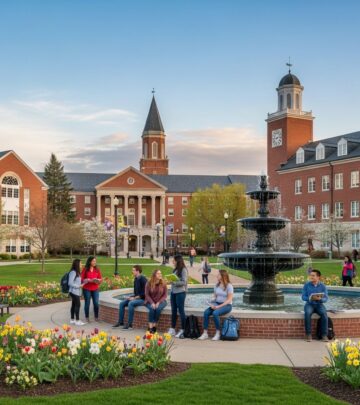
Beyond academics, UVA offers an vibrant social scene centered around the Corner, an area adjacent to campus offering dining and entertainment options, and the Downtown Mall in Charlottesville, which features shops, restaurants, live theatre, and music venues. These spaces create the complete college experience, blending academic rigor with social connection and cultural engagement.
Admissions and Financial Information
Contact Details
Prospective students seeking information about UVA can reach the admissions office at the following details:
Address: 1827 University Avenue, Charlottesville, VA 22903-2628
Phone: 434-924-0311
Website: virginia.edu
Enrollment and Demographics
The university enrolls approximately 26,000 students across all campuses. Online learning programs continue to expand, with participation growing from 882 students in 2016-2017 to 1,038 students in 2017-2018, demonstrating increasing interest in distance education opportunities.
Financial Commitment
UVA’s commitment to access and affordability is demonstrated through significant investments in financial aid. The AccessUVA program provides need-based aid to ensure that talented students from all economic backgrounds can attend. The university’s Academic Division consistently allocates resources to support continued growth in educational opportunities and student support services.
Rankings and Recognition
The University of Virginia holds the 37th ranking among U.S. colleges and universities, reflecting its position among the nation’s elite institutions. The university maintains Carnegie classification as a Doctoral University with Very High Research Activity, underscoring its commitment to advanced scholarship and discovery.
UVA’s exceptional ranking stems from multiple factors: rigorous academic programs, influential research contributions, strong faculty, accomplished alumni, and a vibrant campus community. The university’s selective admissions process ensures that admitted students demonstrate both academic excellence and exceptional potential for contribution to the university community.
History and Founding Legacy
Founded in 1819 by Thomas Jefferson, UVA emerged from Jefferson’s vision for a revolutionary educational institution that would serve the Commonwealth of Virginia. The original Board of Visitors included three U.S. presidents—Jefferson, James Madison, and James Monroe, the latter serving as sitting president at the time of the university’s founding. John Marshall, the Chief Justice of the United States Supreme Court, also participated in the institution’s founding deliberations.
The first classes met on March 7, 1825, marking the beginning of UVA’s educational mission. Like many institutions of its era, UVA acknowledges its historical connection to slavery, as enslaved laborers helped construct the campus and served students and professors. The Memorial to Enslaved Laborers on Central Grounds honors these individuals and their contributions to the university’s physical and intellectual development.
Location and Accessibility
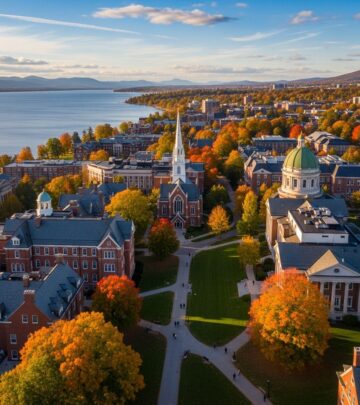
Situated in Charlottesville, Virginia, UVA occupies a location that straddles the border between the City of Charlottesville and Albemarle County. This midsize suburb setting provides students access to both the vibrant college town atmosphere and the natural beauty of the Blue Ridge Mountains region. The location offers proximity to historic sites, outdoor recreation, and cultural institutions, enriching the student experience beyond the classroom.
Campus Tours and Visitor Information
The University of Virginia welcomes thousands of prospective students, families, and visitors each year to explore its historic Grounds and learn about its traditions and culture. Guided campus tours can be arranged through individual UVA schools, and the university maintains nine libraries available for both guided and self-guided tours. Interactive campus maps help visitors discover lesser-known facts, historic objects, and significant places throughout the Grounds, enhancing the visitor experience and providing context for the university’s rich history and mission.
Faculty and Academic Community
UVA’s faculty represents scholars and experts across numerous disciplines, contributing to the university’s reputation for academic excellence. Several faculty members live on campus in residential colleges including Brown College at Monroe Hill, Hereford College, and the International Residential College, as well as in Pavilions on the Lawn. This living arrangement encourages informal interactions between faculty and students, fostering mentorship relationships and creating a truly integrated academic community.
Faculty participation in residential life continues a tradition established when faculty were originally housed in the Academical Village among students, serving as both instructors and advisors. This model remains central to UVA’s educational philosophy, emphasizing the importance of meaningful relationships between faculty and students in the learning process.
Future Vision and Growth
The University of Virginia continues to evolve while maintaining its core commitment to academic excellence and public service. Current initiatives include expansion of the Northern Virginia campus to serve more students in the rapidly growing Northern Virginia region, ongoing investment in research facilities and equipment, and continued enhancement of student support services and campus infrastructure.
Recent capital investments in athletic facilities, research parks, and academic buildings demonstrate the university’s commitment to remaining at the forefront of higher education and research. These developments position UVA to continue attracting top faculty and students while expanding its impact on scholarship, research, and service to society.
Frequently Asked Questions
Q: What makes University of Virginia unique among American universities?
A: UVA is the only university in the United States designated as a UNESCO World Heritage Site, recognized for its outstanding universal value. Founded by Thomas Jefferson, it features the Academical Village, an innovative architectural model that has influenced university design nationwide. The institution combines rigorous academics, world-class research, and a vibrant residential campus community.
Q: How many students attend the University of Virginia?
A: Approximately 26,000 students attend UVA across all campuses, including the main Charlottesville campus, UVA Wise in Southwest Virginia, and UVA Northern Virginia with locations in Fairfax and Arlington.
Q: What are the major schools within UVA?
A: UVA comprises 12 schools in Charlottesville, including eight undergraduate schools and three professional schools: the School of Law, Darden School of Business, and School of Medicine. The university also operates the College at Wise and has expanded representation in Northern Virginia.
Q: How can prospective students schedule a campus tour?
A: Prospective students can contact individual UVA schools directly for tour information. The university maintains nine libraries available for guided or self-guided tours, and interactive campus maps help visitors explore the Grounds independently.
Q: What is the ranking of University of Virginia among U.S. colleges?
A: The University of Virginia ranks 37th among colleges and universities in the United States, reflecting its status as one of the nation’s premier institutions.
Q: What financial aid options are available to UVA students?
A: UVA offers the AccessUVA program, which provides need-based financial aid to ensure talented students from all economic backgrounds can afford to attend. The university allocates significant resources to student support and financial assistance initiatives.
References
- University of Virginia — Wikipedia. 2025. https://en.wikipedia.org/wiki/University_of_Virginia
- University of Virginia – Main Campus Overview — College Factual. 2025. https://www.collegefactual.com/colleges/university-of-virginia-main-campus/
- Facts and Figures — The University of Virginia Official Website. 2025. https://www.virginia.edu/facts-figures/
- University of Virginia-Main Campus Profile — College Raptor. 2025. https://www.collegeraptor.com/colleges/University-of-Virginia-Main-Campus-VA–234076
- Visit UVA — The University of Virginia Official Website. 2025. https://www.virginia.edu/visit-uva/
Similar Articles








Read full bio of medha deb