University of Virginia: Excellence, Tradition, and Academic Leadership
Discover UVA's legacy of academic excellence, innovative research, and transformative student experiences.
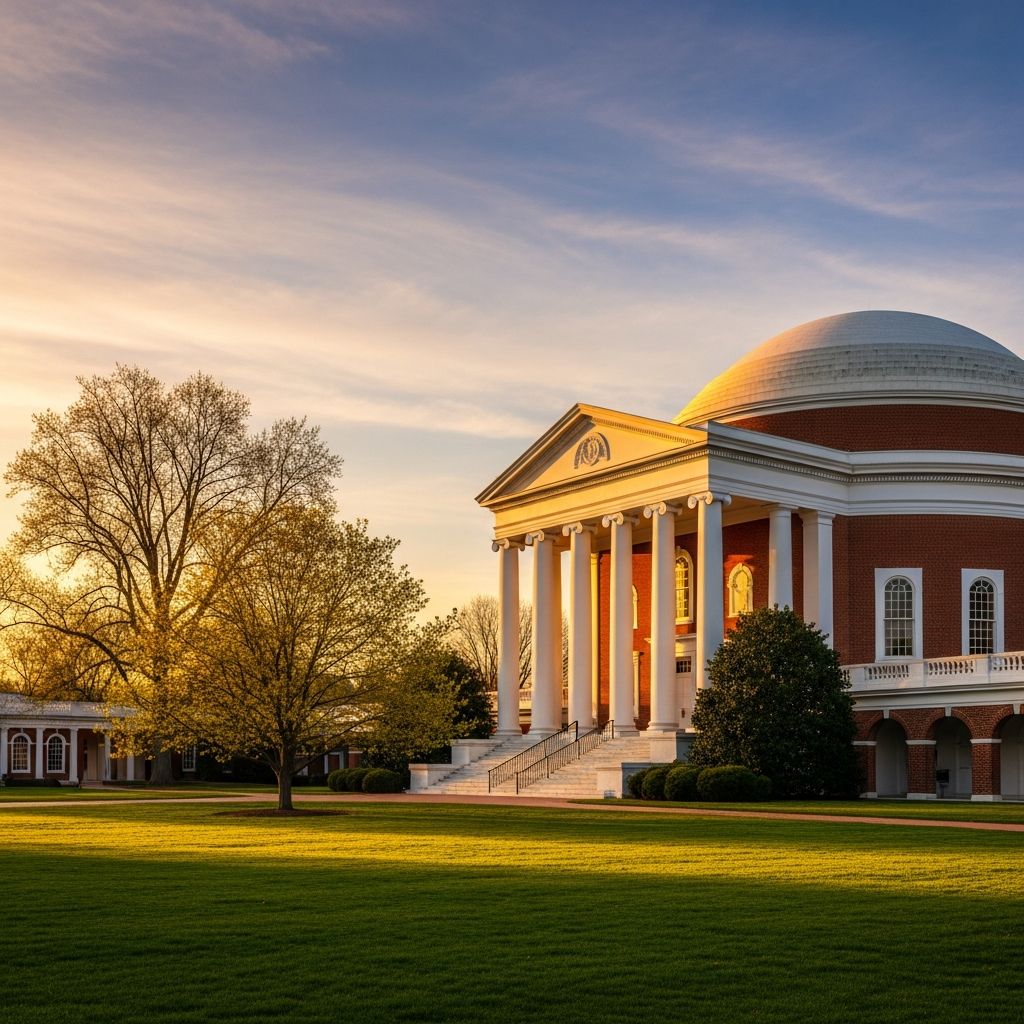
University of Virginia: A Premier Institution of Learning and Leadership
The University of Virginia stands as one of the most prestigious public research institutions in the United States, combining centuries of academic tradition with cutting-edge research and innovation. Founded in 1819 by Thomas Jefferson, the principal author of the Declaration of Independence, UVA has evolved into a beacon of educational excellence that attracts talented students from around the world. Located in Charlottesville, Virginia, a picturesque community nestled east of the Blue Ridge Mountains, the university offers a unique blend of rigorous academics, vibrant student life, and a commitment to public service that defines its mission and values.
A Legacy Built on Visionary Leadership and Innovation
The founding of the University of Virginia represents a remarkable moment in American higher education history. In 1817, three U.S. presidents—Thomas Jefferson, James Madison, and James Monroe, along with Chief Justice John Marshall—met to establish a new institution of higher learning. After deliberation, they selected Charlottesville as the location, and the Commonwealth of Virginia chartered the flagship university on January 25, 1819. The university’s first classes convened on March 7, 1825, marking the beginning of an institution that would shape American intellectual life for generations to come.
What makes UVA’s founding particularly distinctive is Jefferson’s visionary approach to institutional design. Rather than placing a chapel at the center of campus as was customary at the time, Jefferson positioned the library at the heart of the university—a symbolic statement reflecting his profound commitment to the pursuit of knowledge and intellectual inquiry. This philosophical foundation continues to define the university’s character more than two centuries later.
The Academical Village: A Unique Learning Environment
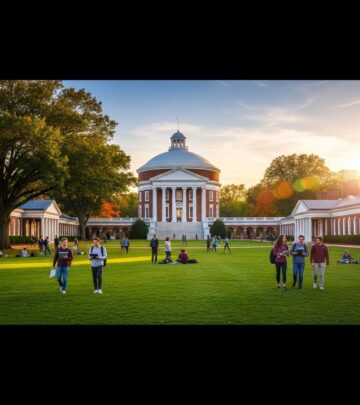
At the heart of UVA’s distinctive character lies the Academical Village, a UNESCO World Heritage Site that represents Jefferson’s revolutionary vision for higher education. The design intentionally fostered close relationships between faculty and students, with professors residing in pavilions surrounding the central Lawn where students lived in single rooms. This physical arrangement created an environment conducive to informal mentoring, intellectual exchange, and the development of deep academic relationships that transcended traditional classroom instruction.
Today, this tradition persists as faculty continue to live on the Grounds, either in the Pavilions on the Lawn or as fellows at one of three residential colleges—Brown College at Monroe Hill, Hereford College, and the International Residential College. This arrangement ensures that the spirit of collaboration and cross-disciplinary exchange remains fundamental to the university’s educational philosophy, creating an atmosphere where differing perspectives not only coexist but actively co-create new knowledge and understanding.
Academic Excellence and Scholarly Achievement
The University of Virginia comprises eight undergraduate schools and three professional schools, including the distinguished School of Law, the Darden School of Business, and the School of Medicine. This comprehensive structure enables the university to offer exceptional educational opportunities across numerous disciplines while maintaining the highest standards of academic rigor and scholarly achievement.
The university’s commitment to research is evident in its substantial investments and contributions to human knowledge. According to the National Science Foundation, UVA spent $614 million on research and development in 2019, positioning it as the 44th-ranked research institution nationally and first in Virginia. This research enterprise spans numerous fields, from the sciences and engineering to medicine, business, and the humanities, generating discoveries that address some of society’s most pressing challenges.
A particularly notable research asset is the National Radio Astronomy Observatory, headquartered at UVA. This facility operates the Green Bank Telescope in West Virginia and the Very Large Array radio telescope, instruments that have contributed to groundbreaking astronomical discoveries and continue to advance our understanding of the universe.
Notable Research Infrastructure and Facilities
Beyond its central campus, UVA maintains extensive research infrastructure designed to support scientific innovation and discovery. The North Fork Research Park, established in 1996, comprises 562 acres and 3.7 million square feet of laboratory and office space located nine miles north of campus. This facility houses the UVA Applied Research Institute alongside private research and development efforts by major firms including Battelle, The MITRE Corporation, Signature Science, and CACI. Additionally, UVA is developing a campus in Northern Virginia within Fairfax to expand its research and educational reach into the nation’s capital region.
The Honor System: A Cornerstone of Student Integrity
Among UVA’s most distinctive features is its student-run Honor System, introduced in 1842 following a tragic incident on campus. This system represents a sophisticated approach to fostering academic integrity and ethical development among students. Operating on three fundamental principles—students must not lie, cheat, or steal—the system empowers students to uphold these values through a peer-based judicial process. When violations occur, students face trial before fellow students without faculty presence, and proven violations may result in expulsion from the university.
This system exemplifies the university’s belief in student responsibility and self-governance, treating students as mature individuals capable of maintaining high ethical standards and enforcing community norms. The Honor System has become a defining element of UVA culture, shaping student character and fostering a community built on trust, respect, and accountability.
Student Life and Campus Culture
With approximately 26,000 students enrolled, the University of Virginia maintains a vibrant and engaged campus community. The student body comprises 55% female and 45% male students, with 13% identifying as international students, bringing diverse perspectives and experiences to the community. This diversity enriches the educational experience and prepares students to succeed in an increasingly globalized world.
Student life at UVA centers around Newcomb Hall, the primary hub for student activities and engagement. Home to the Student Activities Center (SAC) and the Media Activities Center (MAC), Newcomb Hall provides essential resources for student organizations, including leadership consulting, computing facilities, and meeting spaces. The Student Council, the university’s self-governing body, holds regular meetings and office hours in the newly renovated Programs and Council (PAC) Room, which also houses the University Programs Council and Class Councils.
The basement of Newcomb Hall houses significant student media operations, including the office of the independent student newspaper The Cavalier Daily and the Consortium of University Publications, ensuring that students maintain a vibrant independent media presence on campus.
Distinguished Alumni and Institutional Impact
The University of Virginia has produced exceptional alumni who have made significant contributions to American society and world culture. UVA has graduated eight NASA astronauts, eight Pulitzer Prize winners, and 51 Rhodes Scholars—more than any state-supported university and more than any institution in the American South. The university’s alumni roster includes polar explorer Richard Byrd, acclaimed author Edgar Allan Poe, renowned artist Georgia O’Keeffe, and Tina Fey, the celebrated writer, actress, and television producer.
Research and Intellectual Resources
Central to UVA’s mission is its world-class library system, which has evolved from Jefferson’s personal collection. In 1815, the Library of Congress acquired Jefferson’s personal library of 6,487 books encompassing philosophy, science, and literature—a foundation that continues to influence the university’s intellectual pursuits. Today, the library system offers five million print volumes, 16 million manuscripts, and maintains a vast digital archive dedicated to preserving significant historical and cultural works, including the Jefferson Papers and rare video documentation from the Civil Rights Era.
Campus and Location
The University of Virginia’s physical campus, referred to as the Grounds, straddles the border between Charlottesville and Albemarle County across 1,135 acres. Beyond the central campus, the university maintains 562 acres at North Fork and 2,913 acres at Morven Farm southeast of the city, providing ample space for research, agriculture, and future expansion. Charlottesville itself has been recognized as the “happiest city in America” by the U.S. National Bureau of Economic Research, providing students with a welcoming community environment.
Commitment to Financial Accessibility and Diversity
As a proudly public institution, UVA is committed to ensuring that financial circumstances do not impede talented students from pursuing their educational goals. The university’s commitment to financial aid and accessibility reflects its founding principles and dedication to serving as a beacon of opportunity for students from all backgrounds. This commitment to equity and access strengthens the university community by ensuring that talented individuals can contribute their abilities regardless of socioeconomic status.
Institutional Recognition and Ranking
The University of Virginia’s excellence is consistently recognized through various academic rankings and accreditations. As a member of the Association of American Universities since 1904, UVA stands among a select group of the nation’s most distinguished research universities. The institution is classified as a Doctoral University with Very High Research Activity, reflecting its substantial commitment to research excellence across multiple disciplines.
Academic Programs and Curriculum
UVA’s academic offerings reflect the breadth and depth that characterize a major research university. From its inception, the university has offered diverse subjects including mathematics, medicine, law, chemistry, ancient and modern languages, and philosophy. This comprehensive approach to higher education continues today, with the university offering programs at the undergraduate, master’s, and doctoral levels across its eight undergraduate schools and three professional schools. Students benefit from rigorous curricula designed by distinguished faculty, many of whom are active researchers contributing to their disciplines’ advancement.
Historical Acknowledgment and Campus Evolution
The University of Virginia has also taken important steps to acknowledge its complex history. Like many American universities founded in the early 19th century, UVA benefited from enslaved labor that helped construct the campus and served students and faculty. The Memorial to Enslaved Laborers on Central Grounds stands as a testament to this history and honors the lives and legacies of those who contributed to the university’s development under difficult circumstances. This acknowledgment reflects UVA’s commitment to historical honesty and inclusive campus community.
Frequently Asked Questions About University of Virginia
Q: When was the University of Virginia founded?
A: The University of Virginia was founded in 1819 by Thomas Jefferson. The Commonwealth of Virginia chartered the institution on January 25, 1819, and the first classes were held on March 7, 1825.
Q: How many students attend UVA?
A: Approximately 26,000 students attend the University of Virginia, with a gender ratio of 55% female and 45% male, and about 13% of students identifying as international.
Q: What is the Honor System at UVA?
A: The student-run Honor System, established in 1842, operates on three principles: students must not lie, cheat, or steal. Violations are addressed through peer trials, and proven guilt may result in expulsion.
Q: What makes the Academical Village unique?
A: The Academical Village, designed by Jefferson, is a UNESCO World Heritage Site where faculty and students live in close proximity to encourage intellectual exchange and mentorship beyond the classroom.
Q: How much research funding does UVA receive?
A: According to the National Science Foundation, UVA spent $614 million on research and development in 2019, ranking it 44th nationally and first in Virginia.
Q: What professional schools does UVA offer?
A: UVA offers three professional schools: the School of Law, the Darden School of Business, and the School of Medicine, alongside eight undergraduate schools.
References
- University of Virginia – Wikipedia — Wikipedia Foundation. Accessed November 2025. https://en.wikipedia.org/wiki/University_of_Virginia
- University of Virginia-Main Campus — College Raptor. Accessed November 2025. https://www.collegeraptor.com/colleges/University-of-Virginia-Main-Campus-VA–234076
- University of Virginia (Main campus) – Times Higher Education — Times Higher Education. Accessed November 2025. https://www.timeshighereducation.com/world-university-rankings/university-virginia-main-campus
- About UVA – The University of Virginia — University of Virginia Official Website. Accessed November 2025. https://www.virginia.edu/about-uva/
Similar Articles








Read full bio of Sneha Tete